
By VFuture Media Team | April 21, 2026 | 12 min read
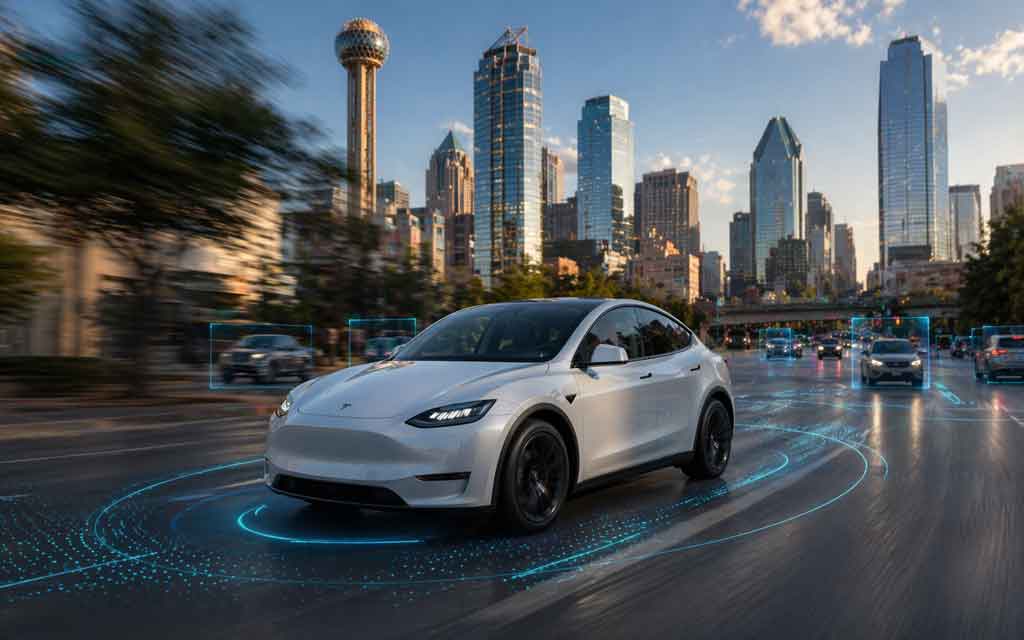
In a significant milestone for electric vehicles and autonomous technology, Tesla Robotaxi expansion reached two major Texas cities on April 18, 2026. The company officially rolled out its unsupervised Robotaxi service in Dallas and Houston, marking the first major geographic growth beyond the initial pilots in Austin and the San Francisco Bay Area.
This development comes at a pivotal time in latest EV news, as the industry grapples with slowing sales in some markets while autonomous capabilities promise to unlock new revenue streams and boost long-term adoption of electric vehicles. At VFuture Media, we cover the intersection of EV news, AI-powered autonomy, and future mobility. Here’s everything you need to know about Tesla’s latest Robotaxi breakthrough.
Announcement and Immediate Rollout Details
On Saturday, April 18, 2026, Tesla’s official @robotaxi account on X posted a simple yet powerful update: “Robotaxi now rolling out in Dallas & Houston.” The post included maps showing the initial service areas and a short video demonstrating a Model Y operating without any human in the driver’s seat.
Users and early riders quickly confirmed that rides in these new cities started unsupervised — meaning no safety driver or monitor is present in the vehicle. This is a notable difference from some earlier phases in Austin, where safety monitors were sometimes still used during initial testing.
Elon Musk amplified the news by reposting and encouraging people to “Try Tesla Robotaxi in Dallas & Houston!” The follow-up post from the Robotaxi account simply said “All by myself,” emphasizing the fully driverless nature of the service.
Service Areas: Small Geofences to Start
As with most autonomous ride-hailing rollouts, Tesla is taking a cautious, data-driven approach:
- Houston: The initial geofence covers approximately 12–40 square miles, focusing on areas around Willowbrook and Jersey Village (northwest Houston suburbs).
- Dallas: The service area is roughly 30–35 square miles, centered near Highland Park and central neighborhoods.
These zones are relatively small compared to the full metro areas (Houston metro alone exceeds 10,000 square miles), but they represent a meaningful step forward. Tesla has indicated that the geofences will expand as the system gathers more local driving data on traffic patterns, infrastructure, and edge cases specific to each city.
Early reports show limited vehicle availability in the first 24–48 hours (0–2% in some tracking data), with only one or two vehicles spotted per city initially. This is typical for controlled expansions, allowing Tesla to monitor performance closely before scaling the fleet.
Unsupervised Operations: A Major Technical Leap
The shift to unsupervised Robotaxi operations is one of the biggest highlights in this EV news update. In these new cities, passengers can sit in the front seat, use their phones freely, or even rest during the ride — experiences not possible when a safety monitor is present.
Tesla’s approach relies on its vision-only Full Self-Driving (FSD) system, powered by cameras and advanced neural networks trained on billions of miles of real-world fleet data. No lidar or radar is used, which keeps hardware costs lower and enables faster scaling across existing vehicle models like the Model Y and Model 3.
This unsupervised capability builds directly on the Austin launch earlier in 2026, where unsupervised rides first became available to the public. By starting Dallas and Houston with unsupervised rides from day one, Tesla is demonstrating growing confidence in its AI stack.
Safety, Data, and Regulatory Context
Safety remains the top priority. Tesla has not released detailed incident statistics for the new cities yet, but the company’s overall FSD data continues to show strong performance in urban environments. The Texas locations benefit from relatively consistent regulatory support compared to more restrictive states.
Users have already shared videos of smooth rides handling typical suburban and urban scenarios, including highway merges, construction zones, and pedestrian interactions. However, some early feedback mentions occasional limitations due to the small geofences — for example, rides ending abruptly at the boundary or longer wait times when availability is low.
Tesla’s fleet learns continuously: every mile driven improves the neural network for the entire system. This data advantage is a key differentiator from competitors that rely on more expensive sensor suites and manual mapping.
Pricing and User Experience: Cheaper Than Waymo?
Early rider reports suggest Tesla Robotaxi rides in Dallas and Houston are competitively priced — often cheaper than Waymo in comparable markets. While official pricing details were not announced in the initial rollout, the service is accessible via the Tesla app, similar to existing pilots.
Riders appreciate the seamless experience: request a ride, get picked up by a clean Model Y, and enjoy a quiet, electric ride with no driver chit-chat. As availability increases, this could become a convenient alternative to traditional ride-hailing or personal car ownership in these sprawling Texas cities.
Broader Impact on the EV Industry
This Tesla Robotaxi expansion has ripple effects across the electric vehicle sector:
- Revenue Potential: Successful robotaxis could generate high-margin, recurring revenue for Tesla, helping offset any softness in new vehicle sales.
- Fleet Utilization: Tesla owners may eventually add their personal vehicles to the network and earn income when not in use, turning EVs into productive assets.
- Infrastructure Demand: More autonomous EVs will drive investment in fast-charging networks and smart energy management.
- Competitive Pressure: Legacy automakers and other ride-hailing players (Uber, Lyft, Waymo, Zoox) must accelerate their own autonomy timelines or risk losing ground.
In the larger EV news landscape of 2026, this move reinforces that software-defined vehicles powered by AI are becoming the future of mobility. While some manufacturers have scaled back EV plans due to demand fluctuations, Tesla continues pushing the boundary with autonomy.
Technical Deep Dive: What Powers Tesla’s Robotaxi?
At its core, the system uses end-to-end neural networks trained on Dojo supercomputers. Key improvements in 2026 software updates include:
- Better prediction of unpredictable human behavior
- Smoother handling of complex intersections and merges
- Enhanced performance in varied lighting and weather conditions common in Texas
Future integration with advanced AI models could further improve reasoning capabilities for edge cases. Tesla’s vertical integration — designing vehicles, software, and even batteries in-house — gives it a unique edge in scaling this technology affordably.
Challenges and Realistic Outlook
Not everything is perfect yet. Critics point out the tiny initial geofences and limited fleet size as signs that full-scale deployment will take time. Some compare it to previous timeline shifts, noting that Tesla has adjusted expectations on unsupervised FSD in the past.
Availability can be spotty in the early days, and regulatory hurdles could slow expansion into other states. Weather events, construction, and rare disengagements remain areas for continuous improvement.
Nevertheless, the fact that unsupervised operations launched immediately in two new cities signals real progress. Tesla has plans to expand further in 2026 to cities like Phoenix, Miami, Orlando, Tampa, and Las Vegas.
The Road to Cybercab and Mass Adoption
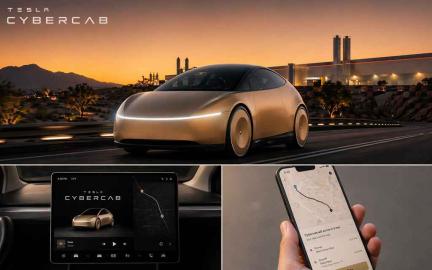
This expansion also supports the upcoming dedicated Cybercab — Tesla’s purpose-built, two-seater robotaxi without a steering wheel. Production is expected to ramp later in 2026 at Giga Texas, with these vehicles designed specifically for high-utilization autonomous service.
Data gathered from current Model Y-based robotaxis will directly inform Cybercab development, helping refine mapping, safety systems, and efficiency.
What This Means for EV Enthusiasts and Investors
For EV owners and fans, the Tesla Robotaxi expansion hints at a future where your electric vehicle can earn money while you sleep. For investors, it underscores Tesla’s long-term bet on autonomy as a transformative business beyond just selling cars.
In the context of 2026 EV news, this story highlights how AI and electric propulsion are converging to reshape transportation. While challenges like public trust, insurance, and full regulatory approval remain, the momentum is clearly building.
Future Outlook for 2026 and Beyond
Looking ahead, expect:
- Rapid geofence expansion in Dallas and Houston as data accumulates
- More Texas and U.S. cities added in the coming months
- Potential owner-operated robotaxi features later this year
- Deeper integration of next-generation AI for even safer, more capable rides
- Progress toward volume Cybercab production
Tesla’s Robotaxi push could accelerate overall EV adoption by making electric mobility more convenient and cost-effective than ever.
What’s your take? Have you tried the new Robotaxi service in Dallas or Houston? Do you believe unsupervised autonomy will go mainstream in 2026? Share your experiences and predictions in the comments below.
Stay updated with the latest in electric vehicles, AI advancements, and startup innovations. Bookmark our categories:
Subscribe to the VFuture Media newsletter for weekly roundups of breakthrough EV news and autonomous technology developments



Leave a Comment