
By Ethan Brooks U.S. Tech & Auto Journalist | April 23, 2026
Detroit, MI — General Motors has indefinitely delayed development of its next-generation full-size electric trucks and SUVs, putting future versions of the Chevrolet Silverado EV, GMC Sierra EV, GMC Hummer EV, and Cadillac Escalade IQ on hold.
The decision, first reported by Crain’s Detroit Business and confirmed across multiple outlets, comes amid softening demand for high-priced EVs, mounting losses, and a strategic pivot back toward gasoline trucks and hybrids. For American families, truck buyers, and workers in the Midwest auto belt, this shift highlights the bumpy road to widespread EV adoption in the United States.
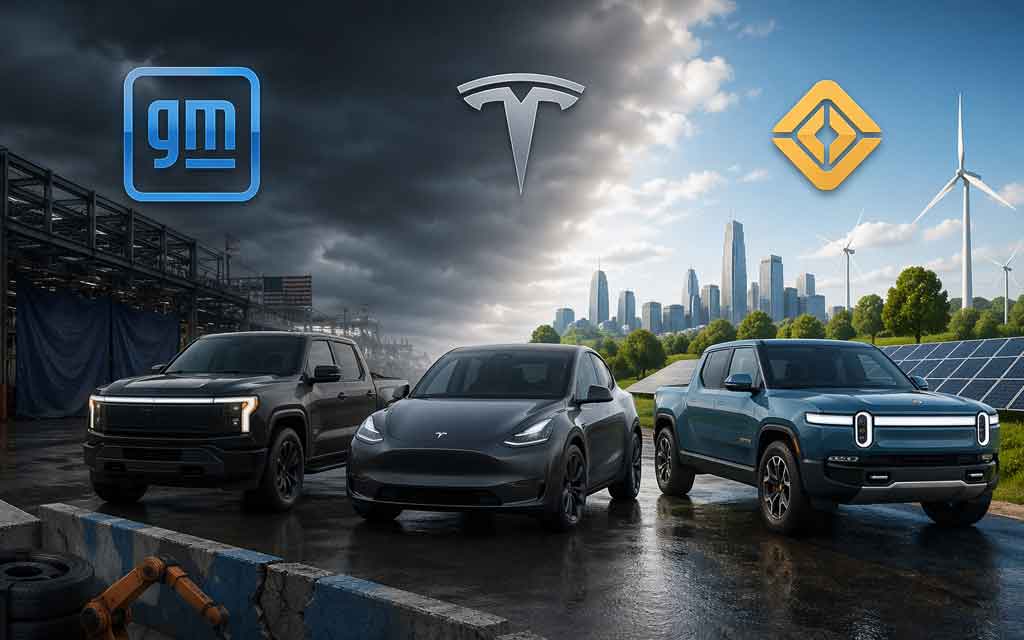
While GM hits the brakes, competitors like Tesla and Rivian are accelerating, underscoring a tale of two strategies in the evolving U.S. EV market.
GM’s EV Truck Pivot: What We Know So Far
GM had planned refreshed, potentially lower-cost versions of its electric full-size lineup for a 2028 production start at Factory Zero in Detroit-Hamtramck. Those plans are now suspended with no new timeline.
- Suppliers were recently notified that the program is on indefinite hold.
- GM recorded significant EV-related charges in 2025, reportedly around $7.6 billion, including writedowns tied to canceled or delayed plans.
- The company continues producing current-generation EVs but is reallocating resources to internal combustion engine (ICE) and hybrid platforms, such as the upcoming T1-2 truck architecture for 2027 gasoline Silverado and Sierra models.
In a statement, GM emphasized it has not canceled its existing EV portfolio and remains committed to electrification long-term, while addressing current market realities.
Rivian Moves Forward with R2 Production Start
In contrast, Rivian hit a major milestone this week. On April 22, 2026, the company began production of its more affordable R2 SUV at its Normal, Illinois plant, with customer deliveries expected to start in late spring 2026.
The R2 lineup starts around $53,990–$57,990 (with a Performance Launch Edition), targeting a broader segment of American buyers than Rivian’s premium R1 vehicles. This positions Rivian to challenge Tesla’s dominance in the mid-market while expanding U.S. manufacturing jobs in Illinois.
Slate Auto: A Bright Spot for Affordable U.S.-Made EV Trucks
Another positive development for budget-conscious American truck buyers: Bezos-backed Slate Auto raised $650 million in Series C funding in mid-April. The company plans to launch an affordable electric pickup — priced in the mid-$20,000s — with production ramping in its Warsaw, Indiana facility for late 2026 deliveries.
This funding round, led by TWG Global, brings Slate’s total raised to about $1.4 billion and signals strong investor confidence in American-made, accessible EVs.
What This Means for American Drivers and the Economy
For consumers: High gas prices continue to sting household budgets, yet many remain wary of EVs due to range anxiety, charging infrastructure gaps (especially in rural areas), and upfront costs. GM’s delay may keep more affordable gas and hybrid trucks available longer, while Rivian and Slate target the “value” segment where demand appears stronger.
For auto jobs: Michigan, Illinois, and Indiana stand to benefit differently. GM’s pivot protects some traditional roles tied to ICE vehicles but could slow EV-specific hiring at Factory Zero. Rivian’s R2 ramp and Slate’s Indiana plant expansion are creating new opportunities in heartland manufacturing.
Tesla’s continued leadership: Despite broader market softness, Tesla maintains strong U.S. EV market share (around 50%+ in recent quarters), thanks to its vertically integrated model and price adjustments.
Looking Ahead: Policy, Prices, and the Path Forward
With federal EV tax credits expired and infrastructure still developing, 2026 is shaping up as a year of recalibration for the U.S. auto industry. Hybrids are gaining traction as a practical bridge, while pure EVs succeed best when they deliver compelling value, range, and capability.
GM’s move reflects short-term pragmatism, but long-term success for American automakers will depend on delivering EVs that everyday U.S. families — from Midwest farmers to suburban commuters — actually want to buy.
What do you think? Is GM being smart by pausing, or falling behind innovators like Rivian and Slate? Share your experiences with EVs or gas trucks in the comments, and stay tuned to vfuturemedia.com for more on EV news, green tech, startups, and American innovation.
Ethan Brooks is a U.S.-based journalist with over 12 years covering automotive, technology, and energy sectors. He has reported from Detroit Auto Show, CES, and major industry events.
Internal Links for vFutureMedia.com SEO:
- Google’s New TPUs Challenge Nvidia in Agentic AI
- SpaceX-Cursor AI Deal Reshapes Coding Tools
- Slate Auto’s $650M Raise and Affordable EV Trucks
- Why AI Data Centers Are Driving U.S. Clean Energy


Leave a Comment