
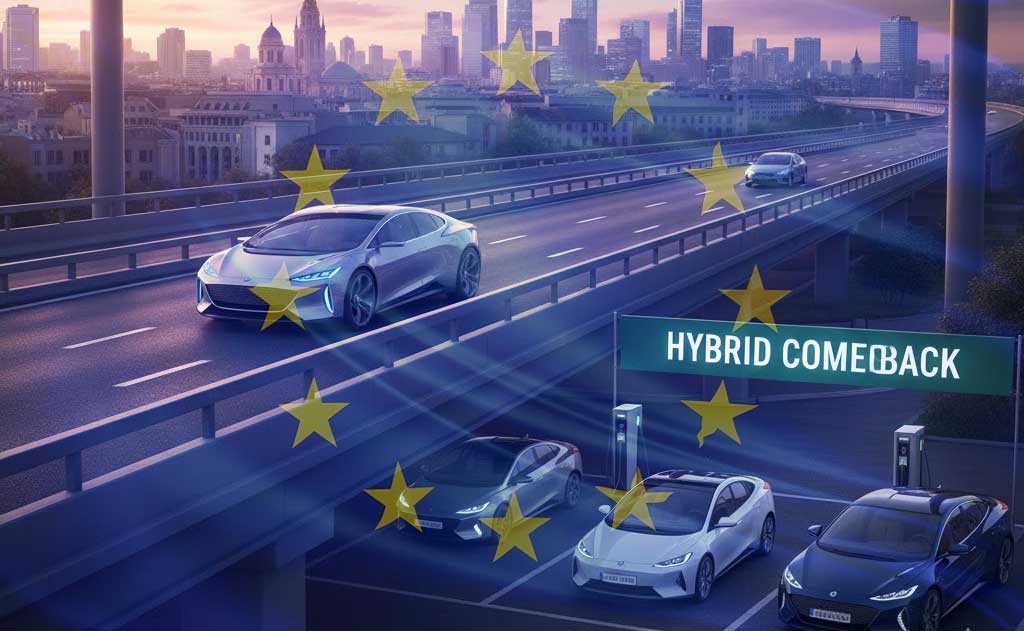
The European Commission has proposed a significant softening of its landmark 2035 zero-emission vehicle mandate, shifting from a full ban on new combustion-engine cars to a 90% reduction in CO2 emissions from 2021 levels. This change effectively allows up to 10% of new car sales beyond 2035 to include plug-in hybrids (PHEVs), range extenders, and even conventional internal combustion engines, provided the remaining emissions are offset through mechanisms like low-carbon “green” steel produced in the EU or sustainable e-fuels and biofuels.
The move, announced on December 16, 2025, comes after intense lobbying from legacy automakers and several member states, including Germany and Italy. While giants like Volkswagen and Stellantis have welcomed the “pragmatic” flexibility, pure-play EV startups and advocates are voicing strong opposition, arguing it undermines investments in battery-electric vehicles (BEVs) and risks ceding ground to Chinese competitors.
Key Details of the Policy Shift
The original 2035 regulation, part of the EU’s Fit for 55 package, required 100% zero-tailpipe emissions for new cars and vans, effectively phasing out petrol, diesel, and non-plug-in hybrid sales. The revised proposal introduces several loopholes and incentives:
- Hybrids and e-Fuels Allowance: PHEVs, range extenders (which use a small combustion engine to recharge batteries), mild hybrids, and ICE vehicles can continue beyond 2035 if emissions are compensated.
- Offset Mechanisms: Manufacturers can offset the remaining 10% of fleet emissions by incorporating EU-made low-carbon steel or using carbon-neutral synthetic e-fuels and advanced biofuels (e.g., from waste like used cooking oil).
- Additional Measures: Eased interim targets for 2030, a new category for small affordable EVs with extra CO2 credits if built in Europe, and mandates for zero-emission corporate fleets tailored by GDP per capita.
This “technological neutrality” approach aims to support the struggling European auto industry amid slower EV adoption and competition from low-cost Chinese imports.
Reactions: Legacy Automakers Cheer, EV Pure-Plays Warn of Setbacks
Traditional manufacturers have praised the changes. Volkswagen called it “economically sound,” while industry bodies like Germany’s VDA argued it provides necessary breathing room. However, EV-focused companies and startups, many signatories to the “Take Charge Europe” open letter from September 2025, are alarmed.
The letter, backed by over 150 companies including charging providers, energy firms, and startups, urged the Commission to maintain the strict 2035 target to secure Europe’s leadership in electrification. Critics warn that the dilution delays scale-up of battery production, weakens investment signals, and favors incumbents with established hybrid tech over BEV specialists.
“By reopening the door to plug-in hybrids and unscalable biofuels, we slow ourselves down in a highly competitive global race,” said one industry voice echoing startup concerns.
Technical and Environmental Implications
Hybrids offer real-world efficiency gains (often 50-100 mpg in optimal conditions) and act as a bridge technology, reducing short-term strain on electricity grids. However, lifecycle analyses show BEVs have lower overall emissions due to simpler powertrains and reliance on renewable charging.
The shift risks missing broader 2050 net-zero goals if hybrid reliance prolongs fossil fuel use. True decarbonization hinges on scaling battery tech, renewables, and fast-charging infrastructure—areas where European pure-EV firms and startups are innovating aggressively.
Market Context: EV Growth Persists Despite Policy Uncertainty
European EV registrations have surged in 2025, with battery-electric vehicles capturing around 16% market share in the first 10 months (up from 13% in 2024), according to ACEA data. Hybrids (including non-plug-ins) hold over 34%, reflecting consumer preference for transitional options.
Globally, EV sales are booming, driven by affordable Chinese models flooding Europe. This policy hesitation could accelerate loss of market share to China, which dominates battery supply chains and achieved over 50% electrified vehicle penetration domestically.
Outlook: Innovation in Focus
As the proposal heads to the European Parliament and Council for negotiation in 2026, the debate intensifies over balancing industrial competitiveness with climate ambition.
At VFutureMedia, we’ll continue tracking impacts on cutting-edge developments like solid-state batteries, ultra-fast charging networks, and next-gen EV platforms from European innovators.
I’m Ethan, and I write about the tech that’s actually going to change how we live — not the stuff that just sounds impressive in a press release. I cover AI, EVs, robotics, and future tech for VFuture Media. I was on the ground at CES 2026 in Las Vegas, walking the show floor so I could give you a real read on what matters and what’s just noise. Follow me on X for daily takes.


Leave a Comment