
By Ethan Brooks | May 9, 2026 | vFutureMedia.com
Latest 2026 Hantavirus updates on the MV Hondius cruise ship outbreak (8 cases, 3 deaths, Andes virus). CDC says US risk extremely low. Full details on symptoms, transmission, prevention, and what Americans need to know.
A rare but serious rodent-borne virus is making headlines in May 2026 after a cluster of cases emerged aboard an expedition cruise ship in the South Atlantic. While health authorities emphasize that the risk to the general public — including in the United States — remains extremely low, the situation has renewed attention on hantavirus pulmonary syndrome (HPS) and prevention strategies.
At vFutureMedia, we provide clear, fact-based analysis on emerging health threats. Here’s everything Americans need to know about the current hantavirus developments, historical context, symptoms, and practical prevention steps.
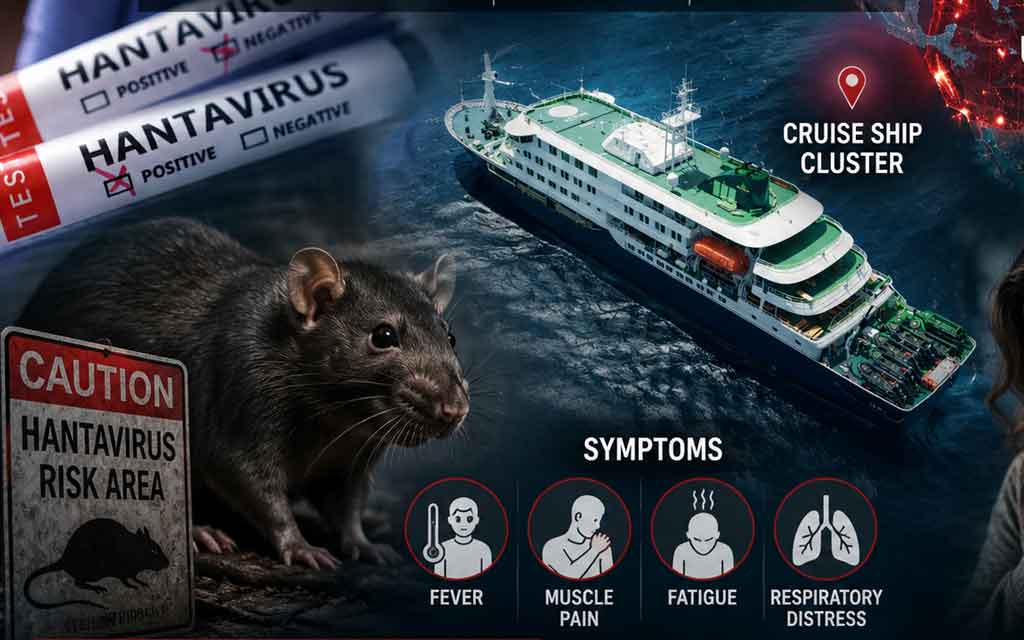
Current Hantavirus Outbreak: MV Hondius Cruise Ship (May 2026)
- Origin: The Dutch-flagged expedition ship MV Hondius departed Ushuaia, Argentina, on April 1, 2026, for Antarctic and South Atlantic routes.
- Cases: As of May 8, 2026, eight cases reported (six laboratory-confirmed as Andes virus, two probable). Three deaths have occurred (case fatality ratio ~38%).
- Transmission Note: The Andes virus strain involved is the only hantavirus known to transmit person-to-person in rare cases, which likely contributed to the shipboard cluster.
- Response: The ship is heading toward the Canary Islands under isolation protocols. Multiple countries are monitoring passengers and contacts who disembarked earlier. The CDC has activated a Level 3 emergency response (lowest level) and is coordinating with states.
U.S. Involvement: At least five states (Arizona, California, Georgia, Texas, Virginia) plus others are monitoring a small number of returned passengers. No U.S. cases linked to this outbreak have been reported, and officials describe the risk to the American public as “extremely low.” Routine travel continues normally.
Hantavirus in the United States: Background & Statistics
Hantavirus is not new to the U.S. It primarily causes Hantavirus Pulmonary Syndrome (HPS).
- Total U.S. Cases (1993–2023): 890 laboratory-confirmed cases.
- Annual Average: 20–40 cases per year, mostly in western and southwestern states.
- Highest Burden States: New Mexico (126), Colorado (120), Arizona (91).
- Fatality Rate: Approximately 30–40% in reported HPS cases.
Domestic transmission occurs almost exclusively through contact with infected rodents (deer mice, cotton rats, etc.) — not person-to-person (except rare Andes virus cases).
Symptoms: What to Watch For
Hantavirus infection typically progresses in two phases:
- Early (Prodromal) Phase (3–5 days): Flu-like symptoms including fever, fatigue, muscle aches, headaches, chills, dizziness, nausea, vomiting, diarrhea, and abdominal pain.
- Cardiopulmonary Phase: Sudden onset of cough, shortness of breath, chest tightness, low blood pressure, and fluid buildup in the lungs leading to severe respiratory distress.
Seek immediate medical care if you develop these symptoms after potential rodent exposure. Early supportive care in an ICU significantly improves outcomes.
Transmission & Risk Factors
- Primary Route: Inhaling aerosolized virus from rodent urine, droppings, or saliva (especially when cleaning enclosed spaces).
- Other Routes: Rodent bites, contaminated food, or direct contact with nesting materials.
- No Vaccine or Specific Antiviral: Treatment is supportive (oxygen, ventilation, fluids).
High-risk activities include cleaning sheds, cabins, barns, or areas with rodent droppings without proper protection.
Prevention: How to Stay Safe in 2026
The CDC and health experts recommend these practical steps:
- Seal entry points in homes, garages, and cabins.
- Use traps or professional pest control to reduce rodent populations.
- When cleaning rodent areas: Wear gloves, N95 mask, and wet-clean surfaces with disinfectant (do not sweep or vacuum dry droppings).
- Store food in rodent-proof containers.
- Avoid camping in areas with visible rodent activity.
For travelers: Practice good hygiene and avoid contact with wild rodents.
Why This Is Not the “Next COVID”
- Hantavirus is not highly contagious between people (except rare Andes strain cases).
- It requires specific rodent exposure in most strains.
- Global risk remains low according to WHO assessments.
- U.S. public health systems are actively monitoring and have decades of experience managing domestic cases.
Final Thoughts: Stay Informed, Not Alarmed
The 2026 cruise ship hantavirus cluster is a serious but contained event. For most Americans, the everyday risk comes from local rodent control rather than international travel. By following simple prevention steps and seeking prompt medical attention if symptoms appear after exposure, you can minimize concerns.
vFutureMedia will continue monitoring developments from the CDC, WHO, and state health departments. As always, rely on verified public health sources over social media speculation.
Have you taken extra rodent prevention steps this spring? Share your thoughts or questions in the comments.
Ethan Brooks is a senior technology and health analyst at vFutureMedia.com, covering emerging public health threats, science policy, and innovation. Follow him on X @EthanBrooksVF for timely updates.
Share this post to help friends and family stay informed about the latest hantavirus developments!




Leave a Comment