
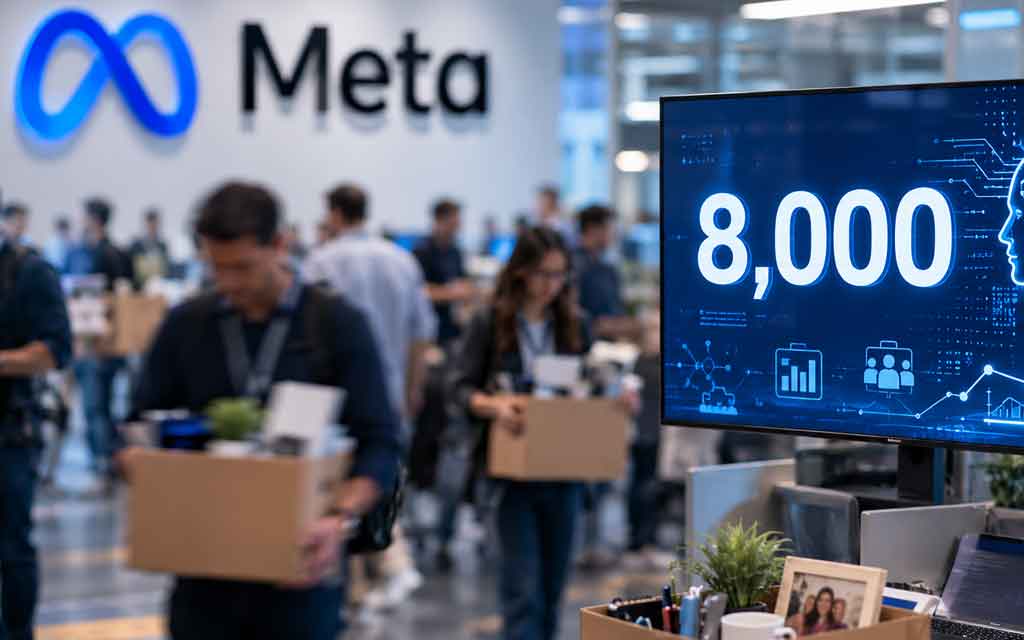
As a major American tech giant, Meta is set to deliver termination notices to roughly 8,000 employees (10% of its workforce) on Wednesday, May 20, 2026, with emails dropping at 4 a.m. local time in coordinated global waves. North American teams have been told to work from home as the cuts land. This AI-driven restructuring isn’t just another round of belt-tightening — it’s a stark reality check for the U.S. tech workforce.
From Silicon Valley to Austin and New York, American professionals are watching closely. Many see this as the new normal in an industry racing toward AI dominance.
Why Meta’s Layoffs Hit Hard for American Workers: The AI Efficiency Reset
Meta’s Chief People Officer Janelle Gale laid it out clearly in internal memos: the company is flattening management layers, creating smaller “pods,” reassigning 7,000 people to new AI initiatives, and closing 6,000 open roles. The goal? Run leaner to offset massive AI investments ($125–145 billion in capex this year).
American wisdom from the trenches: “This doesn’t feel like just another layoff — it’s a full structural reset,” noted employees on internal forums and platforms like Blind. Many describe “28 days of hell” leading up to the date, with low morale, keystroke tracking for AI training, and a sense of dread. One recurring theme from U.S.-based staff: the company is training the very AI tools that may replace more roles down the line.
Veteran tech workers in America are offering hard-earned advice:
- Diversify your skills now. Traditional coding or mid-level management roles are under pressure. AI fluency, prompt engineering, data analysis, and agent-building experience are the new must-haves.
- Build your personal brand. Update LinkedIn today. Highlight impact metrics and any AI exposure. American recruiters emphasize that visibility matters more than ever in a flooded market.
- Network relentlessly. Join AI-focused communities, attend meetups in hubs like the Bay Area or remote Discord/Slack groups. Many laid-off Meta alumni from previous rounds say connections saved them.
What the Severance and Support Look Like (U.S. Focus)
For American employees (especially in California and other key states), Meta is offering:
- 16 weeks of base pay + additional weeks based on tenure
- Continued healthcare
- Career transition support
Still, many U.S. workers point out the emotional and financial toll. With high living costs in tech hubs, the “wise move” repeated across forums is building an emergency fund covering 6–12 months.
Broader American Perspective: This mirrors trends at other U.S. tech leaders. Efficiency drives fueled by AI are reshaping the industry. While Meta reports strong revenue, the human cost is real — echoing cuts since 2022 that eliminated tens of thousands of roles.
Practical Advice from American Tech Veterans
- Treat this as a wake-up call, not a crisis. Use the uncertainty to audit your skill set. Free or low-cost resources like Coursera, YouTube, and official AI certifications are popular among U.S. professionals pivoting.
- Protect your mental health. Many Americans recommend therapy resources (often covered in severance) and leaning on family/friends during transitions.
- Look beyond Big Tech. Startups, enterprise AI roles, government tech contracts, and even non-tech sectors adopting AI are hiring.
- Document everything. Keep records of achievements — vital for negotiations or future interviews.
The Long Game: Will AI Create or Destroy American Tech Jobs?
American optimism mixed with realism prevails. Many believe AI will create higher-value roles, but the transition is painful. As one U.S. engineer shared anonymously: “Adapt or get left behind. The companies winning are those whose people evolve with the tech.”
At Vufutre Media, we’re committed to delivering grounded insights on the future of work, especially from the American tech ecosystem that drives global trends.
What’s your take as an American professional or observer? Drop a comment below — have you been through Meta (or similar) layoffs? What advice would you give?
Last updated: May 19, 2026. Sources: Reuters, Bloomberg, Business Insider, employee reports.




Leave a Comment