
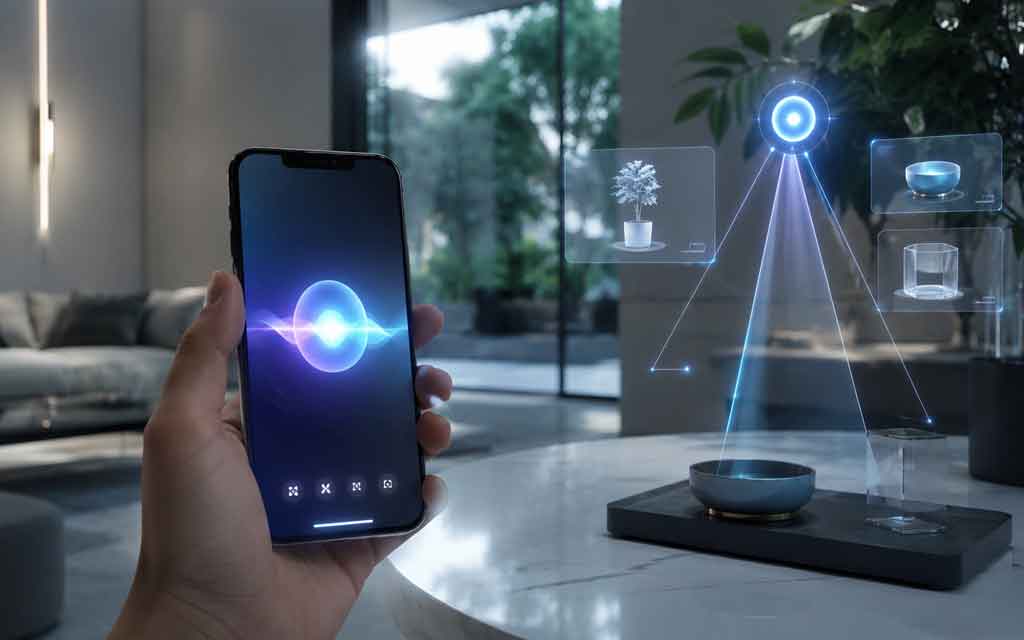
Apple unveiled Siri AI at WWDC 2026 — the biggest upgrade to Siri ever. Here’s everything new: features, release date, privacy improvements, device support, and how it compares to previous versions.
Apple’s annual Worldwide Developers Conference (WWDC) on June 8, 2026, delivered one of the most significant updates to its ecosystem in years. The star of the show was Siri AI, a complete rebuild of Apple’s voice assistant powered by Apple Intelligence.
Described by Apple as “our most personal Siri update ever,” the new Siri moves far beyond simple voice commands. It now understands personal context, performs complex on-device actions, offers visual intelligence, and engages in natural, back-and-forth conversations.
This article breaks down everything announced about Siri AI, how it works, when it will be available, which devices support it, and what it means for the future of AI assistants.
What Is New in Siri AI?
Apple completely rebuilt Siri with a new architecture centered around the user and their devices. The update combines on-device processing with private cloud compute to deliver more intelligent, contextual, and private assistance.
Key upgrades include:
- Personal Context Understanding: Siri now knows your routines, relationships, and data across apps. It can pull relevant information from your emails, messages, photos, and calendar without you spelling everything out.
- On-Screen Awareness: Siri can see what’s on your screen and take actions based on it. For example, if you’re looking at a photo, you can ask Siri to edit it or find similar images.
- App Actions: Siri can perform complex tasks across multiple apps. It can draft emails, edit photos, create calendar events, or even control HomeKit accessories using natural language.
- Visual Intelligence: Integrated deeply into the Camera app and system-wide. Point your camera at something and ask Siri questions about it. On Mac, you can use a keyboard shortcut to query selected content. On iPad, it works with screenshots.
- Image Understanding & Generation: Siri can analyze images and, through Image Playground, generate new images in various styles.
- Conversational Experience: The new Siri supports rich, detailed answers and natural back-and-forth dialogue instead of one-shot commands.
- Dedicated Siri App: A new app lets you revisit past conversations. All history syncs privately via iCloud.
- Writing Tools: System-wide writing assistance that matches your communication style, offers feedback, and provides automatic proofreading — even in third-party apps.
- Expressive Voices & Improved Dictation: More natural and expressive voices with significantly better accuracy in spelling, punctuation, and capitalization.
These features represent a major leap from the previous Siri, which many users found limited and frustrating.
Old Siri vs New Siri AI: Comparison
Old Siri vs New Siri AI (2026)
Context Awareness
- Old Siri: Very limited
- New Siri AI: Deep personal and on-screen context awareness
Conversation Style
- Old Siri: One-shot commands
- New Siri AI: Natural back-and-forth conversations
Visual Intelligence
- Old Siri: Basic capabilities
- New Siri AI: Advanced camera, screenshot, and screen-awareness features
App Integration
- Old Siri: Simple app commands
- New Siri AI: Complex multi-app actions and workflows
Writing Assistance
- Old Siri: Not available
- New Siri AI: Full system-wide writing tools
Privacy
- Old Siri: Mixed processing model
- New Siri AI: Strong on-device processing with Private Cloud Compute
Image Generation
- Old Siri: Not available
- New Siri AI: Available through Image Playground
Dedicated App
- Old Siri: No dedicated app
- New Siri AI: Dedicated app with conversation history
Release Status
- Old Siri (2026): Widely available
- New Siri AI: Developer beta available now, public beta next month, full release planned for Fall 2026
How Siri AI Actually Works
Apple emphasized privacy throughout the keynote. The new Siri uses a combination of:
- On-device models for most tasks (faster and more private)
- Private cloud compute for more complex requests (data is not stored or accessible to Apple)
A new “system orchestrator” intelligently routes requests between on-device and cloud processing while maintaining strong privacy protections.
Apple also revealed it collaborated with Google, using Gemini technology in parts of its foundation models while still prioritizing on-device capabilities and privacy.
This hybrid approach allows Siri AI to handle both simple local tasks and more demanding requests that require broader knowledge.
Release Timeline and Availability
- Developer betas: Available immediately after WWDC 2026
- Public beta: Expected next month (July 2026)
- Full release: Fall 2026 alongside iOS 27, iPadOS 27, macOS 27 (Golden Gate), watchOS 27, and visionOS 27
Important regional notes:
- Siri AI will launch in English first
- It will not be available initially on iOS and iPadOS in the European Union due to regulatory requirements
- China rollout is also delayed while Apple works through local regulatory needs
This staggered rollout is typical for Apple’s major AI features but may frustrate users in restricted regions.
Which Devices Support Siri AI?
Siri AI runs on the same devices that currently support Apple Intelligence:
- iPhone 15 Pro and later
- iPhone 16 series
- Recent iPads with M-series chips
- Macs with M1 and later chips
No new hardware was announced at WWDC 2026. Apple is focusing on making existing devices significantly smarter through software.
Additional integrations:
- AirPods: Custom EQ and tighter Siri AI integration
- CarPlay: Enhanced Siri AI experience
- Home app: Better camera analysis and accessory control
- Vision Pro: Spatial computing features and 3D visualization
What This Means for Users
For average users, Siri AI should feel like a genuinely useful assistant rather than a gimmick. Everyday tasks like summarizing emails, editing photos with natural language, finding information across apps, and getting contextual help should become much smoother.
Power users and professionals will benefit from deeper writing tools, better dictation, and the ability to automate complex workflows using natural language through Shortcuts.
However, the real test will come after the fall 2026 release when millions of users start interacting with it daily. Early impressions from developers suggest the conversational quality and visual features are the biggest upgrades.
Competitive Landscape: How Siri AI Stacks Up
Apple is entering a crowded field:
- OpenAI’s ChatGPT has strong conversational abilities and plugin support
- Google Gemini is deeply integrated into Android and Google services
- Microsoft Copilot (powered by OpenAI) has strong enterprise presence
Apple’s advantages appear to be:
- Superior privacy architecture
- Deep integration across its own hardware and software ecosystem
- On-device processing for speed and privacy
Its disadvantages include:
- Later arrival to advanced AI features
- Regional regulatory delays
- No new hardware announced alongside the software update
Whether Siri AI can close the gap will depend heavily on execution during the fall 2026 launch and how quickly Apple expands language and regional support.
Limitations and Realistic Expectations
While the update is impressive, there are some caveats:
- Many advanced features still require newer Apple Silicon devices
- EU and China users will have to wait longer
- Daily limits may apply to cloud-based features (higher limits with iCloud+)
- Real-world performance will only be clear after widespread adoption
Apple has historically been cautious with AI rollouts, prioritizing reliability and privacy over speed. This approach may frustrate some users who want features immediately but could pay off in long-term trust.
FAQs About Siri AI at WWDC 2026
When will Siri AI be available to the public? Public beta is expected in July 2026, with full release planned for fall 2026.
Which devices support the new Siri? iPhone 15 Pro and later, recent iPads and Macs with Apple Silicon. No new hardware was announced.
Is Siri AI available in the EU and China at launch? No. It will be delayed in the EU (iOS/iPadOS) and China due to regulatory requirements.
Does Siri AI work offline? Many features work on-device. More complex requests use private cloud compute.
Will there be new iPhones or Macs with Siri AI? No new hardware was announced at WWDC 2026. The update focuses on software improvements for existing devices.
How is privacy handled? Apple uses on-device processing + private cloud compute. Data is not stored or accessible to Apple in the cloud.
Final Thoughts
Apple’s Siri AI update at WWDC 2026 represents the company’s most serious attempt yet to deliver a truly intelligent, personal, and private AI assistant. By rebuilding Siri from the ground up with deep system integration and strong privacy protections, Apple is playing to its traditional strengths.
The real question is whether this upgrade will be enough to change how people interact with their Apple devices daily. Early signs from developers are positive, especially around conversational ability and visual intelligence.
As with all major Apple AI features, the proof will be in the pudding once it reaches hundreds of millions of users this fall.
For now, developers and early adopters can start testing the new capabilities in the developer beta.
What feature of the new Siri AI excites you the most? Let us know in the comments below.


Leave a Comment