
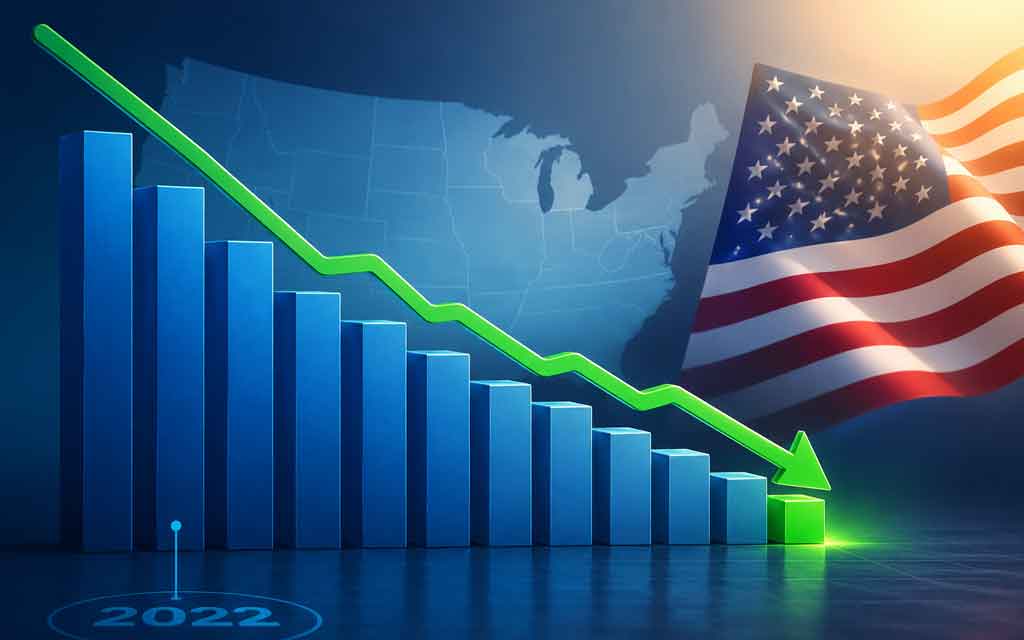
The odds of the United States entering a recession have fallen to their lowest levels since 2022, according to multiple models, prediction markets, and economist surveys.
As of mid-July 2026, key indicators — including the New York Fed’s recession probability model, market-implied odds, and forecaster consensus — point to a remarkably resilient economy despite earlier concerns about tariffs, inflation, and policy uncertainty.
Current Recession Probability Readings
- New York Fed Model: Around 15-17% chance of recession in the next 12 months (recent readings have been in this range, significantly down from higher levels in prior years).
- Prediction Markets (e.g., Kalshi): Odds of a recession in 2026 or 2027 have dropped below 10% in some contracts — the lowest since 2022.
- Economist Surveys: Bloomberg and other forecaster polls show recession probabilities in the 30-40% range for the coming year, down from higher estimates earlier in the cycle.
- JPMorgan Research: Recently lowered its US/global recession probability to 40% from 60%, citing stronger-than-expected growth and labor market stability.
These figures represent a notable improvement from peaks seen in 2023-2025 when recession fears were more pronounced.
Why Recession Risks Have Declined
Several factors have contributed to the improved outlook:
Strong Labor Market and Consumer Resilience Unemployment remains relatively low and stable. Job gains have continued, and consumer spending — while moderating in some areas — has held up better than many pessimists expected.
AI and Tech Investment Boom Massive capital expenditure on data centers, AI infrastructure, and related technologies has provided a significant tailwind to growth. Companies like hyperscalers are driving industrial-like investment cycles.
Policy and Rate Environment The Federal Reserve’s careful management of monetary policy, combined with expectations of gradual easing, has supported markets. Fiscal policy adjustments and tariff negotiations have introduced uncertainty but have not derailed growth as feared by some.
Cooling Inflation Inflation has moderated, giving the Fed more room to maneuver without triggering new shocks.
Market Regime Adaptation Businesses and consumers have adapted to the post-pandemic and higher-rate environment, leading to more sustainable growth patterns.
What the Data Shows
The New York Fed’s Treasury spread-based recession probability model, a well-regarded indicator, has trended lower. Prediction markets, which aggregate trader wisdom on economic outcomes, have shown particularly sharp declines in recession odds.
Economists at major banks and research firms have revised forecasts upward, with many now projecting continued (if modest) GDP growth through 2026 and beyond.
Risks That Remain
While probabilities are low, risks have not disappeared entirely:
- Geopolitical tensions and trade policy uncertainty could still disrupt supply chains or confidence.
- Housing market challenges and high debt levels in some sectors remain vulnerabilities.
- If AI investment slows or delivers less productivity impact than hoped, growth could weaken.
- Unexpected inflation resurgence or labor market softening could shift the Fed’s path.
Most forecasters describe the current scenario as a “soft landing” or “no landing” (sustained growth) rather than recession.
Implications for Investors and Businesses
Lower recession odds are generally positive for risk assets:
- Stock markets have responded favorably to resilient data.
- Corporate investment, particularly in tech and AI, remains robust.
- Borrowing costs and planning horizons become more predictable.
However, investors should remain cautious. Low probabilities do not mean zero risk, and markets can still experience volatility from other factors.
Outlook for the Rest of 2026 and Beyond
Most analysts now expect the US economy to continue expanding through 2026, with growth in the 1.8-2.5% range depending on the source. Unemployment is projected to stay relatively stable, and inflation is expected to remain manageable.
The probability of a recession hitting its lowest point since 2022 suggests the economy has navigated recent challenges better than anticipated. Continued strength in AI-driven sectors, combined with adaptive policy, could support further resilience.
That said, monitoring key indicators — employment data, inflation readings, consumer confidence, and corporate earnings — will be essential. Surprises in any direction could quickly shift probabilities.
Final Thoughts
The decline in US recession probability to levels not seen since 2022 is a welcome sign of economic strength amid a complex global environment. It reflects the resilience of the American economy, the impact of technological investment, and effective policy navigation.
For businesses, investors, and policymakers, this environment favors strategic optimism tempered with vigilance. The AI supercycle and other structural tailwinds provide reasons for confidence, but risks around trade, geopolitics, and execution remain.
As we move through the second half of 2026, the data suggests a soft landing is increasingly the base case — but careful monitoring will be key to staying ahead of any shifts.
Frequently Asked Questions
What is the current probability of a US recession? Models and markets put it in the low-to-mid teens to around 30-40% depending on the source and timeframe — the lowest readings since 2022.
Which model is most reliable? The New York Fed’s Treasury spread model is widely followed for its historical track record. Prediction markets like Kalshi provide real-time crowd wisdom.
Why have recession odds fallen? Strong labor market data, robust AI/tech investment, cooling inflation, and adaptive policy have supported growth better than expected.
Does a low probability mean no recession? No. Probabilities can change quickly with new data. Even low odds warrant preparedness.
What should investors do? Focus on quality companies with strong balance sheets, particularly those benefiting from AI and productivity trends, while maintaining diversification.
Bottom Line The probability of a US recession has dropped to its lowest point since 2022, signaling greater economic resilience heading into the second half of 2026. AI investment, steady job growth, and moderating inflation have been key drivers.
While risks remain, the current outlook supports cautious optimism. Continued monitoring of economic indicators will be crucial as new data emerges.
For more on economic forecasts, AI’s impact on growth, and market trends, stay tuned to vfuturemedia.com.




Leave a Comment