
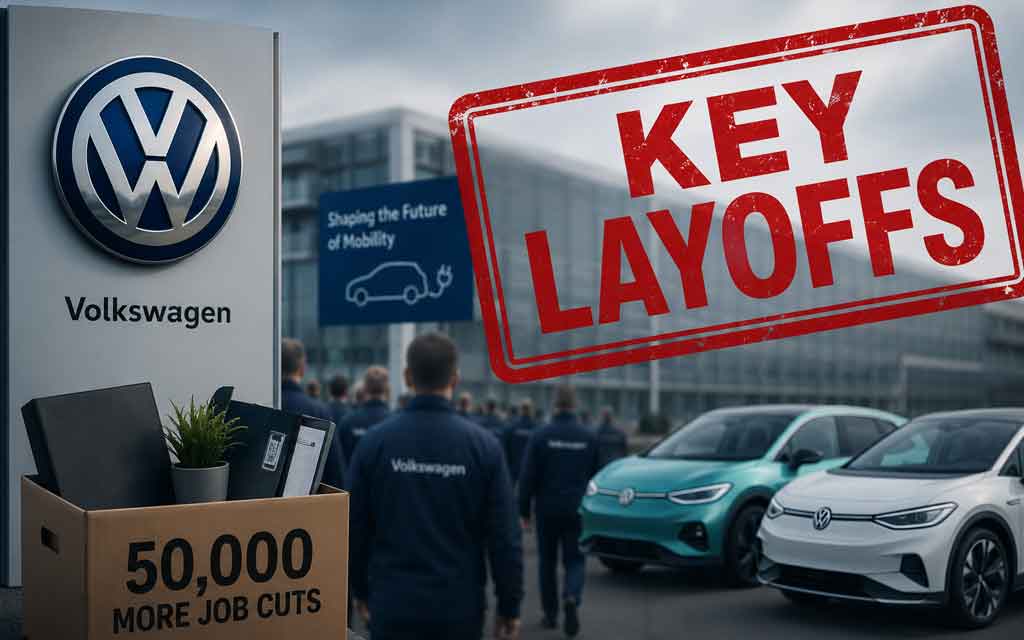
Volkswagen Group CEO Oliver Blume is accelerating cost-cutting efforts, proposing up to 50,000 additional job reductions across the company as Europe’s largest automaker grapples with fierce competition, slowing EV demand in key markets, and the need to restore profitability.
The potential cuts would add to previous restructuring initiatives and represent one of the most significant workforce reductions in the company’s recent history.
Details of the Proposed Job Cuts
According to reports, Blume and management are targeting significant headcount reductions in Germany and other European operations. The moves aim to address:
- High fixed costs in traditional manufacturing.
- Overcapacity amid shifting demand toward electric vehicles.
- Intense competition from Chinese EV makers and legacy rivals investing heavily in new technologies.
The proposal comes amid ongoing negotiations with works councils and unions, who are expected to push back strongly against large-scale layoffs.
Reasons Behind the Restructuring Push
Several pressures are driving Volkswagen’s aggressive cost-saving plan:
EV Transition Challenges The shift to electric vehicles has been more costly and slower than anticipated in some segments. High development expenses, battery costs, and infrastructure gaps have strained margins.
Competition from China Chinese automakers are flooding European markets with affordable EVs, pressuring pricing and market share for traditional players like VW.
Profitability Concerns Volkswagen’s core brands have faced margin compression. Management sees workforce optimization as essential to fund future investments in software, autonomous driving, and next-generation platforms.
Broader European Auto Industry Woes Many European manufacturers are confronting similar issues: high labor costs, regulatory pressures for emissions, and the need to retool factories for electrification.
Impact on Workers and Operations
If implemented, the cuts could affect:
- Manufacturing and assembly roles.
- Administrative and support functions.
- Potentially some R&D positions, though core engineering may be protected for future tech development.
Volkswagen employs tens of thousands in Germany alone. Any major reduction would trigger intense union negotiations, possible strikes, and government scrutiny given the company’s economic importance.
Blume has emphasized that the goal is a leaner, more competitive organization capable of thriving in the electric and software-defined vehicle era.
Volkswagen’s Transformation Strategy
Despite the job cut focus, Volkswagen is continuing major investments:
- New EV platforms and models.
- Battery production expansion.
- Software and digital services growth.
- Partnerships and potential M&A in key technologies.
The restructuring is framed as necessary to free up capital for these strategic priorities rather than a retreat from innovation.
Broader Context in the Auto Sector
Volkswagen is not alone:
- Other European automakers have announced or are planning significant cost reductions.
- US and Asian competitors are also optimizing workforces while scaling new technologies.
- The industry faces a multi-year transition period where legacy ICE businesses must subsidize EV growth.
Labor unions across Europe have warned that aggressive cuts could harm skills retention and long-term competitiveness.
What This Means for Investors and the Industry
For investors:
- Short-term margin improvement potential but execution and labor risks.
- Long-term success depends on successful EV and software execution.
- Valuation sensitivity to profitability turnaround.
For the wider auto sector:
- Continued pressure on traditional manufacturing jobs.
- Acceleration of automation and efficiency measures.
- Potential consolidation or partnerships as companies seek scale.
The coming months of negotiations will be critical in determining the final scale and implementation of Volkswagen’s plans.
Frequently Asked Questions
How many jobs is Volkswagen planning to cut? Up to 50,000 additional positions as part of cost-cutting initiatives under CEO Oliver Blume.
Why is Volkswagen cutting jobs? To reduce costs, improve profitability, and fund the transition to electric and software-defined vehicles amid competition and slowing EV demand.
Will the cuts affect German factories? Likely yes, given the concentration of VW operations in Germany, though negotiations with works councils will shape the final impact.
Is this the end of Volkswagen’s EV push? No. Management views the restructuring as necessary to make the company more competitive in EVs and future technologies.
How are unions responding? Strong opposition is expected, with potential for negotiations, protests, or strikes to protect worker interests.
Bottom Line Volkswagen CEO Oliver Blume is pushing for up to 50,000 more job cuts as the automaker seeks to streamline operations and restore profitability during its costly transition to electric vehicles. The move reflects broader challenges facing European carmakers in a competitive, rapidly evolving industry.
While painful for workers, the restructuring aims to position Volkswagen for long-term success in software, EVs, and new mobility. The outcome of union negotiations will significantly influence the final plan and its impact on the company and region.
For more on the auto industry transformation, EV market trends, and corporate restructuring, stay tuned to vfuturemedia.com.




Leave a Comment