
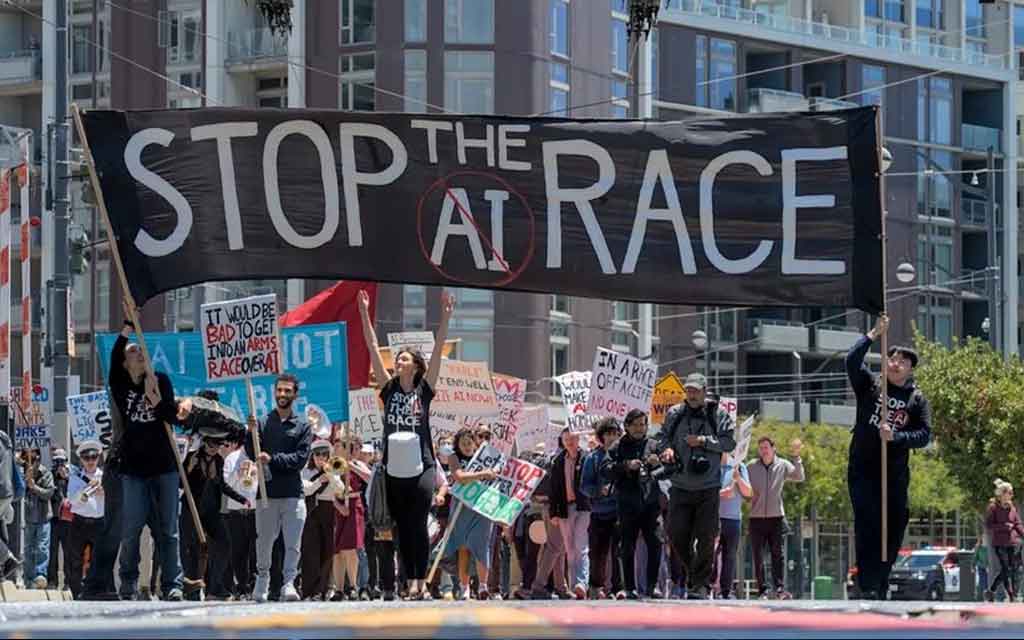
Hundreds of demonstrators gathered in San Francisco this week to protest outside the offices of leading AI companies — OpenAI, Anthropic, and Google DeepMind — calling for an immediate halt to further AI development.
The protests, part of a growing wave of anti-AI activism, highlight deepening public concerns over safety risks, job displacement, ethical issues, and the rapid pace of technological change. Protesters chanted slogans and held signs demanding stricter regulation and a pause on frontier model training.
What Happened at the Protests
Demonstrators converged on key AI labs in the Bay Area:
- OpenAI headquarters saw large crowds calling attention to existential risks and corporate influence.
- Anthropic offices drew protesters focused on alignment and safety concerns.
- Google DeepMind faced criticism over the company’s vast resources and rapid scaling of AI capabilities.
The events featured speeches from AI safety advocates, affected workers, and community organizers. Some participants linked the protests to broader movements, including the recent Summer of Ludd festival in New York, which featured Gen Z activists chanting against major AI models.
Signs and chants included calls to “Pause AI,” “Protect Humanity First,” and demands for government intervention before more powerful systems are released.
Drivers of the Anti-AI Protest Movement
Several factors have fueled this activism in 2026:
Safety and Existential Risks Critics argue that frontier AI systems could pose catastrophic risks if not properly controlled. High-profile warnings from figures in the AI community have amplified these concerns.
Job Displacement and Economic Impact Stories of layoffs in tech alongside AI productivity gains have heightened fears about widespread unemployment, especially in creative, coding, and knowledge work sectors.
Ethical and Societal Concerns Issues around bias, misinformation, deepfakes, surveillance, and corporate concentration of power in a few AI labs have driven opposition.
Youth-Led Skepticism Gen Z, the most digitally native generation, is increasingly vocal about tech’s downsides. Events like the Summer of Ludd reflect a desire for more analog, community-focused living and resistance to constant AI integration.
Recent Triggers
- Ongoing lawsuits and controversies (e.g., Apple vs OpenAI trade secrets).
- High-profile AI model releases and capability jumps.
- Visible corporate investment in massive compute infrastructure.
Perspectives from All Sides
Protesters’ View: The unchecked race for more powerful AI is dangerous. A pause is needed to ensure safety research catches up and societal impacts are properly addressed.
Industry Response: Companies like OpenAI, Anthropic, and Google emphasize responsible development, safety teams, and the benefits of AI for science, medicine, productivity, and human flourishing. They argue pausing would cede ground to less responsible actors (including state competitors).
Broader Public Opinion: Polls show mixed views. Many Americans support AI innovation but want stronger safeguards, transparency, and protections for jobs and privacy. A vocal minority supports more radical pauses or regulations.
Expert Divide: The AI community remains split, with some researchers calling for slowdowns or international coordination, while others push for continued rapid progress to maintain competitive advantages.
Connection to Wider Movements
The San Francisco protests align with other actions:
- Summer of Ludd festival in NYC with anti-AI chants.
- Union actions (e.g., Hyundai workers striking over robot deployment).
- Growing digital wellness and anti-surveillance activism.
These reflect a cultural undercurrent questioning whether “move fast and break things” is still the right approach for transformative technology.
Potential Impact and Next Steps
While protests alone rarely halt technological progress, they can influence:
- Public opinion and media narrative.
- Regulatory pressure on lawmakers.
- Corporate decisions around transparency and safety investments.
- Talent attraction/retention for companies perceived as responsible.
AI labs have responded with statements reaffirming commitment to safety while continuing development. Expect increased focus on communication, policy engagement, and perhaps more visible safety measures in coming months.
Outlook for AI Regulation and Development
The protests add to calls for greater oversight. Possible outcomes include:
- Stronger voluntary industry standards.
- New legislation on safety testing, reporting, and compute governance.
- International coordination efforts.
- Continued innovation with heightened scrutiny.
The tension between acceleration and caution is likely to define AI policy debates through the rest of 2026 and beyond.
Frequently Asked Questions
Why are people protesting AI companies in San Francisco? Protesters demand a halt or significant slowdown in AI development due to safety risks, job displacement, ethical concerns, and rapid societal change.
Which companies were targeted? OpenAI, Anthropic, and Google DeepMind offices were the main focus.
Is this part of a larger movement? Yes, it connects to events like the Summer of Ludd festival and other labor and digital wellness activism.
How are AI companies responding? They typically reaffirm commitment to responsible development and safety research while arguing that pausing would be counterproductive.
What are the main demands? A pause on frontier AI training, stronger regulations, more transparency, and protections for workers and society.
Bottom Line Hundreds protested outside OpenAI, Anthropic, and Google DeepMind offices in San Francisco, demanding a halt to AI development. The demonstrations reflect growing public unease with the pace and direction of AI advancement, particularly among younger activists.
While innovation continues at full speed, these protests serve as a reminder that societal acceptance and governance must keep pace with technological capability. The coming months will likely see intensified debate over how best to balance AI’s risks and rewards.
For more on AI safety, regulation, and cultural reactions, stay tuned to vfuturemedia.com.




Leave a Comment