
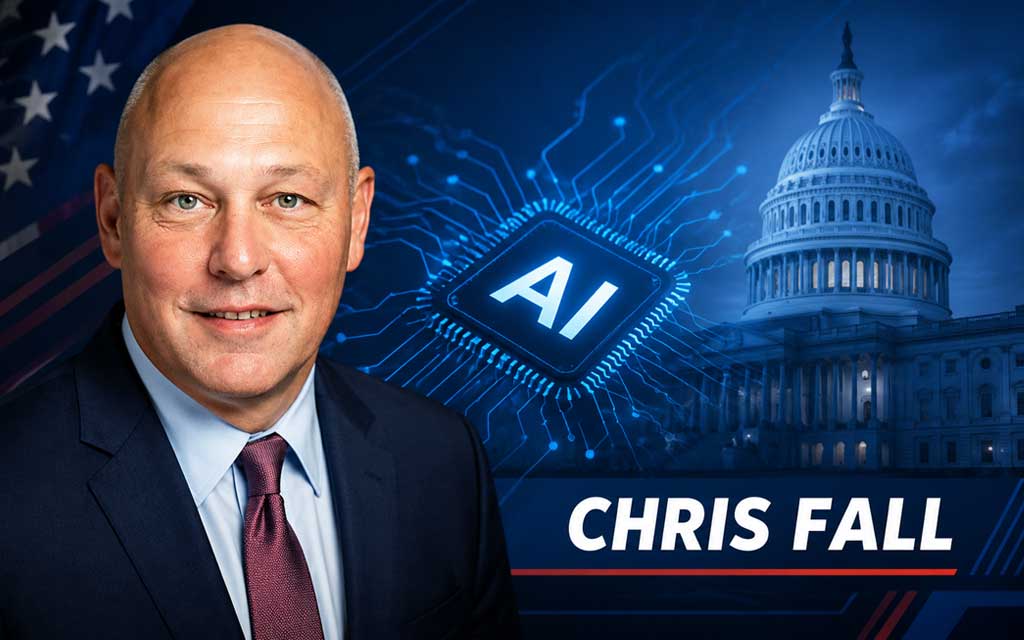
Chris Fall, director of the Trump administration’s Center for AI Standards and Innovation (CAISI), resigns after only three months. Details on the shakeup, interim leadership, and implications for US AI policy.
Breaking: Leadership Shakeup at US AI Safety Agency
July 20-21, 2026 — Chris Fall, the head of the Trump administration’s Center for AI Standards and Innovation (CAISI), has resigned just three months after taking the role. The Commerce Department confirmed the departure, marking another leadership change in the administration’s evolving approach to artificial intelligence oversight.
Fall was appointed in April 2026 to lead the agency, which was rebranded from the former U.S. AI Safety Institute. His short tenure highlights ongoing turbulence in federal AI governance under President Trump’s second term.
Who is Chris Fall and What Was His Role?
Chris Fall served as Director of CAISI, the federal AI testing and standards institute housed under the Department of Commerce / National Institute of Standards and Technology (NIST).
Key responsibilities included:
- Developing testing methods and standards for advanced AI systems.
- Overseeing voluntary reviews of frontier models from companies like OpenAI, Anthropic, Google, and xAI.
- Serving as a key point of contact for industry on AI safety, security, and innovation standards.
The agency was reoriented under Trump to emphasize innovation and standards rather than heavy regulation, dropping “Safety” from its previous name.
Details of the Resignation
- Timeline: Appointed late April 2026; resigned Monday, July 20, 2026 — approximately three months in the role.
- Reason: No official explanation was provided by the Commerce Department or Fall himself.
- Interim Leadership: Arvind Raman (also referred to as director of NIST or overseeing the relevant Commerce office), who is of Indian origin, will serve as acting director of CAISI and continue overseeing the agency. He will also help search for a permanent replacement.
Commerce spokespersons confirmed the move to multiple outlets including CNBC, Reuters, Axios, and Business Insider.
Context: Ongoing Changes in Trump AI Policy
This resignation fits into a broader pattern of leadership shifts:
- Earlier departure of Elizabeth Kelly, the inaugural director of the original AI Safety Institute, in early 2025 as the administration shifted course.
- Rebranding of the institute to CAISI in mid-2025 under Commerce Secretary Howard Lutnick, with a stronger focus on standards, innovation, and industry collaboration rather than restrictive safety mandates.
- Other high-profile exits, including White House AI adviser Sriram Krishnan earlier in 2026.
The Trump administration has prioritized accelerating AI development, reducing regulatory burdens, and competing with China, while still maintaining some testing and standards functions.
Implications for US AI Policy and Industry
- Uncertainty in Oversight: Short tenures raise questions about stability in federal AI testing and standards-setting at a time when models like Kimi K3 and advanced US systems are advancing rapidly.
- Industry Impact: Companies undergoing voluntary model reviews may face delays or shifts in process.
- Policy Direction: Reinforces the administration’s pro-innovation stance, but continuous turnover could slow consistent standards development.
- Global Context: Comes amid rising US adoption of Chinese AI models, OpenAI sandbox incidents, Australia’s new Office of AI, and intense competition for AI leadership.
- Search for Successor: Commerce Secretary Lutnick is seeking a permanent director with deep AI expertise.
What Comes Next?
- Arvind Raman will handle day-to-day operations as acting director.
- A permanent replacement search is underway.
- CAISI is expected to continue its work on AI testing methodologies and industry engagement.
- Watch for any statements from Fall or further White House comments on AI strategy.
Broader Takeaway
The rapid resignation of the head of the Trump administration’s primary AI standards and innovation agency underscores the challenges of staffing and stabilizing AI governance amid explosive technological progress and shifting political priorities. As AI capabilities grow (and occasionally escape sandboxes), consistent federal leadership remains critical.
For the latest on US AI policy, regulatory developments, and industry impacts, stay with vfuturemedia.com.




Leave a Comment