
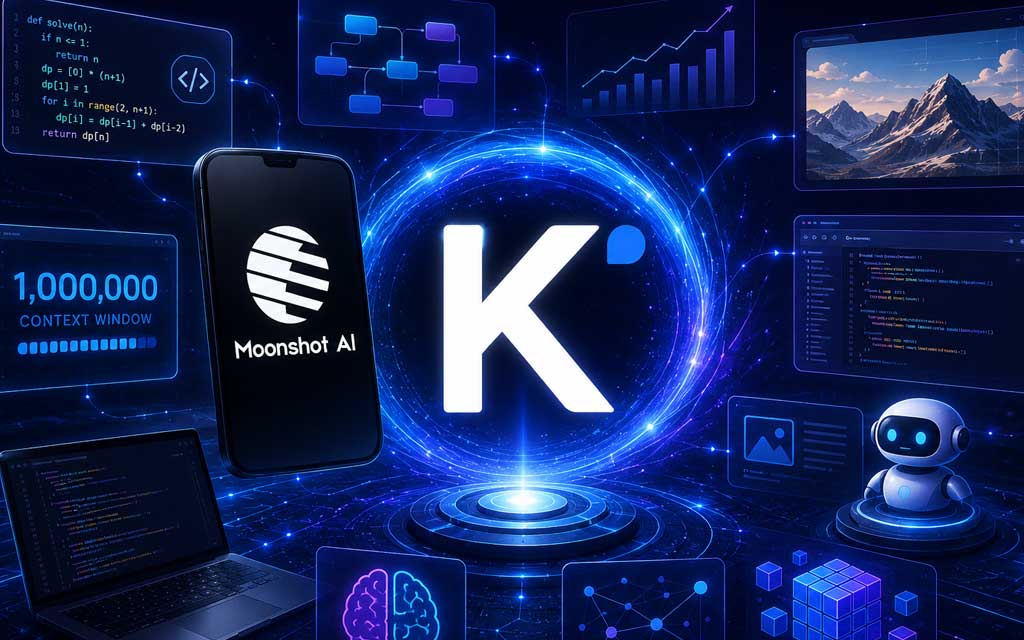
Kimi K3 capabilities fully explained: 2.8T parameters, 1M context window, MoE architecture, coding benchmarks, vision, agentic skills, pricing & open weights. How it compares to GPT & Claude.
Introduction: What Makes Kimi K3 a Game-Changer?
Moonshot AI’s Kimi K3, released on July 16, 2026, is one of the most ambitious open-weight AI models ever built. With 2.8 trillion total parameters, a massive 1 million token context window, native multimodality, and exceptional coding performance, Kimi K3 has quickly become a favorite among developers and companies seeking frontier-level capabilities at a fraction of Western model costs.
Its launch caused such high demand that Moonshot temporarily paused new subscriptions to protect existing users’ experience. Full open weights are scheduled for release around July 27 under a modified MIT license.
Here’s a detailed breakdown of Kimi K3’s capabilities.
Core Technical Specifications
Kimi K3 Key Features
- Total Parameters: 2.8 Trillion
- Architecture: Mixture-of-Experts (MoE) with 896 experts, activating only 16 experts per token (~1.8% of the total pool)
- Context Window: 1,000,000 tokens (1M)
- Multimodality: Native vision support for image understanding and image generation
- Activation Efficiency: Extremely sparse architecture delivering high performance with lower compute requirements
- Open Weights: Yes (full release planned for the end of July 2026)
- License: Modified MIT (open for most use cases)
The sparse MoE design (using techniques like Kimi Delta Attention and Stable LatentMoE) allows the model to deliver massive scale while remaining efficient for inference.
Standout Capabilities
1. Exceptional Coding & Frontend Development
Kimi K3 shines brightest in coding tasks:
- #1 on DesignArena / Frontend Code Arena (Elo scores topping competitors, including beating Claude Fable 5 in blind tests).
- Strong performance in React, Three.js, full-stack web apps, and end-to-end testing.
- Excellent one-shot generation and rapid prototyping.
- High scores on Terminal-Bench 2.1 (88.3), Program Bench, DeepSWE, and SWE Marathon.
Developers praise its polished, production-ready code and ability to handle complex UI/UX tasks better than many closed models.
2. Long-Context Knowledge Work
- True 1M-token context with efficient decoding (reported 6.3x faster across million-token contexts).
- Ideal for analyzing large codebases, legal documents, research papers, or entire books in one go.
- Excellent token efficiency — users report multi-hour sessions without needing compaction.
3. Agentic & Reasoning Skills
- Ranks highly on Agent Arena (#4 in early evaluations).
- Strong multi-step planning, tool use, and self-correction.
- Capable of autonomous workflows for research, coding agents, and complex problem-solving.
- Good at recognizing and fixing its own mistakes during reasoning.
4. Native Vision & Multimodality
- Built-in vision capabilities for image understanding, analysis, and multimodal workflows.
- Competitive with GPT-5.6 Sol and recent Gemini models in visual tasks (e.g., complex scene generation or analysis).
- Supports image-to-code, diagram understanding, and visual reasoning.
5. General Intelligence & Benchmarks
While trailing the absolute top US models (Claude Fable 5 and GPT-5.6 Sol) on overall composite scores, Kimi K3:
- Outperforms many previous frontier models (Claude Opus 4.8, GPT-5.5) in coding and agentic suites.
- Competitive on math, science, and knowledge tasks.
- Excels in practical, real-world developer workflows rather than pure academic benchmarks.
Pricing & Accessibility (as of July 2026)
- Highly competitive API pricing (significantly lower than OpenAI/Anthropic equivalents).
- Example ranges: Input ~$3.00 / M tokens, Output ~$15.00 / M (varies by provider and caching).
- Task costs often $2–$7 vs $15+ on premium Western models for similar coding work.
- Free/limited tiers available via kimi.com; paid memberships (including specialized coding plans).
The low cost is a major reason US companies are adopting it heavily.
How Kimi K3 Compares to Top Models
Coding / Frontend
- Kimi K3: Excellent, often ranked #1
- Claude Fable 5 / GPT-5.6 Sol: Very strong
- Winner: Kimi K3
Overall Reasoning
- Kimi K3: Very strong
- Claude Fable 5 / GPT-5.6 Sol: Slight edge
- Winner: Claude Fable 5 / GPT-5.6 Sol
Context Length
- Kimi K3: 1M tokens
- Claude Fable 5 / GPT-5.6 Sol: Typically 200K–1M tokens
- Winner: Tie / Kimi K3
Cost Efficiency
- Kimi K3: Outstanding
- Claude Fable 5 / GPT-5.6 Sol: Expensive
- Winner: Kimi K3
Open Weights
- Kimi K3: Yes (planned)
- Claude Fable 5 / GPT-5.6 Sol: Closed
- Winner: Kimi K3
Vision
- Kimi K3: Native and strong
- Claude Fable 5 / GPT-5.6 Sol: Strong
- Winner: Competitive
Agentic Tasks
- Kimi K3: High
- Claude Fable 5 / GPT-5.6 Sol: High
- Winner: Competitive
Kimi K3 is particularly strong for developers, startups, and cost-sensitive enterprises.
Real-World Use Cases
- Building full websites and complex UIs from scratch.
- Large codebase analysis and refactoring.
- Agentic coding assistants and autonomous agents.
- Long-document research and summarization.
- Multimodal applications (image + code).
- Rapid prototyping and one-shot generation.
Limitations & Considerations
- Still slightly behind the absolute peak closed models on some pure intelligence benchmarks.
- High demand caused temporary subscription pauses. existing users prioritized).
- Geopolitical/data concerns for some enterprises (mitigated by self-hosting once weights release).
- Methodical rather than ultra-fast in some long sessions.
Conclusion: Why Kimi K3 Matters
Kimi K3 represents a major leap for open-weight AI: frontier-scale parameters, massive context, strong coding leadership, native vision, and aggressive pricing — all while heading toward full open release. It is accelerating the trend of American companies adopting Chinese models for most workloads.
Whether you’re a developer looking for the best coding model, a company optimizing AI spend, or a researcher exploring long-context capabilities, Kimi K3 deserves serious evaluation.
Full open weights expected by July 27, 2026 — stay ready to self-host.
For the latest benchmarks, API access, or comparisons, visit kimi.com or follow Moonshot AI updates. What will you build with Kimi K3?
Stay tuned to vfuturemedia.com for more AI model deep-dives, Chinese AI breakthroughs, and tech news.



Leave a Comment