
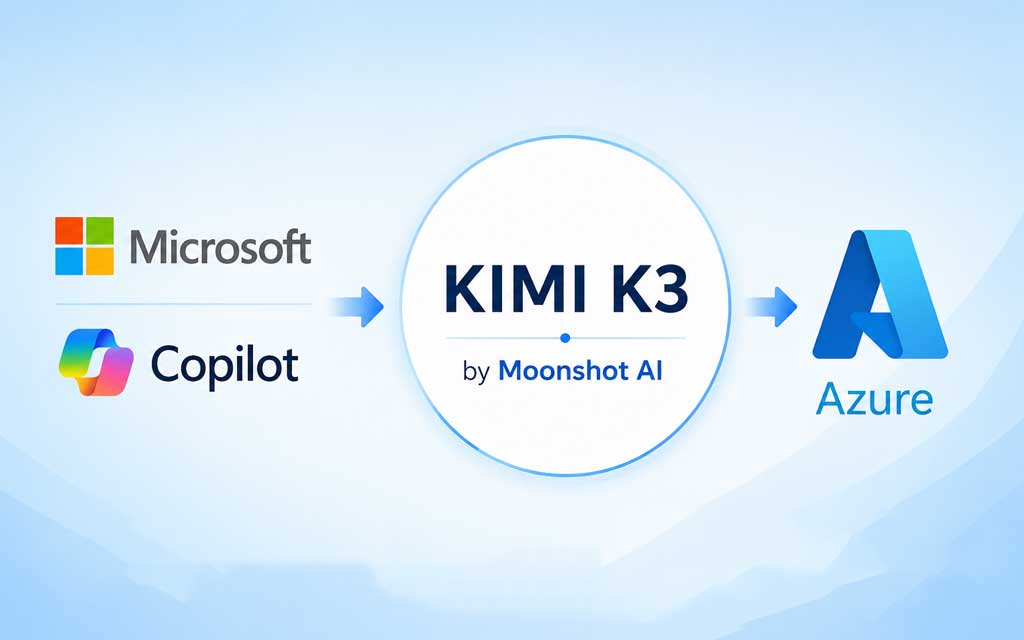
Microsoft evaluates Moonshot AI’s Kimi K3 for Copilot and prepares to host the 2.8T-parameter open-weight model on Azure. Cost savings, coding power, and US-China AI implications explained.
Breaking: Microsoft Eyes Kimi K3 for Copilot and Azure
July 20-21, 2026 — Microsoft is actively testing Moonshot AI’s Kimi K3 — China’s powerful 2.8-trillion-parameter open-weight model — for potential use in its flagship Copilot AI assistant while preparing to bring the model to Azure. This move could significantly reduce inference costs (estimates up to $600 million) and partially displace reliance on OpenAI and Anthropic models.
The development underscores how even the closest US partners of OpenAI are embracing high-performing Chinese models for practicality and cost efficiency.
Why Kimi K3? Key Capabilities Driving Microsoft’s Interest
Kimi K3, launched July 16, 2026 by Beijing-based Moonshot AI, stands out with:
- 2.8 trillion parameters (Mixture-of-Experts architecture activating only ~16 of 896 experts).
- 1 million token context window.
- Native vision and strong multimodal abilities.
- Exceptional coding performance — topped Frontend Code Arena / DesignArena benchmarks (beating Claude Fable 5 in some tests) and ranks highly on agentic tasks.
- Aggressive pricing and high efficiency, making it far cheaper for high-volume workloads.
Microsoft has previously integrated earlier Kimi versions (K2.5, K2.6, K2 Thinking) into Azure Foundry as “Direct from Azure” models. K3 represents a major leap.
What Microsoft Is Doing
- Copilot Evaluation: Engineers are testing whether Kimi K3 can handle features currently powered by OpenAI and Anthropic models. Potential savings of hundreds of millions in inference costs are a key driver. Reports suggest up to 60% lower per-token costs in some scenarios.
- Azure Integration: Microsoft is preparing to offer Kimi K3 on Azure once full open weights are released (expected around July 27 under a modified MIT license). This would allow enterprise customers secure, managed access with Azure-grade security, observability, and billing.
This is not a full replacement of existing models but an expansion of options for flexibility, cost optimization, and multi-model routing.
Broader Context: US Companies Embrace Chinese AI
This fits a larger trend:
- American firms (DoorDash, Airbnb, Lindy, Cursor, Vercel, etc.) already route heavy workloads to DeepSeek, Kimi, and Qwen for cost and performance reasons.
- US clouds (AWS, Azure, Google) host Chinese models extensively.
- Open-weight Chinese models have closed the practical performance gap while undercutting proprietary pricing dramatically.
Microsoft’s move is pragmatic business — protecting margins on Copilot (a massive revenue driver) while giving Azure customers more choices.
Implications for the US-China AI Race
- Cost Pressure on US Labs: OpenAI and Anthropic face intensified competition on price/performance.
- Geopolitical Sensitivity: Hosting a leading Chinese model in core Microsoft products could draw scrutiny from the Trump administration (already dealing with AI leadership turnover at CAISI). Some executives have warned about “AI communism” from open Chinese models.
- Enterprise Impact: Faster, cheaper AI features for Microsoft 365, GitHub Copilot, and Azure customers.
- Open-Source Acceleration: Once weights drop, self-hosting and fine-tuning options will explode.
Potential Benefits and Risks
Benefits:
- Massive cost savings.
- Access to top-tier coding and long-context capabilities.
- Diversified model portfolio reduces single-vendor risk.
Risks:
- Data security and compliance concerns (mitigated by Azure hosting).
- Possible regulatory or political pushback.
- Dependency on foreign open models.
What’s Next?
- Full Kimi K3 weights release (~July 27).
- Official Azure catalog addition and pricing.
- Possible phased Copilot rollout or multi-model routing announcements.
- Industry reactions from OpenAI, Anthropic, and policymakers.
Conclusion: Pragmatism Wins in the AI Race
Microsoft testing Kimi K3 for Copilot and bringing it to Azure is a clear signal: in 2026, performance and cost matter more than nationality for many real-world AI deployments. The US-China AI race is no longer just about who builds the smartest closed model — it’s about who delivers the best value at scale.
This move strengthens Azure’s position as a multi-model powerhouse while highlighting the disruptive power of Chinese open-weight innovation.
Stay tuned to vfuturemedia.com for updates on Microsoft, Kimi K3, Copilot changes, and the escalating US-China AI competition.




Leave a Comment