
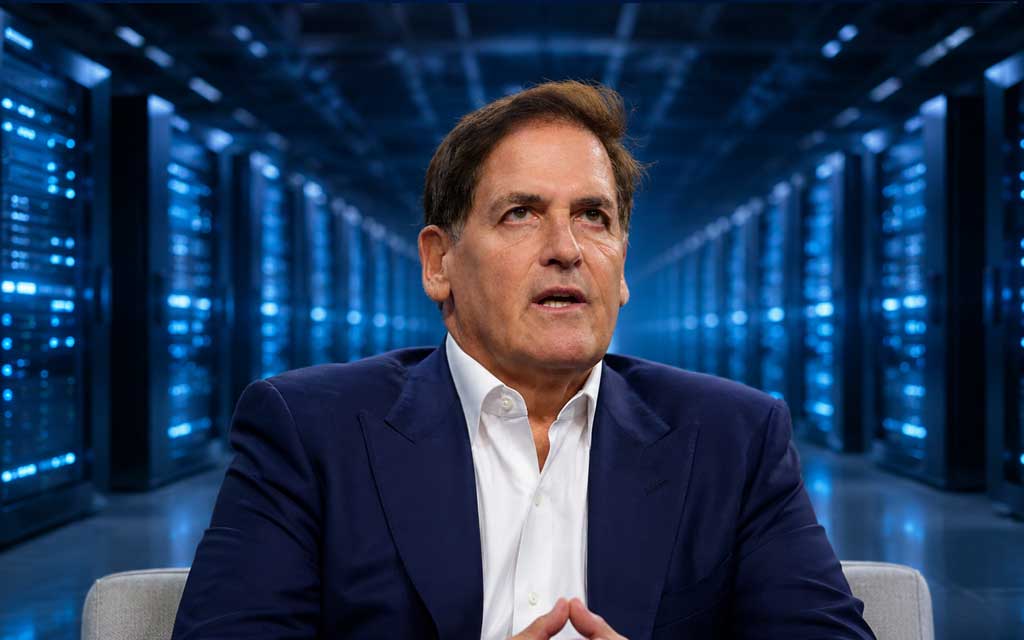
Mark Cuban warns that rapid efficiency gains in AI and computing could leave many of today’s data centers obsolete, joking they may one day become pickleball courts.
Billionaire entrepreneur and investor Mark Cuban has offered one of the more memorable predictions of the current AI boom: many of the massive data centers being built today could eventually be turned into pickleball courts.
Speaking on the All-In podcast, Cuban argued that rapid improvements in AI model efficiency and computing technology will significantly reduce the long-term need for the enormous infrastructure currently under construction. If that happens, he said, “a lot of data centers are going to be turned into pickleball courts.”
The line is partly a joke — Cuban co-owns the Dallas Flash professional pickleball team — but it carries a serious underlying warning about potential overbuilding in AI infrastructure.
The Efficiency Argument
Cuban’s core point is straightforward. AI systems and the hardware that powers them are improving at a rapid pace. Models are becoming more efficient, chips are delivering more performance per watt, and software optimizations continue to reduce the compute required for many tasks. Over time, he suggests, these gains could mean that far fewer large-scale data centers are needed than the industry is currently planning to build.
In this view, the current wave of construction risks creating excess capacity similar to previous technology infrastructure cycles. Once demand growth slows or efficiency improves faster than expected, some facilities could become underutilized or economically obsolete.
Echoes of Past Bubbles
Cuban has pointed to historical parallels, including the fiber-optic boom of the late 1990s. During that period, companies raced to lay vast amounts of cable in anticipation of surging internet demand. When the bubble burst, much of that capacity sat unused for years. He sees a similar risk in the current AI data center buildout, where companies are locking in long-term power contracts and spending heavily on the assumption that compute demand will remain extremely high for decades.
The comparison is not perfect — AI demand is real and growing — but it highlights the danger of assuming today’s growth rates will continue without interruption or major efficiency breakthroughs.
Why the Comment Resonates
The “pickleball courts” remark has spread widely because it captures a tension at the heart of the AI infrastructure debate. On one side are companies and investors pouring hundreds of billions of dollars into new facilities, power deals, and specialized chips. On the other are skeptics who worry that the industry is overestimating how much physical infrastructure will ultimately be required.
Cuban’s perspective carries extra weight because of his experience. As co-founder of Broadcast.com, he sold the company to Yahoo near the peak of the late-1990s internet boom and has lived through previous cycles of technology hype and overinvestment.
A Balanced View of the Risk
Not everyone agrees that large numbers of data centers will become obsolete. Many industry leaders argue that demand for AI compute will continue to expand aggressively as models grow more capable and new applications emerge. Training frontier systems, powering agentic workflows, and supporting widespread enterprise adoption could require even more capacity than currently planned.
Still, Cuban’s warning serves as a useful counterpoint. Efficiency gains have repeatedly surprised technology industries in the past. If progress in model architecture, specialized hardware, and software optimization continues at a high rate, the economics of large data centers could shift more quickly than many currently expect.
Looking Ahead
Whether or not data centers are eventually converted into recreational facilities, Cuban’s comment underscores an important question for the AI industry: how much physical infrastructure will still be needed once the technology matures? The answer will shape investment decisions, energy planning, and the long-term economics of artificial intelligence.
For now, the race to build continues at full speed. Cuban’s prediction is a reminder that the most durable advantage may not come from owning the most facilities today, but from adapting quickly as the cost and efficiency of computing continue to improve




Leave a Comment