
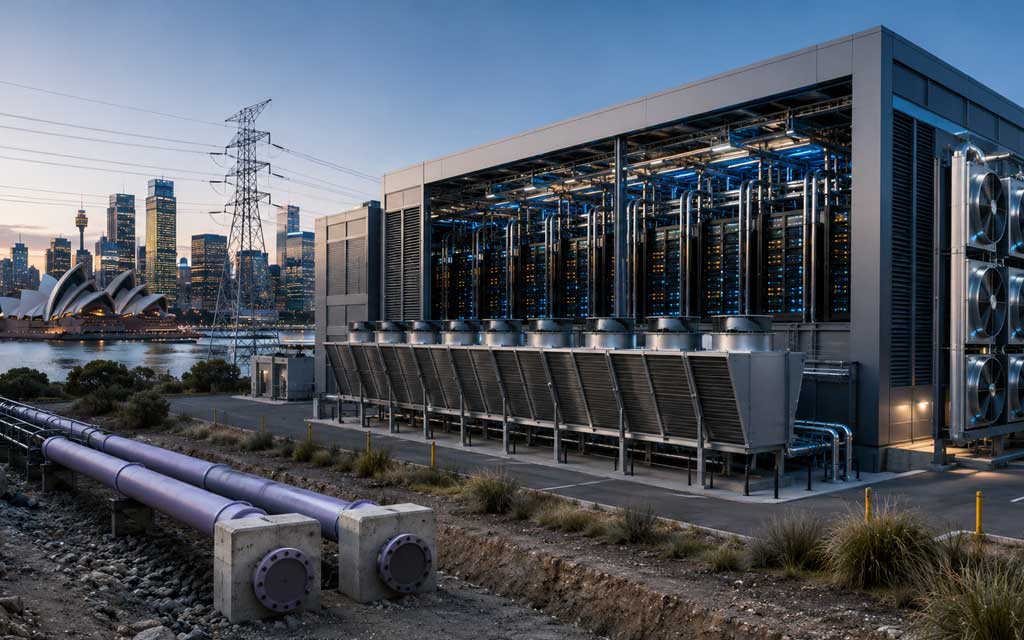
OpenAI’s planned 612 MW Sydney data center drops recycled water cooling due to pipeline issues, switching to a more energy-intensive method as local power capacity faces pressure.
Developers of a massive data center that OpenAI plans to build in Australia have abandoned plans to cool the facility with recycled water, opting instead for a more energy-intensive cooling approach.
The decision, reported exclusively by Reuters on July 23, 2026, involves the proposed 612-megawatt S7 facility in Sydney. If completed, the project would rank among the world’s largest AI data centers. OpenAI’s Australian partner on the development is NEXTDC.
Why the Recycled Water Plan Was Dropped
Original planning documents lodged in April outlined a plan to use Sydney’s treated sewage (recycled water) to cool the servers. The approach was designed to avoid drawing on drinking water supplies and to limit additional pressure on the electricity grid.
However, NEXTDC told Reuters it ended discussions with utilities after failing to secure planning permission for the pipeline required to transport the recycled water to the site. Without that infrastructure approval, the recycled-water strategy became unfeasible.
As a result, the project is shifting to an alternative cooling method that is more energy-intensive.
Growing Pressure on Sydney’s Resources
The change comes at a time of rising concern about the resource demands of Australia’s expanding data center sector. Rapid growth in AI-related facilities, particularly around Sydney, is already testing local power infrastructure. Grid operators and officials have warned that capacity is under strain from the wave of new and proposed data centers.
Water use has also become a sensitive issue. Some analyses have projected that data centers could consume a significant share of Sydney’s water resources within a decade if many projects rely on conventional cooling. Governments and utilities have encouraged the use of recycled or non-potable water as one way to reduce the impact on drinking supplies and the broader energy system.
The abandonment of the recycled-water plan for this high-profile OpenAI-linked project highlights the practical difficulties of implementing more sustainable cooling solutions at scale, even when they are preferred in principle.
Broader Implications
The switch undercuts efforts to curb the environmental footprint of the booming AI infrastructure sector. While recycled water cooling was intended to ease pressure on both water and power systems, regulatory and infrastructure hurdles prevented its adoption in this case.
For OpenAI and NEXTDC, the priority appears to be moving the large-scale project forward. For policymakers and local communities, the episode raises questions about how Australia will balance the economic opportunity of becoming a major AI data center hub with the real constraints of energy and water availability.
As more AI facilities seek approval in the Sydney region and beyond, decisions around cooling technology, power procurement, and water sourcing are likely to face increasing scrutiny. The S7 project’s shift away from recycled water serves as an early example of the trade-offs involved when ambitious AI infrastructure meets local capacity limits.




Leave a Comment