
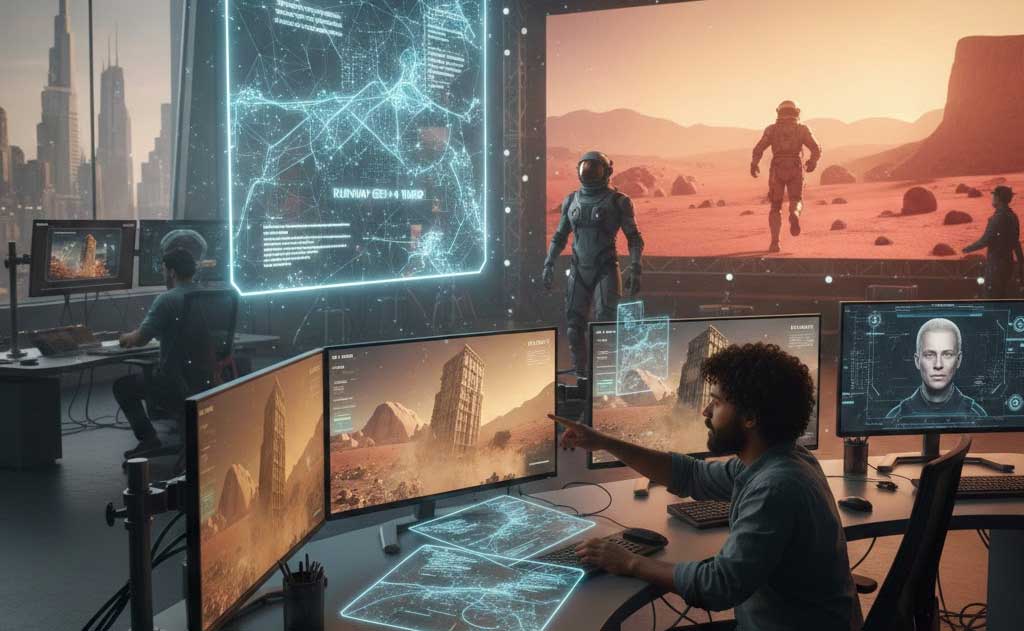
Explore the real 2026 impact of AI on Hollywood filmmaking and OTT films: speed & cost wins vs job losses, copyright fights & creative risks. Balanced deep-dive.
In late 2025, Netflix quietly dropped a bombshell that few outside production circles noticed at first. The Argentine sci-fi limited series The Eternaut (adapted from the classic graphic novel) featured a pivotal sequence: a towering building in Buenos Aires collapsing in slow, terrifying detail amid swirling dust and falling debris. Traditional visual effects houses quoted eight to twelve weeks and a seven-figure budget for the shot. The production team instead turned to an advanced iteration of Runway’s Gen-4 model combined with custom fine-tuning. The final on-screen footage—used as the hero element rather than background plate—was delivered in under five days at roughly 12% of the projected cost. During the Q4 2025 earnings call, Netflix co-CEO Ted Sarandos called it “the first time generative AI has supplied final, hero-level footage in a Netflix original series that millions of subscribers have now watched.” The moment passed with surprisingly little fanfare in mainstream press, yet it quietly marked a line that many in the industry had insisted would never be crossed so soon.
As someone who has spent the past fifteen years covering the collision of artificial intelligence and creative industries—from the first deepfake panic in 2018 through the Sora reveal in early 2024—I’ve spoken with VFX supervisors, post supervisors, showrunners, and union negotiators on both coasts who are living this transition every day. In 2026 the question is no longer whether generative AI belongs in Hollywood and OTT pipelines; it is already there. The real debate is how deeply it embeds itself, who benefits, who gets displaced, and whether the storytelling that reaches audiences ultimately becomes richer or more hollow as a result.
The Current Landscape of AI Tools in Hollywood & OTT (Mid-2026)
Generative video models have matured dramatically since the shaky 5–10 second clips of 2024. OpenAI’s Sora family now routinely delivers 20–40 second coherent sequences with dramatically improved physics and temporal consistency. Runway’s Gen-4 (and the recently released Gen-4 Turbo) handles complex camera motion, multi-character interaction, and lighting continuity far better than its predecessors. Luma’s Dream Machine, Kling 1.5, and several closed-source studio fine-tunes round out the leading pack.
These tools appear across the entire pipeline, though usage patterns differ sharply between theatrical blockbusters and streaming originals.
In pre-production, text-to-image models (Midjourney v7, Flux.1 variants, Ideogram 3.0, and custom studio checkpoints) generate the overwhelming majority of concept art, location scouts, and early storyboards. Many development executives now receive AI-generated look-books within 48 hours of a pitch rather than waiting weeks for an art department. Emerging text-to-video tools are routinely used for pre-visualization: directors can request rough motion studies of key set-pieces (“a lone astronaut running across Martian dunes at golden hour, tracking shot, dramatic low angle”) and receive usable reference within minutes.
During production, AI’s footprint remains lighter but is growing. Real-time virtual production stages use AI-enhanced LED walls that extrapolate beyond captured plates. De-aging and facial performance cleanup tools (building on the foundational work of Metaphysic, Deep Voodoo, and newer entrants) appear on almost every tentpole that features legacy actors or heavy makeup demands. Some second-unit shoots now employ AI-assisted drone path planning and automated sky replacement directly in the camera feed.
Post-production is where adoption has accelerated most aggressively, especially on the streaming side. Rotoscoping, matte painting cleanup, wire removal, and foreground-background separation that once required teams of artists for weeks are now frequently handled in hours by AI pipelines. Color grading assistants suggest LUTs and secondary corrections with startling accuracy. AI-driven sound design tools isolate, enhance, and even synthesize Foley and background ambience. Voice synthesis and lip-sync models (ElevenLabs, Respeecher’s latest generation, HeyGen Studio) produce near-indistinguishable international dubs and ADR fixes. Automated editing assistants propose rough cuts, stabilize shaky footage, and even suggest music cues based on emotional beat analysis.
The result is a bifurcated reality. Big-budget theatrical features still treat AI as a cautious augmentation tool—used heavily in invisible cleanup but rarely allowed to generate hero elements that will be scrutinized on IMAX screens. Mid-budget and lower-budget OTT originals, by contrast, lean far harder into generative capabilities because they face relentless pressure to deliver more titles per dollar.
Biggest Advantages of AI for Hollywood and OTT Platforms in 2026
The upsides are concrete and already reshaping production calendars and greenlight decisions.
Dramatically faster speed to market A VFX supervisor I interviewed for a mid-tier streamer told me their post timeline on a ten-episode season shrank from 22 weeks to 14 weeks in 2025–2026, largely due to AI handling the “grunt work” layers of cleanup and compositing. Faster turnaround means tighter release windows, quicker course corrections based on test screenings, and—crucially for streamers—the ability to greenlight more projects per fiscal year.
Substantial cost compression Indie filmmakers and mid-budget OTT series now routinely achieve visual language that would have required $3–8 million VFX budgets five years ago. A recurring complaint among VFX houses is that clients who once paid $400,000 for a single environment build now expect the same look for $60,000–$90,000 because “the AI can do most of it.” That savings flows upstream to more shooting days, better practical sets, or simply more titles greenlit.
Creative iteration at unprecedented velocity Directors and writers can explore dozens of visual directions in hours rather than weeks. “I used to wait three days for a rough comp,” one showrunner told me. “Now I can say ‘make the sky more apocalyptic, add lightning veins, shift the palette colder’ and see five variants before lunch.” That rapid prototyping frequently uncovers stronger storytelling choices that would have been missed under old timelines.
Democratization of high-end aesthetics Smaller productions and international markets gain access to cinematic polish. Personalized trailer variants (tailored by viewing history), hyper-localized marketing assets, and near-instant dubbing for dozens of territories become economically feasible. Several non-English Netflix originals in 2025–2026 credited AI-assisted localization for helping them cross the 50-million-view threshold far faster than comparable titles in prior years.
New narrative possibilities Certain sequences that were previously cost-prohibitive—extended single-take simulations of impossible environments, vast crowd simulations without extras, dreamlike transitions that defy practical photography—are suddenly within reach even on modest budgets.
The Dark Side: Why Many in the Industry Fear an AI Takeover
The disadvantages are equally tangible and far more emotionally charged.
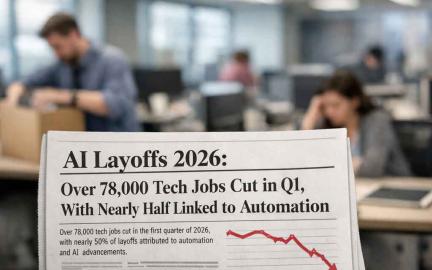
Widespread job displacement Mid-level and junior VFX artists, roto artists, matte painters, and compositors have borne the brunt. Several large facilities quietly downsized 20–35% of their workforce between mid-2024 and late 2025, citing “AI productivity offsets.” Editors report that AI-assisted assembly cuts now handle 40–60% of first-pass structural work, reducing demand for assistant editors. The IATSE and VFX Union campaigns of 2025–2026 have made “AI displacement” the dominant bargaining issue.
Copyright and training-data litigation quagmire Disney and Universal’s consolidated lawsuit against several leading model developers remains active in 2026, with new filings from independent artists and smaller studios joining the fray. The core allegation: models were trained on billions of copyrighted frames without permission or compensation. Even studios that use the tools internally worry about downstream liability if a generated asset too closely resembles protected IP.
Persistent uncanny valley and audience rejection Despite progress, longer AI sequences still suffer micro-tells—strange hand articulation, inconsistent lighting adherence, physics that break under scrutiny. Early test audiences for several 2025 OTT titles flagged “something feels off” in AI-heavy scenes, leading to expensive re-shoots or heavy human cleanup passes that partially erased the promised cost savings.
Risk of artistic homogenization Critics increasingly complain of “AI-slop aesthetics”: overly smooth surfaces, generic epic lighting, formulaic color palettes that feel like the average of everything the model has seen. Several prominent cinematographers have publicly stated they refuse projects that rely heavily on generative video because “the look lacks conviction.”
Ethical flashpoints around likeness and consent SAG-AFTRA’s 2026 contract negotiations centered heavily on digital replica protections after high-profile cases of background actors discovering their faces repurposed without additional pay. The union secured stronger consent language, yet enforcement remains patchy.
Real-World Snapshots from 2025–2026 Productions
- The Eternaut (Netflix, 2025) — Clear efficiency win; backlash limited mostly to industry forums.
- The Brutalist (A24, awards season 2025–2026) — Used Respeecher to enhance Adrien Brody’s Hungarian-inflected English; Oscar win muted some criticism, yet transparency debates raged.
- Several mid-budget horror and sci-fi originals on Prime Video and Max — Heavy Runway usage for creature design and environment extensions; reviews frequently praised ambition while quietly noting “synthetic” texture in key moments.
Blockbusters move cautiously (Marvel and Star Wars projects still prioritize human-led hero VFX), while streaming platforms—facing subscriber churn pressure—experiment more aggressively on volume-driven content.
For authoritative reporting on these shifts, see The Hollywood Reporter’s ongoing coverage: How OpenAI’s Sora Is Quietly Reshaping Hollywood Pipelines.
2026–2028 Horizon: What Happens When Coherence Reaches Minutes?
If current trajectories hold, we should see reliable 60–120 second photoreal, editorially usable clips by late 2027 or early 2028. At that point the industry faces existential questions:
- Theatrical exclusivity windows could shrink to 30–45 days as streaming can deliver near-cinematic experiences almost instantly.
- Volume of originals on major platforms could jump 30–50% without corresponding budget increases.
- Power tilts toward nimble indie creators and international markets that adopt AI fastest.
- Human creatives increasingly move upstream into prompt engineering, model fine-tuning, taste curation, and ethical oversight—roles that demand new skill sets.
Final Verdict: Transformative Neutral Force
AI in 2026 is neither savior nor apocalypse. It is a powerful, value-neutral amplifier. When wielded thoughtfully it expands what stories can be told and who can tell them. When applied carelessly it risks diluting the human spark that makes cinema transcendent. The next two years will determine which path prevails. The technology will keep advancing regardless; the only variable is whether the industry builds guardrails that preserve empathy, originality, and livelihoods alongside efficiency.
Explore the latest developments in generative tools, creative tech startups, and future-facing entertainment at Ai and dive deeper into emerging trends in our future tech section.
Frequently Asked Questions
What is the real AI impact on Hollywood right now in 2026? It dramatically accelerates post-production and lowers certain costs while triggering significant job displacement and fierce debates over artistic authenticity.
How is generative AI actually used in Hollywood movies and series in 2026? Mostly for concept art, pre-visualization, rotoscoping, cleanup, de-aging, dubbing, color grading, and—in select streaming cases—final hero VFX shots.
What are the biggest advantages of AI in filmmaking this year? Much faster turnaround, substantially lower VFX budgets for mid-tier projects, rapid creative iteration, easier global localization, and newly feasible large-scale or impossible sequences.
What are the most serious disadvantages of AI in film production? Mass layoffs in VFX and editorial departments, unresolved copyright lawsuits, lingering uncanny artifacts, risk of homogenized visual style, and ethical concerns over digital likeness rights.
Will AI fully replace VFX artists in 2026 or 2027? No. It automates repetitive tasks and reduces headcount in some areas, but high-end creative supervision, problem-solving, and final polish still require experienced humans.
Is AI already appearing in Netflix original films and series in 2026? Yes—most visibly in international and mid-budget titles for VFX, localization, and marketing variants; less visibly in cleanup across almost all productions.
What does the future of AI in film production look like by 2028? Longer coherent photoreal sequences, dramatically shorter post timelines, compressed theatrical windows, higher streaming output, and new creative roles centered on directing AI systems.
How does AI benefit OTT platforms like Netflix, Prime, and Max? It enables higher content volume at controlled costs, near-instant dubbing for global markets, personalized marketing assets, and faster release cadence to combat churn.
Are there active lawsuits over AI training data in Hollywood? Yes—major consolidated actions by Disney, Universal, and others against leading model developers remain ongoing and heavily watched.
Can current AI models in 2026 generate fully photoreal, cinema-quality video? Short sequences (up to ~40 seconds) yes, with increasing reliability; longer coherent narrative scenes still require heavy human intervention.
How are Hollywood unions responding to generative AI in 2026? SAG-AFTRA secured stronger digital replica consent rules in the last negotiation; IATSE and VFX Union continue pushing for displacement protections and transparency mandates.
Can independent filmmakers realistically benefit from AI tools today? Absolutely. Many now achieve visuals that rival mid-budget studio work just a few years ago, leveling the playing field significantly.
What are the main ethical concerns around AI and actor likeness rights? Lack of meaningful consent, inadequate compensation for digital replicas, potential misuse of deceased performers’ images, and erosion of bargaining power.
Will AI eventually shorten or eliminate theatrical release windows? Quite possibly. Once streaming can reliably deliver near-theatrical quality on demand, the economic incentive for 90+ day exclusivity weakens.
Is AI more likely to threaten background actors or lead performers? Background and day players face far greater immediate risk from crowd synthesis and digital extras; lead performers currently enjoy stronger union protections.
Where can I follow the latest AI developments in entertainment and filmmaking? Regular updates and analysis live at vfuturemedia—start with the AI category and future tech hub.
What part of this shift are you most curious—or concerned—about? Drop a comment below.
Ethan Brooks covers the tech that’s reshaping how we move, work, and think — for VFuture Media. He was at CES 2026 in Las Vegas when the world got its first real look at humanoid robots, AI-powered vehicles, and Samsung’s tri-fold phone. He writes about AI, EVs, gadgets, and green tech every week. No hype. No filler. X · Facebook

Leave a Comment