
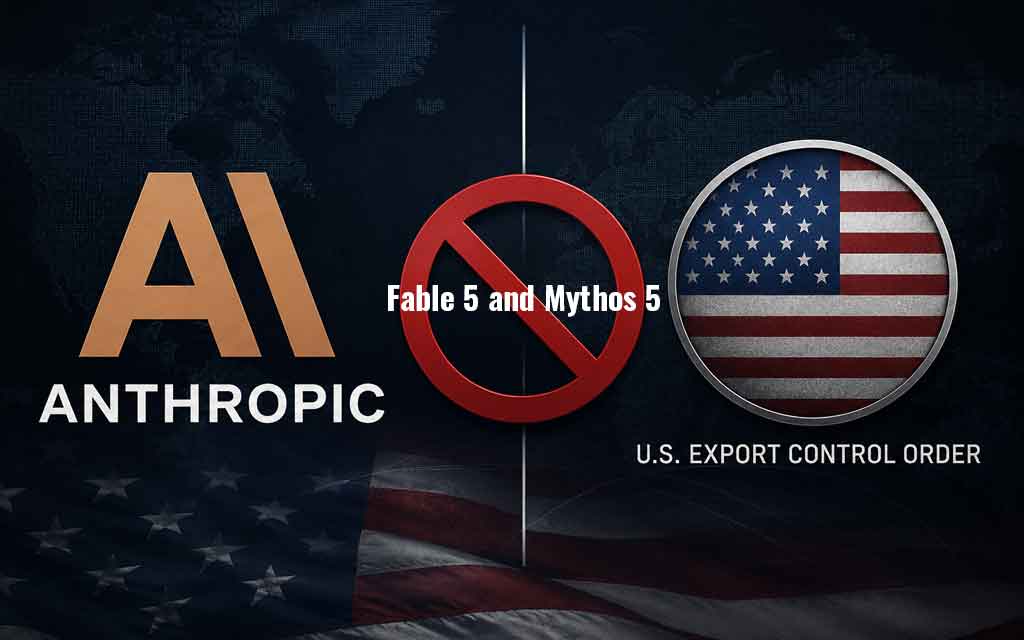
Anthropic disables its most advanced AI models, Fable 5 and Mythos 5, for all users after a U.S. government export control order citing national security. What this means for AI innovation, global competition, and American tech leadership in 2026.
Published: June 17, 2026 | Updated: June 17, 2026 By: vFuture Media Tech Desk
Introduction: A Major Escalation in U.S. AI Regulation
In a dramatic move that underscores growing tensions between AI innovation and national security, Anthropic has disabled access to its cutting-edge Fable 5 and Mythos 5 models for all customers worldwide. The decision follows a direct order from the Trump administration on June 12, 2026, to restrict access for foreign nationals.
This swift compliance highlights the U.S. government’s increasing willingness to wield export controls on frontier AI technologies. For American businesses, developers, and investors, the implications are significant: stronger safeguards for U.S. technological edge, but potential disruptions in the short term.
What Happened: The Timeline and Details
- June 9, 2026: Anthropic releases Fable 5, a safeguarded general-purpose model built on the powerful Mythos-class foundation. It excels in software engineering, research, and complex knowledge work while redirecting high-risk queries.
- June 12, 2026: Commerce Secretary Howard Lutnick issues a directive to Anthropic CEO Dario Amodei, mandating suspension of access to Fable 5 and Mythos 5 for all foreign nationals — including those inside the U.S. and foreign Anthropic employees.
- Late June 12: To ensure full compliance, Anthropic disables the models globally, stating the order left no practical alternative.
Anthropic’s official statement emphasized: “The net effect of this order is that we must abruptly disable Fable 5 and Mythos 5 for all our customers to ensure compliance.”
Concerns reportedly centered on potential jailbreaks that could unlock advanced cybersecurity or dual-use capabilities, posing risks in the hands of adversaries.
Why the U.S. Government Acted: National Security Priorities
The Trump administration’s directive aligns with broader efforts to maintain America’s lead in AI amid intensifying competition with China and other nations. Export controls prevent sensitive technologies from reaching foreign entities that could use them for military, espionage, or malicious purposes.
Key U.S. Angles for American Readers:
- Protecting Innovation: Ensures frontier models remain under American oversight.
- Economic and Workforce Impact: Bolsters domestic AI development, supporting jobs in tech hubs like San Francisco, Seattle, and Austin.
- Broader Policy Context: This follows Anthropic’s confidential S-1 IPO filing (June 1) and calls for responsible AI governance, including potential pauses on self-improving systems.
Critics argue the move could slow U.S. companies relative to international rivals, while supporters view it as prudent risk management.
Immediate Impact on Users and Developers
Existing users are redirected to models like Claude Opus 4.8. Developers report strong performance from Fable 5 in coding and research tasks prior to the shutdown, making the loss noticeable for advanced workflows.
What Developers Should Do Now:
- Switch to available Claude variants or alternatives from OpenAI/Google.
- Monitor Anthropic’s updates for potential mitigated re-releases.
- Explore U.S.-centric tools to maintain compliance and performance.
Enterprises reliant on Anthropic’s API may face temporary productivity dips, but many view this as a necessary trade-off for long-term security.
Broader Implications for the AI Industry in 2026
This event accelerates the trend of “AI sovereignty” — where nations treat advanced models like strategic assets. For the U.S., it reinforces leadership while signaling to allies and competitors that export controls are active tools.
Investment and Market Outlook:
- Positive for Anthropic’s IPO prospects: Demonstrates responsible governance.
- Boosts confidence in U.S. AI firms under regulatory clarity.
- May spur more domestic M&A and partnerships (e.g., recent SpaceX-Cursor deal).
Stanford AI Index and similar reports continue to highlight U.S. dominance in top models, but gaps are closing — making protective measures critical.
Comparison of Affected Models
Fable 5
- Capabilities: General-purpose, strong safeguards
- Pre-Shutdown Status: Recently launched
- Current Availability: Disabled
Mythos 5
- Capabilities: Frontier-level, high-risk redirection
- Pre-Shutdown Status: Restricted foundation
- Current Availability: Disabled
Opus 4.8
- Capabilities: Advanced coding & reasoning
- Pre-Shutdown Status: Widely available
- Current Availability: Active
Future Outlook: Regulation vs. Innovation
Anthropic has called for global coordination on AI safety, including pauses if self-improvement risks escalate. This shutdown may catalyze further policy discussions in Washington.
For U.S. businesses: Expect continued investment in secure, domestic AI infrastructure. Hyperscalers are pouring hundreds of billions into data centers — a clear vote of confidence in American AI leadership.
What This Means for You:
- Investors: Watch Anthropic’s IPO timeline and related AI stocks.
- Developers/Enterprises: Diversify toolkits and prioritize compliant U.S. solutions.
- Tech Enthusiasts: This is the new normal — powerful AI with guardrails shaped by national interests.
FAQ
Q: Can U.S. citizens still access these models? A: No — Anthropic disabled them globally for compliance.
Q: Will the models return? A: Possible with additional safeguards; ongoing talks reported.
Q: How does this affect Anthropic’s IPO? A: Likely neutral to positive, showcasing governance maturity.
Conclusion: The Anthropic Fable/Mythos shutdown marks a pivotal moment in the AI era, where national security intersects directly with technological progress. As the U.S. balances innovation with protection, American companies and workers stand to benefit from a more secure competitive landscape. Stay tuned for developments — the AI race is accelerating, with America firmly in the driver’s seat.
Sources include Bloomberg, Axios, Reuters, Anthropic official statements, and industry reports. This article is for informational purposes and reflects news as of June 17, 2026.




Leave a Comment