
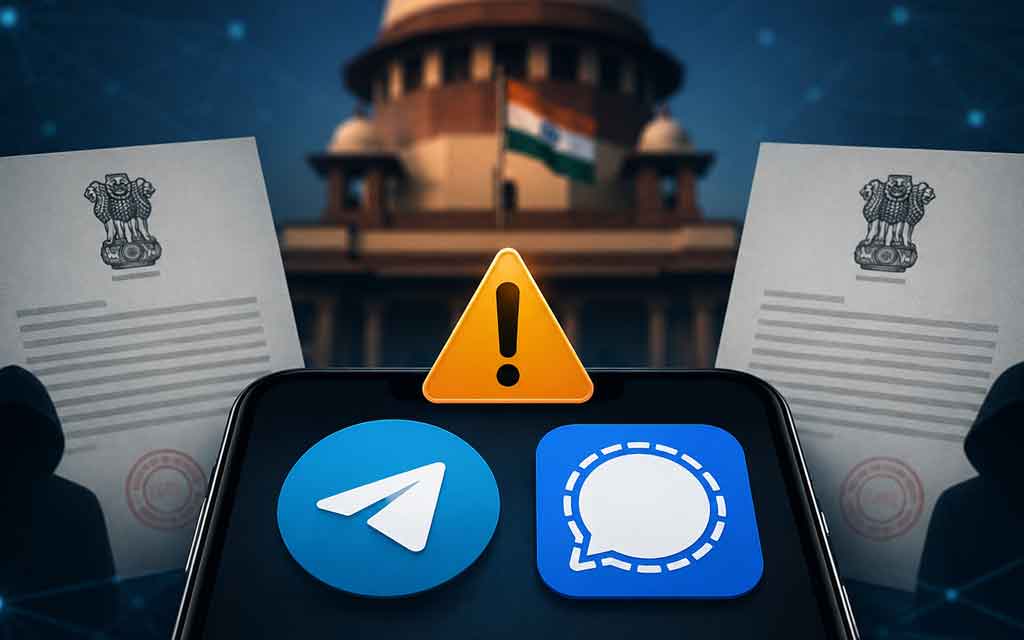
India’s Ministry of Electronics and Information Technology (MeitY) has escalated its scrutiny of popular messaging platforms by issuing formal notices to Telegram and Signal. The government is seeking explanations on how the platforms plan to address risks arising from username-based features that allow users to communicate without revealing their phone numbers.
This move comes just a day after similar action was taken against WhatsApp, where authorities asked the company to pause the rollout of its planned username feature.
What Triggered the Notices?
The core concern raised by the Indian government is that anonymous usernames could be exploited for:
- Impersonation of individuals or officials
- Online fraud and phishing attacks
- Digital arrest scams (increasingly common in India)
- Identity theft and social engineering
By decoupling communication from phone numbers, these features enhance user privacy — but the government fears they also reduce accountability and make it easier for bad actors to operate anonymously.
Sources familiar with the matter told Reuters and other outlets that the notices were sent under the Information Technology Act, 2000, and the IT (Intermediary Guidelines and Digital Media Ethics Code) Rules, 2021.
Background: WhatsApp Was First
The government’s actions began with WhatsApp. Earlier this week, MeitY reportedly asked Meta-owned WhatsApp to halt the planned introduction of usernames. WhatsApp had been testing or preparing a feature that would let users message others using a username instead of (or in addition to) their phone number.
Following that, the ministry expanded its inquiry to platforms that already offer similar functionality:
- Telegram — which has long supported usernames for public channels, groups, and private chats.
- Signal — which recently introduced or enhanced username features to improve privacy.
Why This Matters for Privacy and Security
This development highlights a growing global tension between privacy and accountability in digital communication:
Arguments in favor of usernames (Privacy advocates’ view):
- Protects users from spam and harassment linked to phone numbers.
- Useful for journalists, activists, and users in sensitive situations.
- Reduces the risk of SIM-swapping or phone-number-based attacks.
Government concerns (India’s perspective):
- Makes it harder to trace and act against cybercriminals.
- Could facilitate large-scale fraud, especially “digital arrest” scams that have targeted thousands of Indians.
- Undermines existing traceability requirements under Indian law.
India has been steadily tightening rules around digital platforms, requiring greater cooperation on content moderation, grievance redressal, and user traceability.
What Happens Next?
Telegram and Signal have been asked to respond with details on the safeguards they have in place (or plan to implement) to prevent misuse of usernames.
Possible outcomes include:
- Platforms strengthening verification or reporting mechanisms.
- Introduction of new moderation tools or limits on username creation.
- Potential regulatory changes or restrictions on how usernames can be used in India.
- Further escalation if responses are deemed unsatisfactory.
It remains to be seen how the platforms will respond publicly. Both Telegram and Signal have historically positioned themselves as privacy-focused alternatives to mainstream messaging apps.
Broader Implications
This episode is part of a larger global conversation:
- Several countries are examining how anonymity features in messaging apps intersect with law enforcement needs.
- Encrypted messaging platforms are under increasing pressure to balance user privacy with public safety.
- For Indian users, this could eventually affect how they use Telegram and Signal — particularly for business, activism, or sensitive communications.
It also raises questions about the future of features like WhatsApp’s usernames, which many users have been eagerly awaiting for better privacy.
Expert and Industry Reactions
While official responses from Telegram and Signal are still pending, digital rights groups and privacy advocates are likely to push back against any moves that they see as weakening end-to-end encryption or user anonymity.
At the same time, cybersecurity experts in India have welcomed the government’s focus on tackling rising online fraud and impersonation cases.
What Should Users Do?
For now, Indian users of these platforms should:
- Be cautious when interacting with unknown usernames.
- Verify identities through other channels when dealing with important matters.
- Stay updated on any policy changes announced by the apps or the government.
- Use strong privacy settings and enable two-step verification where available.
Frequently Asked Questions
Why is India concerned about usernames on Telegram and Signal? The government believes usernames allow communication without phone numbers, making it easier for scammers and impersonators to operate anonymously.
Has WhatsApp been affected too? Yes. India first asked WhatsApp to pause its planned username feature rollout before issuing notices to Telegram and Signal.
Will these apps be banned in India? There is no indication of an imminent ban. The current step is a formal notice seeking explanations and safeguards.
What are “digital arrest” scams? These are fraudulent schemes where scammers impersonate law enforcement officials online and threaten victims with arrest unless they pay money — a growing problem in India.
How should I protect myself? Be skeptical of unsolicited messages from unknown usernames, verify important communications through official channels, and enable all available security features in your messaging apps.
Bottom Line India’s latest notices to Telegram and Signal mark an escalation in the government’s efforts to curb online fraud and impersonation by targeting anonymity features in popular messaging apps. While the move raises important questions about privacy versus security, it reflects growing regulatory pressure on platforms that prioritize user anonymity.
As responses from the companies come in and further developments unfold, this issue is likely to remain a key talking point in India’s evolving digital governance landscape.
For more on technology regulation, privacy, and digital security in India and globally, stay tuned to vfuturemedia.com.
Tags: India Telegram Signal notice, username feature regulation, digital impersonation India, IT Ministry notices, messaging app privacy India
CTA:
What’s your take on balancing privacy and security in messaging apps? Should platforms be required to link usernames to verified identities? Share your views in the comments below!




Leave a Comment