
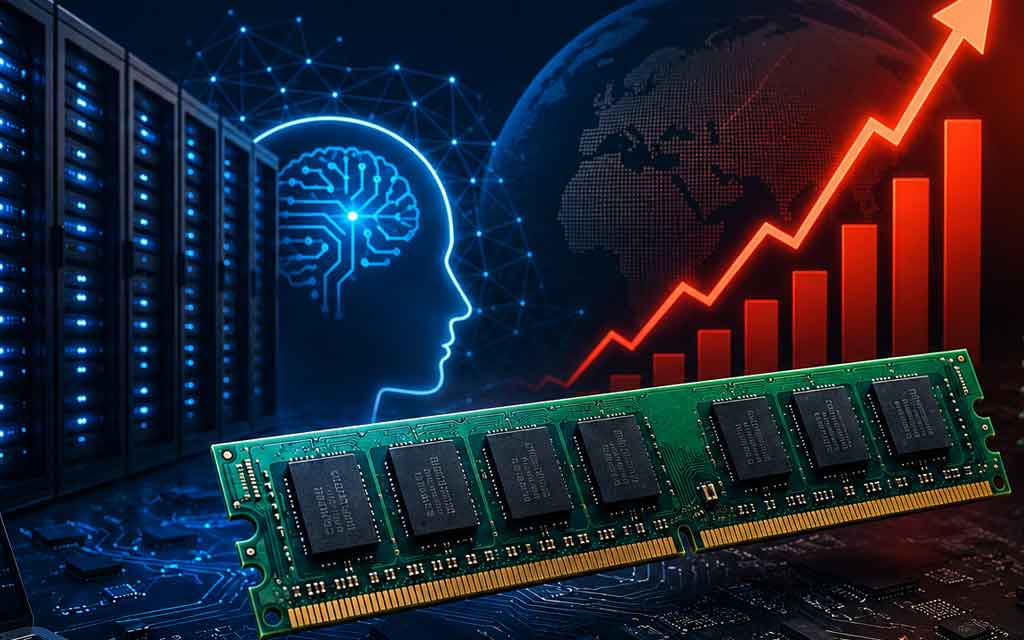
As an international journalist covering tech from the USA, the ongoing memory chip crisis is one of the biggest stories affecting consumers and the industry in 2026. Fueled by explosive AI data center demand, DRAM and NAND flash prices have skyrocketed, forcing price adjustments across laptops, tablets, PCs, and more. Here’s a complete, data-driven report on this week’s developments and broader implications.
The Shortage Explained: AI Boom as Primary Driver
Global memory supply is under unprecedented strain. AI training and inference require massive amounts of high-bandwidth memory (HBM) and traditional DRAM/SSD storage. Data centers are absorbing a huge portion of production, leaving consumer markets short.
- Price Surge: DRAM and NAND costs have risen dramatically (projections up to 130% combined by end of 2026 in some scenarios). Spot prices for DDR5 kits show triple-digit percentage increases in recent months.
- Industry Response: Suppliers like Micron are prioritizing AI/high-margin segments. New fabs take time to come online, prolonging the crunch through 2026 and potentially into 2027.
This is described as a “hundred-year flood” by some executives — a rapid, extreme shift not seen before.
Apple Leads Price Adjustments: Macs and iPads Hit Hardest
On June 25–26, 2026, Apple raised prices across much of its Mac and iPad lineup, explicitly citing the memory shortage:
- MacBook Neo (entry-level): From $599 to $699.
- iPad Models: Increases of $100–$200+ (e.g., base iPad up significantly, Pro models affected).
- Higher-End: MacBook Pro, Mac Studio, iPad Air/Pro, Vision Pro, and accessories also saw hikes up to $300–$500 or more depending on config/storage.
Apple had absorbed costs as long as possible but could no longer shield customers. iPhones remain unaffected for now due to different supply dynamics. This marks one of the most noticeable consumer impacts to date.
Broader Market Impact: PC, Smartphone & Gaming Fallout
Analysts forecast significant ripple effects:
- PC Shipments: Potential decline of 4.9%–10.4% in 2026. Entry-level segment at risk of disappearing by 2028.
- Smartphones: 8.4% shipment drop possible, with ASPs (average selling prices) rising 3–8%.
- Gaming & Creators: 32GB+ RAM becoming more expensive; high-end builds and AAA games feeling pressure on 1% lows and performance.
Gartner and IDC warn of slowed AI PC adoption through 2027. Builders face tough choices: delay upgrades, reduce specs, or pay premiums. DDR5 prices remain volatile — monitor weekly.
Supply Chain Notes: Tariffs, geopolitical issues, and competing demand from EVs/autonomous tech add complexity, though AI is the dominant factor.
Consumer Advice: How to Navigate the Shortage
- Buy Smart Now: Lock in current configs before further hikes. Prioritize 16–32GB minimum for future-proofing.
- Value Options: Consider refurbished/previous-gen devices, AMD/Intel efficient chips, or cloud alternatives for heavy workloads.
- Build Strategy: For PCs, shop sales carefully. DDR4 may still offer value in some secondary markets, but DDR5 is the future.
- Alternatives: Cloud computing, lighter Chromebooks, or waiting for potential stabilization (unlikely full relief in 2026).
- Long-Term: Advocate for or invest in companies expanding memory production. Watch new materials and packaging tech.
For Gamers/Creators: Minimum 32GB recommended for modern titles and workflows. Budget extra 20–50% on memory.
Investment & Industry Outlook
Winners: Memory manufacturers (with caveats on allocation), cloud providers, and firms with efficient AI models. Losers: Budget PC makers and price-sensitive consumers. Opportunities in alternative memory solutions and supply chain resilience.
By late 2026, new capacity may ease pressure, but 2027 could still be challenging. The crisis underscores AI’s massive infrastructure footprint and accelerates innovation in efficiency.
This week’s Apple moves and analyst warnings highlight how interconnected AI progress is with everyday hardware. The RAM shortage is a temporary but painful bottleneck in an otherwise booming tech era.
FAQs
- Will RAM prices drop in 2026? Unlikely significant relief soon due to sustained AI demand.
- Should I buy a Mac now? Yes if needed; expect higher costs later.
- How does this affect EVs/AI gadgets? Indirectly raises compute component costs across tech.



Leave a Comment