
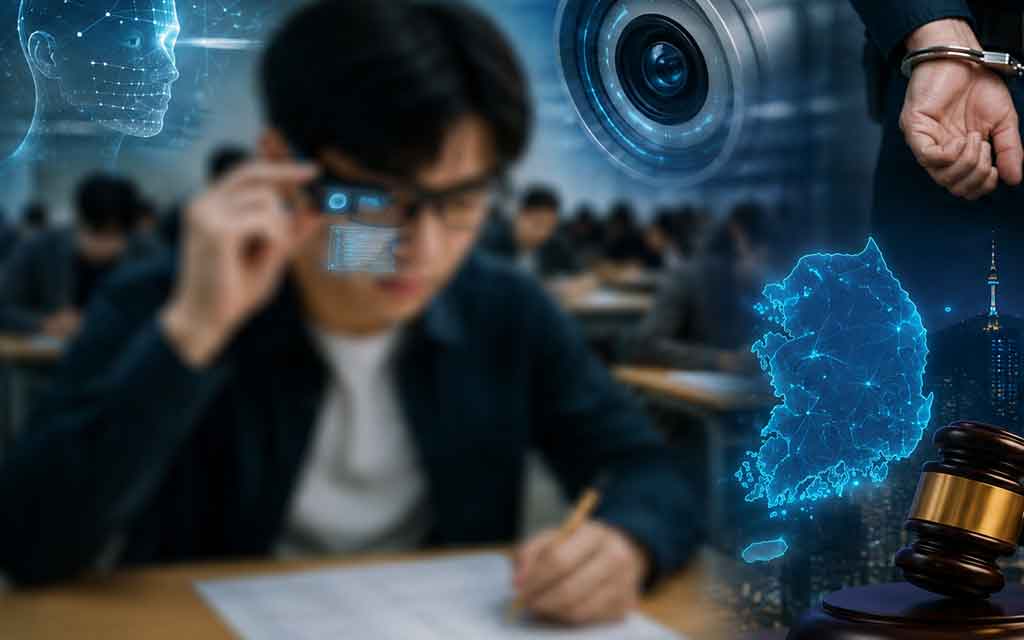
In a landmark case highlighting the challenges of AI in high-stakes testing, South Korean authorities have filed the country’s first criminal charges involving AI-powered smart glasses for exam cheating. The incident underscores growing concerns over advanced technology disrupting fair assessment in education and professional certification.
Case Details: What Happened?
Prosecutors in Gwangju indicted a man in his 40s last month for violating the National Technical Qualification Act. The incident occurred during a fire protection facilities engineer certification exam in May 2026.
- The suspect allegedly developed a custom AI application that connected to smart glasses.
- The app reportedly displayed real-time answers or assistance during the test.
- He was detected when a proctor noticed unusual light reflections from the lenses.
- During questioning, he admitted building and testing the system, stating he wanted to verify if it could generate correct answers in a live exam setting.
This marks the first prosecution of its kind in South Korea involving AI smart glasses, following earlier reports of similar attempts in English proficiency tests like TOEIC.
“Vibe-Coding” and Rapid AI Prototyping
The term “vibe-coding” refers to quick, iterative development — often using AI tools like Claude or similar models to rapidly prototype apps. In this case, the suspect reportedly built the cheating tool swiftly, demonstrating how accessible modern AI development has become. This raises questions about the dual-use potential of consumer AI and wearable tech.
Broader Context: Rising AI Cheating Concerns
South Korea, known for its intense exam culture (e.g., Suneung college entrance test), has seen increasing attempts to use hidden devices:
- Smartwatches, earpieces, and now AI glasses.
- Authorities have banned electronic devices in many exams, but enforcement is challenging with discreet wearables.
- Similar incidents reported globally, prompting discussions on proctoring tech, AI detectors, and policy updates.
Implications for Education, Tech, and Regulation
For Test-Takers and Institutions:
- Heightened security measures, such as metal detectors, AI monitoring, or pre-exam device scans.
- Potential for more robust identity verification and randomized question banks.
For AI and Wearables Industry:
- Scrutiny on smart glasses (e.g., Meta, Xreal, or custom builds) and their integration with real-time AI.
- Calls for built-in restrictions or watermarks in AI outputs for sensitive uses.
Legal and Ethical Angle:
- This case sets a precedent for holding individuals accountable for developing AI-assisted cheating tools.
- It sparks debate on balancing innovation with integrity in professional licensing, where public safety (e.g., fire engineering) is at stake.
What’s Next?
South Korean officials are tightening protocols across national exams. Expect similar regulatory responses in other countries facing AI disruption in testing environments. The rapid evolution of “vibe-coded” apps shows how quickly individuals can leverage AI, making proactive education on ethics and detection crucial.
This story illustrates both the power and pitfalls of accessible AI technology in 2026. As wearables and generative tools advance, maintaining fairness in examinations will require ongoing adaptation.


Leave a Comment