
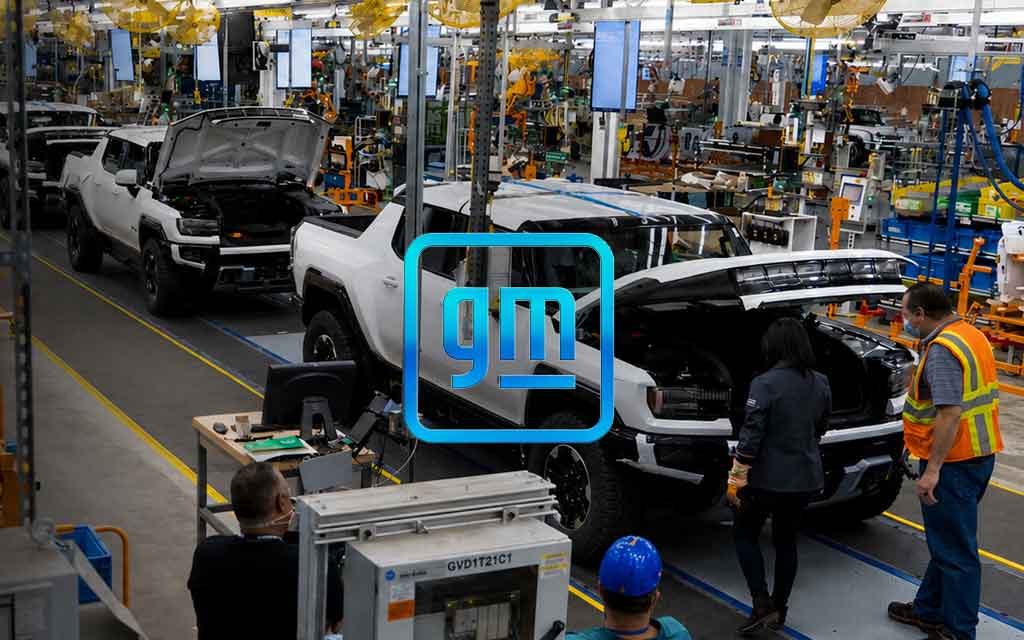
General Motors has laid off more than 1,000 workers at its all-electric Factory Zero plant in Detroit — and then installed around 50 new collaborative robots (cobots) on the factory floor.
The move has drawn sharp criticism from the United Auto Workers (UAW), which argues that the robots are replacing human jobs at a time when EV demand has slowed.
What Happened at Factory Zero
GM’s Factory Zero (formerly the Detroit-Hamtramck Assembly plant) was retooled to become the company’s dedicated EV production facility. It builds vehicles like the GMC Hummer EV, Chevrolet Silverado EV, GMC Sierra EV, and Cadillac Escalade IQ.
However, as U.S. EV sales growth has cooled, GM has repeatedly paused production and reduced shifts at the plant. The latest round of layoffs eliminated over 1,000 positions.
Just weeks after those cuts, GM began installing approximately 50 collaborative robots on the assembly line. These cobots work alongside remaining human workers to attach body panels to vehicles.
GM says the robots are being added to improve safety and ergonomics for employees, not to directly replace them. The company has been expanding its use of advanced automation across its plants as part of a broader push to boost efficiency and quality.
UAW Pushes Back
The United Auto Workers has strongly criticized the timing and intent of the robot installations.
UAW Local 22 President James Cotton told reporters he recently toured the plant and observed the new cobots in operation. The union has filed grievances, arguing that the robots threaten jobs and that GM should have prioritized retaining workers instead of accelerating automation.
This tension is expected to become a major issue heading into the next round of UAW contract negotiations with the Detroit automakers in 2028.
Why GM Is Automating Despite Layoffs
GM’s decision reflects a difficult reality facing the entire auto industry right now:
- EV demand has slowed more than many automakers expected.
- High production costs and lower profit margins on EVs compared to gas-powered trucks and SUVs have forced companies to cut costs.
- Automation is seen as one of the few ways to improve efficiency, reduce injury rates, and stay competitive against lower-cost imports (especially from China and Mexico).
Collaborative robots (cobots) are particularly attractive because they can work safely next to humans without the heavy safety cages required by traditional industrial robots. They are being used for repetitive or ergonomically challenging tasks like panel installation.
The Bigger Picture: Automation vs. Jobs in the EV Transition
GM’s situation at Factory Zero highlights a broader conflict in the shift to electric vehicles:
On one side: Automakers need to modernize factories and cut costs to make EVs profitable. Automation helps achieve that.
On the other side: The UAW and many workers worry that the promised “EV jobs boom” is being undercut by robots and slower-than-expected demand.
This is not unique to GM. Other automakers and suppliers have also announced layoffs or production cuts in the EV segment over the past year while simultaneously investing in more advanced robotics and AI-driven manufacturing systems.
What This Means Going Forward
The addition of 50 cobots at Factory Zero is relatively modest in the context of a large assembly plant. However, it symbolizes a clear strategic direction:
GM (and the wider industry) is betting that highly automated, flexible manufacturing will be essential to compete in the EV era — even if it means fewer human jobs on the assembly line than originally anticipated.
For workers and unions, the message is sobering: the transition to electric vehicles will not automatically create large numbers of new, stable manufacturing jobs. Many of those roles are being designed from the start to be performed by machines.
For GM, the challenge is balancing the need for efficiency and profitability with maintaining a constructive relationship with its unionized workforce.
Bottom Line
GM laid off over 1,000 workers at its flagship EV plant and then immediately began installing dozens of robots. Whether framed as improving safety and efficiency or as job displacement, the move underscores the difficult trade-offs in the EV transition.
As demand for electric vehicles remains softer than hoped and competition intensifies, expect more automakers to pursue aggressive automation strategies — even as they navigate tense labor relations.
The future of EV manufacturing in the U.S. will likely feature fewer workers and far more robots on the factory floor than many people expected just a few years ago.




Leave a Comment