

Rivian R2 & R3 Launch Update: Affordable EVs Coming to American Driveways in 2026
NEXT_PUBLIC_GOOGLE_ADSENSE_ID to enableBy Ethan Brooks Published: May 15, 2026 | vfuturemedia.com
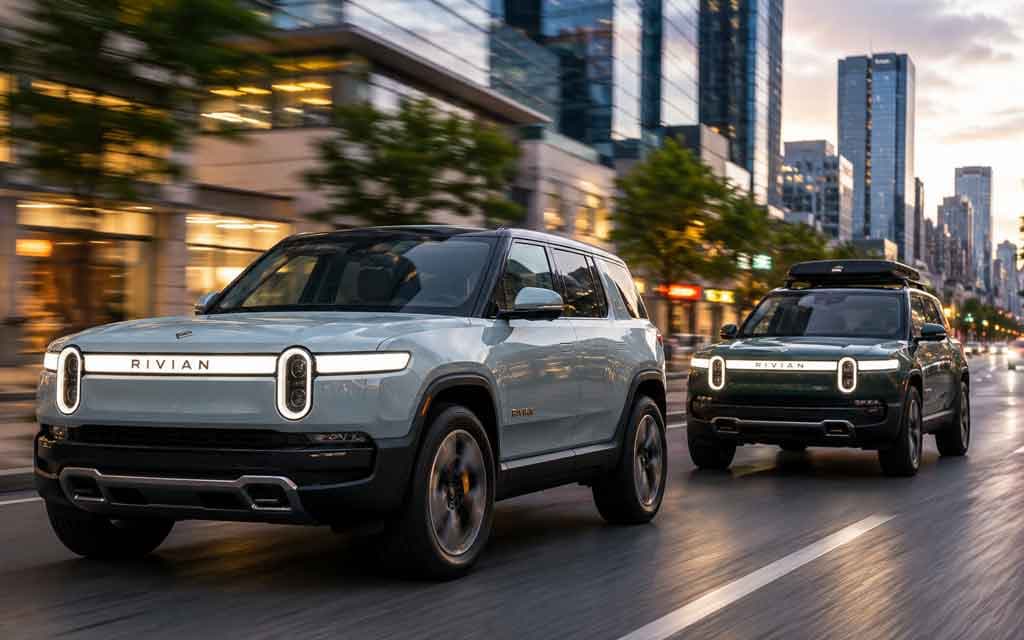
Rivian delivered big news this week with final production specifications and pricing confirmation for the R2 and R3 — its long-awaited mass-market electric SUVs and crossovers aimed directly at mainstream American buyers. The R2 starts at $45,000 before incentives, with deliveries beginning in early 2026.
This marks Rivian’s push from premium adventure vehicles into the heart of the US EV market.
Rivian R2 & R3 Key Specifications (2026 Models)
- R2 (Compact SUV): Starting $45,000 | ~320-mile range (top trims) | Dual-motor AWD available
- R3 (Crossover): Starting $42,000 | Slightly smaller footprint | More affordable entry point
- 0-60 mph: Under 3.5 seconds (R2 Performance)
- Battery Options: 269 kWh to 400+ kWh pack sizes
- Production: Georgia plant (starting late 2025, ramping 2026)
- Key Features: Adventure-ready design, 11.5-inch ground clearance, built-in gear lockers, bidirectional charging (V2H/V2G)
Why Rivian R2 & R3 Matter for American Families & Buyers
Most American EV shoppers want something practical, affordable, and fun — not just another $70K+ luxury option. The R2 and R3 directly address this by bringing Rivian’s signature rugged style and capability to price points that compete with the Tesla Model Y, Hyundai Ioniq 5/6, and Ford Mustang Mach-E.
With the federal IRA $7,500 tax credit still available for US-made vehicles, effective prices could drop as low as $37,500 for many buyers.
Rivian R2 vs Tesla Model Y vs Hyundai Ioniq 5 Comparison (2026)
Rivian R2
- Starting Price: $45,000
- Max EPA Range: ~320 miles
- Adventure Capability: Excellent (off-road focused)
- Interior Style: Rugged premium
- Built in USA: Georgia
- IRA Tax Credit: Eligible
- Target Buyer: Active families
Tesla Model Y
- Starting Price: $44,990
- Max EPA Range: 320–340 miles
- Adventure Capability: Good
- Interior Style: Minimalist tech
- Built in USA: Texas / California
- IRA Tax Credit: Eligible
- Target Buyer: Tech buyers
Hyundai Ioniq 5
- Starting Price: $41,500
- Max EPA Range: ~303 miles
- Adventure Capability: Average
- Interior Style: Futuristic
- Built in USA: South Korea / US
- IRA Tax Credit: Eligible
- Target Buyer: Urban commuters
Standout Features for US Drivers
- Gen 2 Platform — Faster charging (up to 210 kW), improved efficiency, and quieter cabin.
- Adventure DNA — Removable gear lockers, roof racks, and Camp Mode that American road-trippers love.
- Software & Connectivity — Over-the-air updates, new infotainment with better Apple CarPlay/Android Auto support.
- Family-Friendly — Spacious rear seats, massive cargo area, and available third-row option on longer-wheelbase variants.
Pros and Cons for American Buyers
Pros:
- True off-road and adventure capability at mainstream prices
- Strong US manufacturing and job creation in Georgia
- Likely full $7,500 federal tax credit eligibility
- Distinctive styling that stands out from cookie-cutter EVs
- Rivian’s proven high customer satisfaction and community
Cons:
- Production ramp-up could mean wait times into mid-2026
- Charging network still smaller than Tesla’s (though NACS adapter helps)
- Higher trims can quickly climb above $60K
- Brand awareness still lower than Tesla or Hyundai
What This Means for You in 2026
If you’re a suburban or active-lifestyle American family looking for an EV that can handle weekend getaways, school runs, and light off-roading without breaking the bank — the Rivian R2 should be on your test-drive list this year.
Total Cost of Ownership Tip: Lower fuel + maintenance costs + strong resale value (Rivian vehicles hold value well) make the R2 competitive with gas SUVs over 5 years.
Action Steps:
- Visit Rivian.com to configure and place a $100 refundable reservation
- Check your state + federal incentives
- Test drive the current R1T/R1S to experience the brand feel
Final Thoughts
The Rivian R2 and R3 represent a major step toward making compelling electric vehicles truly mainstream for American consumers. By combining adventure capability, solid range, and competitive pricing, Rivian is positioning itself as a serious challenger in the high-volume EV segment.
This launch could accelerate broader EV adoption in the US, especially among buyers who previously hesitated due to price or capability concerns.
Stay tuned to vfuturemedia.com for first-drive impressions, real-world range tests, and full buyer’s guides as vehicles hit dealerships and customer hands.
By Ethan Brooks Senior Future-Tech Analyst, vfuturemedia.com Specializing in EVs and sustainable mobility for American consumers.
NEXT_PUBLIC_GOOGLE_ADSENSE_ID to enableArticles you might like
 Electric Vehicles
Rivian R2 Pricing Strategy Analysis 2026: A Calculated Bet on Premium Positioning Before Going Mass-Market
 Electric Vehicles
Latest EV News June 2026: Global Sales Surge, US Faces Headwinds, Rivian R2 & Lucid Gravity Heat Up
 Electric Vehicles