
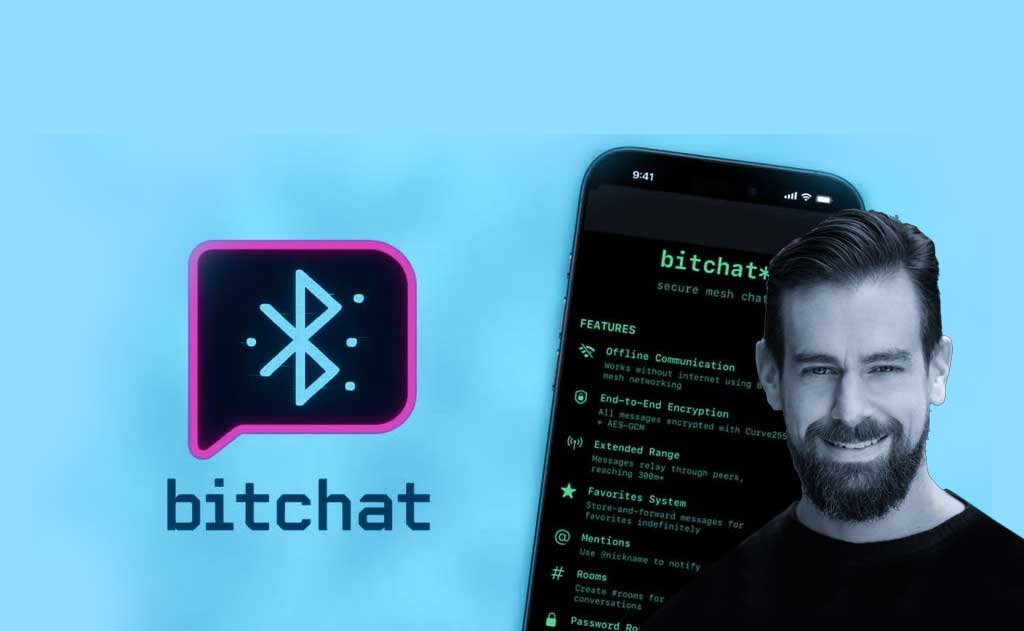
USA Tech Desk, January 17, 2026 – Imagine a crowded music festival where cell service crashes, a hurricane knocks out towers along the East Coast, or – in a worst-case scenario – widespread internet disruptions hit major cities. In those moments, traditional apps like WhatsApp, Signal, or iMessage go silent. But Bitchat, the Bluetooth-powered messaging tool from Jack Dorsey (Twitter/X co-founder and Block CEO), keeps the conversation going – no Wi-Fi, no mobile data, no central servers required.
While the app has exploded in usage during protests and blackouts in places like Iran, Uganda, Nepal, and Indonesia (with surges of tens of thousands of downloads in crisis zones), American users are increasingly downloading it for everyday resilience. Privacy advocates, outdoor enthusiasts, festival-goers, and those concerned about infrastructure fragility see Bitchat as a smart, low-key addition to their toolkit in 2026.
From Weekend Experiment to Global Resilience Tool
Dorsey kicked off Bitchat in July 2025 as a personal coding project over a weekend. Inspired by old-school IRC chats and frustrated with internet centralization (he’s publicly said he’s “partially to blame” via his Twitter days), he built an open-source, peer-to-peer app using Bluetooth Low Energy (BLE) mesh networking.
- Messages hop from phone to phone in range (~30-100 meters per hop).
- In dense crowds – think Times Square, Coachella, or a protest march – the network extends hundreds of meters or more as devices relay automatically.
- No accounts, no phone numbers, no SIMs – just pick a display name and go.
- End-to-end encryption for direct messages; public channels are signed to prevent fakes.
- Panic Mode: Triple-tap the logo to wipe everything instantly.
- Ephemeral by design – messages don’t linger on servers because there are none.
It launched on iOS via the App Store (after a quick TestFlight beta) and Android via GitHub sideload. Dorsey plans Wi-Fi Direct support soon for even better range and speed.
Why Americans Are Turning to Bitchat in 2026
The U.S. hasn’t seen government-mandated nationwide blackouts like some countries, but real-world scenarios make Bitchat appealing:
- Natural Disasters: Hurricanes, wildfires, and storms routinely take down cell networks. During recent events like Hurricane Melissa in the Caribbean (with spillover effects felt stateside), offline tools proved vital. Bitchat works when towers fail – perfect for coordinating with family in affected areas or sharing updates in evacuation zones.
- Crowded Events & Festivals: At massive gatherings (Super Bowl tailgates, music festivals, or New Year’s Eve in NYC), networks overload. Bitchat lets groups stay connected locally without relying on spotty service.
- Privacy & Surveillance Concerns: No logins mean no metadata trails to governments or companies. For activists, journalists, or anyone wary of tracking, it’s a surveillance-resistant option.
- Backup for Blackouts: In an era of growing cyber threats, aging infrastructure, and occasional regional outages, Bitchat offers a decentralized fallback. Reddit threads and tech forums buzz with Americans calling it “the ultimate what-if app.”
Unlike predecessors like Bridgefy (popular in Hong Kong 2019-2020 protests), Bitchat emphasizes minimalism and open-source transparency. Dorsey’s high profile – and his push for user-controlled tech – has drawn interest from U.S. privacy communities.
The Limitations: Not a Magic Bullet
Dorsey is candid: Bitchat hasn’t undergone full external security audits and may have vulnerabilities (early reports noted impersonation risks, now addressed with warnings). It shines in dense groups but fades in sparse areas – you need nearby users for hops. Battery drain can be an issue in constant use, and it’s best as a supplement, not a replacement, for internet-based apps.
Still, in a disconnected moment, even a short-range mesh can mean the difference between isolation and coordination.
The Bigger Vision
Bitchat aligns with Dorsey’s long-standing push for decentralization – from Bitcoin to Bluesky. As he fights internet centralization, this app reminds Americans: Communication doesn’t have to depend on towers, ISPs, or distant servers. In crowds, crises, or just bad signal days, people power the network.
Ready to try? Grab it from the App Store (iOS) or GitHub (Android). In an unpredictable world, staying linked offline might be the edge you need.
We started VFuture Media because we wanted tech news written by people who actually follow this industry — not content farms chasing keywords. If that resonates, we’d love to have you as a regular reader. Pull up a chair.



Leave a Comment