
By Ethan Brooks, Senior Journalist at VFutureMedia
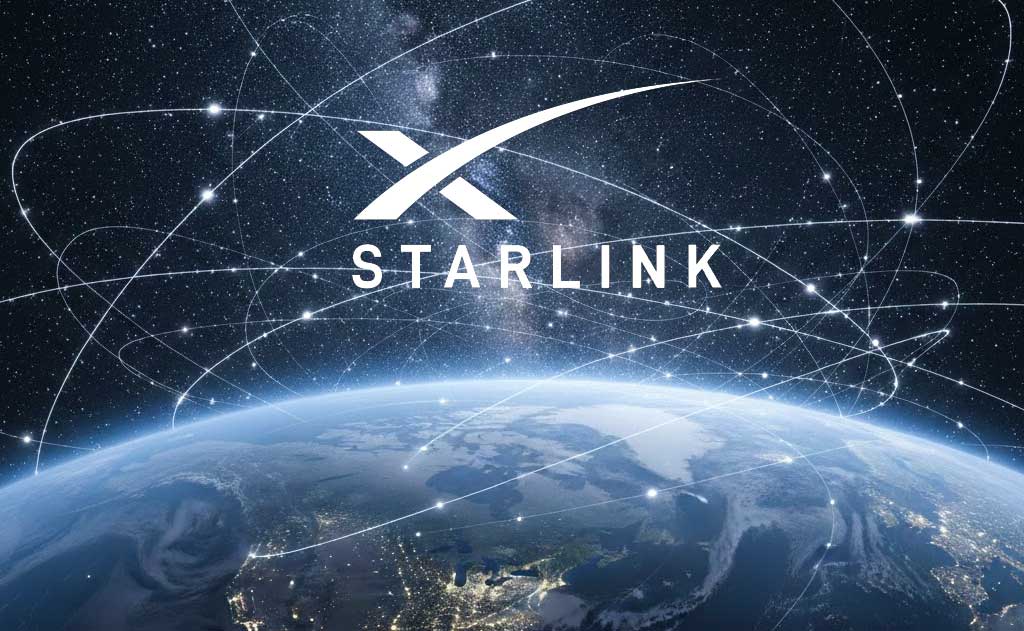
As of early February 2026, SpaceX has achieved a historic feat by launching over 11,000 Starlink satellites into orbit, cementing its position as the operator of the world’s largest and most ambitious satellite constellation. This megaconstellation, designed to deliver high-speed, low-latency internet to underserved and remote areas globally, now dominates low Earth orbit (LEO) and continues to expand at an unprecedented pace.
The milestone underscores SpaceX’s dominance in several key records:
- Guinness World Record for the largest satellite constellation.
- Largest operational satellite constellation worldwide.
- Record-breaking annual launch cadence.
- Most reusable rocket booster flights.
- Fastest satellite deployment rate in history.
These accomplishments highlight how SpaceX is revolutionizing global connectivity, supporting everything from rural broadband to maritime and aviation services, disaster response, and even emerging applications like direct-to-cell connectivity. With Starlink serving millions of subscribers and powering a growing share of SpaceX’s revenue, the project is central to the company’s vision of multi-planetary life and advanced space infrastructure.
The Scale of Starlink: Over 11,000 Launched, ~9,600+ in Orbit
According to detailed tracking from astronomer Jonathan McDowell’s Jonathan’s Space Report and other sources like KeepTrack.space, SpaceX has now launched a total of 11,088 Starlink satellites (as of late January/early February 2026 data points). Of these:
- Approximately 9,621 remain in orbit.
- Around 9,610 are reported as working/operational.
- The constellation accounts for roughly 65% of all active satellites in orbit globally.
This rapid buildup stems from SpaceX’s aggressive launch schedule using the reusable Falcon 9 rocket. Recent missions in early 2026, including multiple Starlink Group 6 flights deploying 29 satellites each, have pushed the total launched past the 11,000 mark. While some satellites are deorbited for end-of-life disposal or reconfiguration (e.g., plans to lower ~4,400 older units from ~550 km to ~480 km in 2026 to reduce collision risks and improve performance), the net growth remains explosive.
Starlink’s operational fleet includes a mix of generations:
- Earlier V1 satellites.
- Newer V2 Mini models with enhanced capabilities, including support for Direct-to-Cell service (allowing standard smartphones to connect without a dish in select regions).
The company has FCC approval for up to 12,000 initial satellites, with expansions to 15,000+ Gen2 units recently greenlit, and filings for even larger constellations—including ambitious proposals for up to 1 million satellites dedicated to orbital data centers for AI and compute needs.
Guinness World Record and Other Historic Achievements
Starlink holds the Guinness World Record for the largest satellite constellation, with records updated as of early 2025 showing thousands of active units (far surpassing previous holders like OneWeb or Iridium). By February 2026, the gap has widened dramatically.
Key records tied to Starlink and SpaceX’s launch prowess include:
- Largest operational constellation — Starlink dwarfs competitors, providing near-global coverage across ~150 countries and territories.
- Record-breaking annual launches — SpaceX shattered its own records in 2025 with 165+ orbital flights (mostly Falcon 9), many dedicated to Starlink. Early 2026 shows continued high cadence, with multiple missions per week.
- Most reusable rocket booster flights — Falcon 9 boosters routinely exceed 20+ flights; individual records have reached 32 flights on a single booster. In 2025–2026, SpaceX achieved milestones like the 500th booster landing and 500th reused launch.
- Fastest satellite deployment pace — Deploying dozens per launch, SpaceX has outpaced all historical efforts, enabling rapid constellation scaling.
These feats are powered by Falcon 9’s reusability, which drastically reduces costs and allows frequent missions. In 2025 alone, Starlink missions dominated the manifest, with boosters returning reliably for refurbishment and reflights.
Implications for Global Connectivity and the Future of Mobility
Starlink’s scale is transforming internet access:
- Millions of subscribers (projections suggest doubling again in 2026 to ~18 million+).
- Coverage in remote areas, oceans, aviation, and crisis zones (e.g., disaster relief).
- Enabling new tech like Direct-to-Cell and integration with Tesla vehicles or future mobility platforms.
For the broader space and mobility ecosystem, Starlink supports data-heavy applications—autonomous vehicles, IoT, remote sensing—and positions SpaceX as a leader in satellite broadband ahead of potential competitors like Amazon’s Kuiper or China’s GuoWang.
Challenges remain: orbital congestion, astronomical interference concerns, deorbiting compliance, and regulatory hurdles for mega-constellations. SpaceX addresses these through proactive lowering of orbits, improved demisability designs, and coordination with regulators like USSPACECOM.
Looking Ahead: Starlink’s Role in SpaceX’s 2026 Ambitions
With SpaceX eyeing a potential 2026 IPO (rumored valuations in the trillions), Starlink remains the revenue engine driving growth. The constellation’s expansion—coupled with Starship development for even larger payloads—sets the stage for next-gen services, including space-based AI compute and Mars-supporting infrastructure.
At VFutureMedia, we track how space tech intersects with mobility, EVs, and global connectivity. For related insights, explore our posts: Chinese Satellite Ambitions vs. Starlink and Reusable Rockets: The Future of Launch.
SpaceX’s Starlink milestone isn’t just about numbers—it’s about redefining access to information and opportunity on a planetary scale. As launches continue, the constellation will only grow more integral to modern life.
I’m Ethan, and I write about the tech that’s actually going to change how we live — not the stuff that just sounds impressive in a press release. I cover AI, EVs, robotics, and future tech for VFuture Media. I was on the ground at CES 2026 in Las Vegas, walking the show floor so I could give you a real read on what matters and what’s just noise. Follow me on X for daily takes.


Leave a Comment