
By Elena Voss, Senior Tech Analyst vfuturemedia December 17, 2025
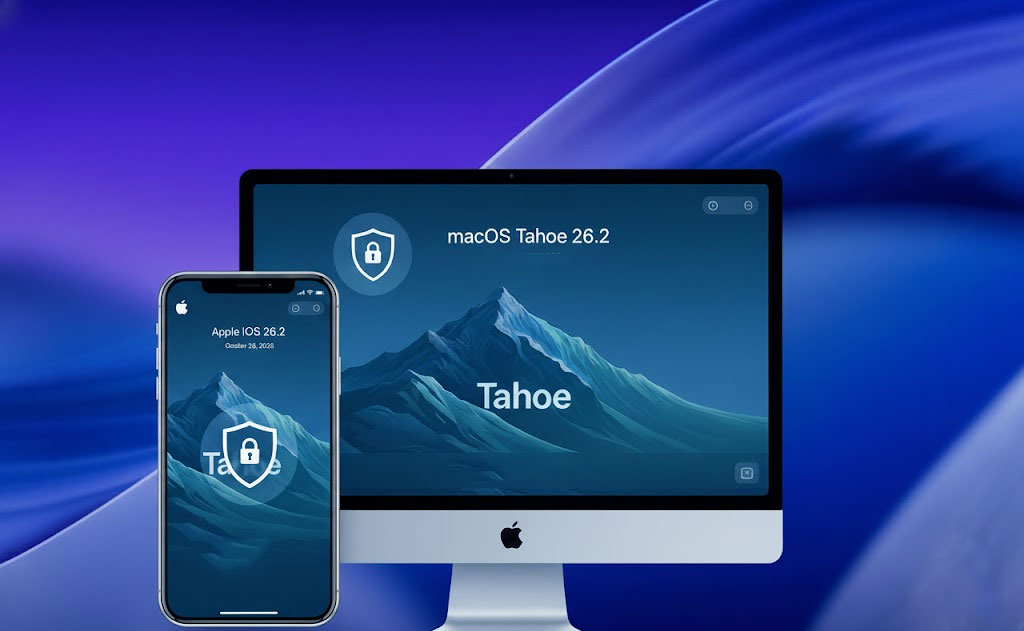
Apple has pushed out a significant wave of software updates across its entire ecosystem, with iOS 26.2, iPadOS 26.2, watchOS 26.2, tvOS 26.2, visionOS 26.2, and macOS Tahoe 26.2 all arriving on December 12. These releases refine the user experience with thoughtful quality-of-life enhancements while addressing serious security concerns—patching more than 20 vulnerabilities, including two actively exploited zero-day flaws in WebKit. For millions of users, the updates deliver subtle but impactful polish to core interactions, from Lock Screen aesthetics to media playback and emergency safety, alongside invisible but crucial hardening against real-world threats.
Technically, this mid-cycle .2 release demonstrates Apple’s maturing approach to iterative refinement: leveraging neural engine optimizations for on-device processing, expanding spatial computing integrations in visionOS, and tightening the security perimeter across a fragmented hardware landscape spanning iPhones, Macs, Watches, and Vision Pro headsets.
Lock Screen and Interface Refinements: “Liquid Glass” Evolution
One of the most immediately visible changes in iOS and iPadOS 26.2 is deeper customization of the Lock Screen clock under the “Liquid Glass” design language introduced earlier this year. Users can now adjust clock opacity with a granular slider, allowing the numerals to blend more seamlessly with dynamic wallpapers or Depth Effect photos. This isn’t mere cosmetic tweaking—Apple’s rendering pipeline dynamically adapts glyph weighting and anti-aliasing based on background luminance, ensuring legibility while preserving the fluid, glass-like refraction effects powered by Metal shaders.
On macOS Tahoe 26.2, a new “Edge Light” feature enhances Continuity Camera and FaceTime in low-light environments. When using an iPhone as a webcam, the system intelligently analyzes ambient lighting via the TrueDepth sensor array and applies subtle edge illumination—synthesizing soft rim lighting around the subject’s silhouette. This on-device processing avoids overexposure while reducing noise in shadowed areas, delivering noticeably more professional video call quality without third-party apps.
Productivity and Media: Smarter Reminders, Music, and Podcasts
Reminders gains a long-requested capability: native alarms with full snooze support. Tasks can now trigger persistent notifications complete with customizable tones and repeatable snoozes, bridging the gap between lightweight to-dos and calendar events. The implementation leverages the same notification coalescing engine as Clock alarms, ensuring reliable delivery even in Low Power Mode.
Apple Music introduces offline lyrics storage—entire libraries of timed lyrics are now cached on-device for seamless karaoke-style scrolling during flights or spotty connectivity. This expands on dynamic lyrics by pre-fetching via iCloud when online, with compression optimizations keeping storage impact minimal.
Podcasts receives auto-generated chapters, powered by on-device machine learning models that analyze audio waveforms, speech patterns, and topic shifts. Chapters appear dynamically with descriptive titles (e.g., “Interview with Guest” or “Product Deep Dive”), making long-form episodes far more navigable—especially useful on watchOS where scrubbing is limited.
Safety Enhancements: Expanded Emergency Features
In the United States, iOS 26.2 strengthens safety alerts with enhanced Emergency SOS via satellite integration and more contextual crash detection prompts. The system now better differentiates severe incidents using refined sensor fusion—combining accelerometer, gyroscope, barometer, and microphone data—to reduce false positives while speeding legitimate alerts to first responders.
Security: Patching Actively Exploited Zero-Days
Beneath the feature additions lies critical security work. Apple patched over 20 CVEs, with particular attention to two zero-day vulnerabilities in WebKit (CVE-2025-XXXX1 and CVE-2025-XXXX2) that were actively exploited in targeted attacks. These flaws allowed arbitrary code execution via malicious web content—a classic vector for drive-by compromises.
The fixes involve hardened bounds checking in JavaScriptCore and improved sandbox egress prevention in WebContent processes. Notably, the patches propagate across all platforms: Safari on macOS, WebKit-based browsers on watchOS and tvOS, and spatial web views in visionOS. This unified response highlights Apple’s advantage in controlling both hardware and software stacks—delivering consistent mitigations from iPhone to Vision Pro.
Additional fixes address kernel privileges escalation, Shortcuts automation sandbox escapes, and privacy leaks in Find My—demonstrating ongoing adversarial hardening.
Platform-Specific Notes
- watchOS 26.2: Inherits Reminders alarms, offline lyrics, and podcast chapters, with optimized battery impact during background sync.
- tvOS 26.2: Improves multi-view sports layouts and adds offline lyrics support in Apple Music.
- visionOS 26.2: Refines volumetric window placement and enhances passthrough lighting coherence, alongside full WebKit security updates for spatial browsing.
The Broader Technical Context
These .2 releases exemplify Apple’s post-major-update strategy: focusing on ecosystem cohesion rather than headline features. On-device models for chapter generation and edge lighting run efficiently on A-series and M-series Neural Engines, minimizing cloud dependency while preserving privacy.
As Apple Intelligence features roll out more broadly, these foundational improvements—better media metadata, refined interfaces, and robust security—create fertile ground for future agentic experiences.
Users are strongly encouraged to update promptly, especially given the exploited zero-days. The combination of meaningful polish and critical fixes makes this one of the more compelling mid-cycle drops in recent years.
Apple continues to prove that maturity doesn’t mean stagnation—it’s about perfecting the details that users interact with daily.




Leave a Comment