


In 2026, the smartphone landscape in the United States is undergoing a seismic shift. For over a decade, the iPhone has reigned supreme as the go-to device for millions of American consumers, thanks to its seamless ecosystem, premium build quality, and strong brand loyalty. But the rise of AI phones—smartphones powered by advanced on-device artificial intelligence—is challenging Apple’s dominance like never before.
With features like real-time translation, generative photo editing, intelligent assistants, and proactive task automation, AI is transforming phones from communication tools into personal AI companions. Android devices, particularly from Google and Samsung, are leading this charge with deeper, more versatile AI integrations. Meanwhile, Apple’s Apple Intelligence continues to evolve, but many experts argue it’s playing catch-up.
So, is the iPhone still king in the US market? Or are AI phones finally dethroning it? In this comprehensive guide, we’ll break down the current state of the smartphone wars, compare key AI features, analyze market data, and explore what this means for US consumers shopping in 2026.
iPhone’s Enduring Dominance in the US
Despite global shifts, the iPhone remains incredibly strong stateside. As of late 2025 and into early 2026:
- iOS holds approximately 58-59% market share in the United States (sources like Statcounter and Backlinko report figures around 58.13% to 59.31% for iOS vs. 40-41% for Android).
- Apple led global shipments in 2025 with 20% share and strong growth, driven by premium models and upgrade cycles.
- In the US, Apple consistently outperforms Android in user loyalty, spending power (iPhone users spend more on apps and services), and premium segment dominance.
This lead stems from Apple’s tightly integrated ecosystem (iMessage, AirDrop, Continuity with Mac/iPad), superior privacy focus, and reliable long-term software support. For many Americans—especially in urban areas, professionals, and younger demographics—the iPhone is synonymous with status and simplicity.
However, cracks are appearing. Upgrade cycles are lengthening, and consumers are increasingly drawn to AI-driven innovations that Android delivers more aggressively.
The Rise of AI Phones: Redefining Smartphone Value
2025-2026 marks the true arrival of AI-native smartphones. Processors like Qualcomm’s Snapdragon 8 Elite, Google’s Tensor G5, and Apple’s A-series chips enable powerful on-device AI, reducing reliance on cloud processing for faster, more private experiences.
Key ways AI is changing consumer tech:
- Personalized Assistance — AI anticipates needs, from suggesting routes to auto-summarizing emails.
- Creative Tools — Generative editing for photos/videos, real-time translations, and content creation.
- Productivity Boosts — Live call screening, note summarization, and multi-step task handling.
- Privacy & Efficiency — On-device processing minimizes data sent to servers.
In the US, where consumers value convenience and innovation, AI features are becoming a top purchase driver—especially as prices rise due to component shortages (average smartphone prices up ~7% in 2026 forecasts).
Apple Intelligence: Solid but Cautious
Apple’s Apple Intelligence (expanded in iOS 19/26) emphasizes privacy-first, on-device processing with fallback to Private Cloud Compute.
Standout features in 2026:
- Writing tools for proofreading, summarization, and rewriting across apps.
- Enhanced Siri with better context awareness (though still lagging in some areas).
- Visual Intelligence (scan objects via camera for info or actions).
- Clean Up in Photos (object removal), Image Playground (generative images), and live translation in Messages/FaceTime/Phone.
- Integration with ChatGPT for complex queries.
Strengths: Seamless iOS integration, strong privacy, polished experience.
Limitations: Features often require newer hardware (iPhone 15 Pro+ or iPhone 17 series). Some tools feel incremental, and Siri trails competitors in versatility.
Android AI: More Aggressive and Versatile
Android’s AI ecosystem—powered by Google Gemini and Samsung’s Galaxy AI—offers broader, more experimental capabilities.
Google Pixel series (e.g., Pixel 10 Pro) excels with:
- Gemini as core assistant: Multimodal (text, image, video), live video/screen sharing in Gemini Live.
- Magic Editor/Imagen for advanced photo/video edits (object removal, sky replacement, generative fill).
- Call Screen with real-time transcription/notes.
- On-device features via Gemini Nano for privacy.
Samsung Galaxy S25 series integrates Gemini deeply:
- Galaxy AI tools: Real-time call translation, note summarization, Audio Eraser.
- Circle to Search, generative image creation.
- Seven-year updates ensure longevity.
Other Androids (e.g., from OnePlus, Xiaomi) trickle down AI features rapidly.
Android advantages: Wider device range (flagship to mid-range), more multimodal AI, faster feature rollouts.
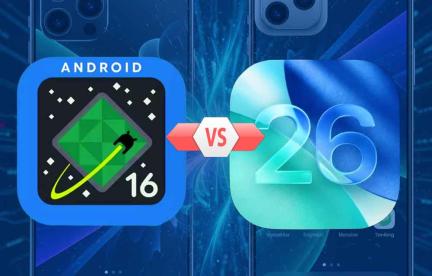
Head-to-Head: iPhone vs. Android AI in 2026
Digital Assistant
- Apple: Improved Siri with better context awareness, but still limited in multi-step tasks
- Android: Gemini Live offers natural conversations, video input, and screen sharing
- Winner: Android
Photo & Video Editing
- Apple: Clean Up tool, Image Playground, ChatGPT-assisted generation
- Android: Magic Editor, Audio Eraser, advanced generative AI tools
- Winner: Android
Translation & Calls
- Apple: Live translation inside apps, basic call screening
- Android: Real-time call translation, Call Screen 2.0 with AI responses
- Winner: Tie / Slight Android edge
Writing Tools
- Apple: System-wide proofreading, rewriting, summarization
- Android: Strong app-level tools, Gemini excels at deeper writing tasks
- Winner: Apple (system-wide consistency)
Privacy & On-Device AI
- Apple: Heavy on-device processing, Private Cloud Compute as fallback
- Android: Gemini Nano on-device, but greater cloud dependence
- Winner: Apple
Availability
- Apple: Limited to newer iPhone models (iPhone 17 series+)
- Android: Available across flagships and many mid-range devices
- Winner: Android
Ecosystem Integration
- Apple: Seamless experience across iPhone, Mac, iPad, Watch
- Android: Deep Google and Samsung integration, highly customizable
- Winner: Depends on user preference
Overall 2026 Takeaway
- Apple is ideal for privacy, polish, and ecosystem stability
- Android is better for advanced AI features, flexibility, and broader availability
If you want this shorter, more news-style, or SEO-optimized, tell me.
Overall, Android leads in raw AI versatility and innovation speed. Reviews from 2026 (e.g., Stuff, PCMag, CNET) often rank Pixel 10 Pro or Galaxy S25 Ultra as top AI phones, with iPhone 17 Pro praised for polish but trailing in “wow” features.
Market Impact and US Consumer Trends
- Sales & Shipments: Premium AI phones drive growth; Apple and Samsung resilient despite 2026 shipment dips (~2% decline forecast due to higher prices).
- Price Pressures: AI chip/memory shortages push average prices up 7%+; US consumers may delay upgrades or shift to value AI options.
- User Preferences: iPhone loyalists stick for ecosystem/privacy; AI enthusiasts migrate to Android for cutting-edge tools.
- Future Outlook: By late 2026-2027, expect agentic AI (proactive agents) and foldables (potential iPhone Fold) to intensify competition.
Is the iPhone Still King?
Yes—for ecosystem loyalists, privacy-focused users, and those prioritizing simplicity, the iPhone remains king in the US. Its ~58-59% market share proves enduring appeal.
But AI phones are eroding that throne. Android’s aggressive AI push (Gemini/Galaxy AI) delivers more transformative experiences today, appealing to power users, creators, and value seekers.
In 2026, the “best” phone depends on priorities:
- Want seamless, private, reliable? iPhone wins.
- Crave advanced AI, customization, innovation? Android AI phones lead.
The smartphone market is no longer just hardware—it’s intelligence. As AI evolves, the true king will be the platform that makes everyday life smarter.
For the latest on AI phones, EV tech, and future mobility, visit www.vfuturemedia.com. What’s your pick in 2026—iPhone loyalty or AI-powered Android? Share in the comments!



Leave a Comment