
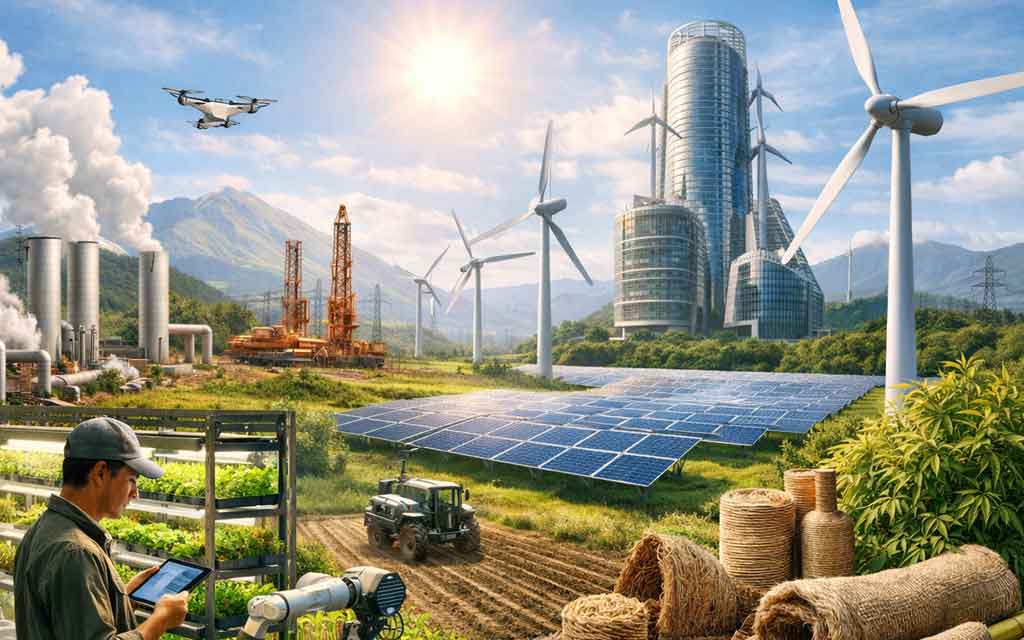
Climate tech is experiencing what many investors are calling its “iPhone moment”—a surge in mainstream interest, scalable innovation, and capital deployment that mirrors the smartphone revolution’s transformative impact. TIME and Statista’s “America’s Top GreenTech Companies 2026” ranking underscores this momentum, with a strong emphasis on advanced energy (including geothermal and fusion), sustainable materials, and agtech solutions that deliver measurable environmental gains alongside financial strength.
Globally, clean energy investment shattered records in 2025, reaching approximately $2.2–2.3 trillion, with two-thirds of total energy spending now directed toward cleaner technologies. This surge is fueled by rising electricity demand from AI data centers, policy support in key markets, and falling costs for renewables and enabling technologies.
Key Categories Driving the GreenTech Agenda
Climate tech lists and rankings in 2026 highlight three core pillars:
- Advanced Energy: Firm, dispatchable clean power sources like next-gen geothermal, advanced nuclear, and fusion are gaining prominence. These technologies address the intermittency challenges of solar and wind while meeting the always-on needs of hyperscale data centers.
- Sustainable Materials: Innovations that replace high-emission traditional materials (plastics, textiles, concrete) with bio-based or circular alternatives are scaling rapidly, driven by corporate net-zero commitments and regulatory pressure.
- AgTech: Solutions focused on reducing agriculture’s massive footprint—including synthetic fertilizer use, methane emissions, and water/land intensity—are delivering both climate benefits and yield improvements for farmers.
A fifth of the TIME/Statista list falls into renewable/advanced energy categories, with top performers blending innovation, proven pilots, and strong backing.
Indian Innovation Spotlight: Canvaloop Raises $1.5M for Sustainable Textile Fibres
India is emerging as a hotbed for sustainable materials innovation, exemplified by Canvaloop, a Surat-based biomaterials startup that has raised $1.5 million in fresh funding from Gujarat Venture Finance Limited (GVFL) and Rockstud Capital.
Founded in 2020 by Shreyans Kokra, Canvaloop transforms agricultural waste—such as pineapple leaves, banana stems, hemp, and other crop residues—into textile-grade fibres using a proprietary low-water, low-chemical, closed-loop process. The technology minimizes environmental impact while creating scalable alternatives to conventional cotton, polyester, and other resource-intensive fibres.
The capital will fuel:
- Expansion of production capacity
- Improved supply chain readiness and faster delivery timelines
- Acceleration of commercial partnerships with textile mills and fashion brands
- Development of next-generation regenerative fibres
This funding round highlights growing investor appetite for circular economy plays in emerging markets, where agricultural waste is abundant and textile manufacturing is a major economic driver. By turning waste into high-value materials, Canvaloop addresses both pollution from crop residue burning and the textile industry’s significant water, chemical, and carbon footprint.
Broader Momentum: From U.S. Leaders to Global Scaling
The U.S. list continues to feature standouts like Fervo Energy (geothermal, #1), Pivot Bio (microbial nitrogen-fixing fertilizers, #2), Ormat Technologies, and Helion Energy (fusion). These companies benefit from corporate offtake deals—particularly with Google and other tech giants seeking reliable clean power for AI infrastructure.
Sustainable materials and agtech players are similarly gaining traction. Gene-edited microbes and precision ag solutions are reducing fertilizer runoff and emissions, while biomaterials startups worldwide tackle plastic and textile waste.
The “iPhone moment” narrative reflects a shift: GreenTech is moving beyond niche pilots into bankable, deployable solutions with clear ROI. Record deal flow, larger later-stage checks, and integration with AI-driven energy demand are creating tailwinds across the sector.
Why 2026 Feels Different
Several converging forces are accelerating progress:
- AI Energy Demand: Hyperscalers’ need for 24/7 carbon-free power is de-risking advanced energy projects through innovative PPAs and direct investments.
- Cost Declines and Maturity: Renewables, storage, and enabling technologies have reached cost parity or better in many regions, making deployment economically attractive.
- Investor Sophistication: Capital is flowing to companies that combine environmental impact with strong unit economics and path-to-scale.
- Global Diversification: While the U.S. leads in high-profile rankings, innovations from India, Europe, and Asia are adding depth to supply chains for critical materials and circular solutions.
Challenges persist—including permitting hurdles, supply chain constraints for critical minerals, and policy variability—but the overall trajectory points to sustained growth in 2026 and beyond.
For businesses, investors, and policymakers, the message is clear: Climate tech categories like advanced energy, sustainable materials, and agtech are no longer experimental—they are essential infrastructure for a high-growth, lower-carbon economy. Companies that execute effectively on scalability and cost reduction will capture outsized opportunities as clean energy investment continues its record-breaking run.
Stay tuned to vfuturemedia.com for ongoing coverage of GreenTech breakthroughs, climate tech funding, and the technologies powering a sustainable future.
Keywords: GreenTech 2026, America’s Top GreenTech Companies, advanced energy climate tech, sustainable materials textiles, agtech microbial fertilizer, Canvaloop $1.5M funding India, clean energy investment record 2025-2026, GreenTech iPhone moment, Fervo Energy geothermal, Pivot Bio agtech.
Ethan Brooks is a tech journalist based in the USA, covering AI innovation, sustainability, GreenTech investments, and emerging climate solutions.




Leave a Comment