
By Elena Voss, Senior Tech Analyst vfuturemedia December 17, 2025
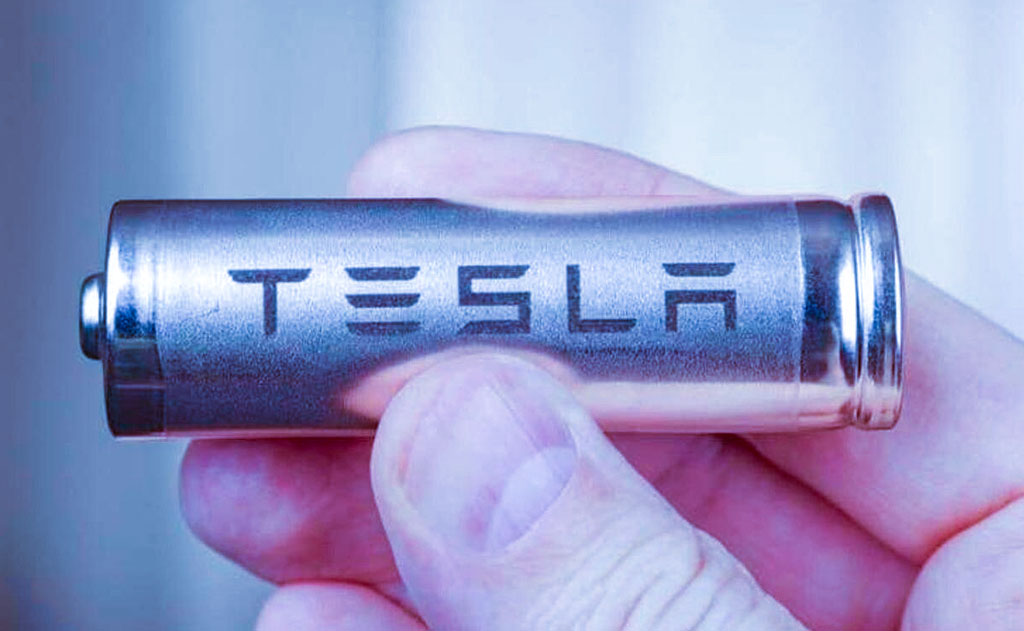
Tesla is pushing the boundaries of battery manufacturing and safety engineering with a dual-track strategy: aggressively scaling highly automated production while rigorously addressing legacy risks. On December 16, the company announced a major investment to enable up to 8 GWh annual battery cell production at Gigafactory Berlin starting in 2027, marking a return to on-site cell manufacturing with the advanced 4680 format. This move toward full vertical integration—from raw cells to packs to vehicles—at a single European site comes amid resumed highly automated pack assembly using imported 4680 cells. Meanwhile, a November 2025 recall of approximately 10,500 older Powerwall 2 units highlights Tesla’s uncompromising focus on thermal runaway prevention, even as its Megapack deployments continue to dominate grid-scale storage with record volumes and new product evolutions.
The technical narrative here is one of relentless optimization: leveraging dry electrode processes and structural pack designs in the 4680 ecosystem for higher energy density and lower costs, while advanced battery management systems (BMS) and remote monitoring mitigate risks in deployed fleets. For future tech observers, these developments underscore how Tesla is engineering a more resilient, localized supply chain against global competition—particularly from Chinese LFP dominance—while powering the renewable grid transition.
Reviving Cell Production at Giga Berlin: The 4680 Vertical Integration Play
Giga Berlin’s battery story has been a rollercoaster of ambition and pragmatism. Originally envisioned as home to the world’s largest cell factory (up to 100-250 GWh initially pitched), plans were deferred in 2022 to prioritize U.S. production amid IRA incentives. Now, Tesla is recommitting with a three-digit million-euro investment, pushing total cell factory spending toward €1 billion.
The target: 8 GWh/year of 4680 cells starting 2027. These tabular-format cells—46mm diameter, 80mm height—represent Tesla’s bet on in-house innovation. Key technical advantages include:
- Dry electrode coating: Eliminates solvent drying, slashing energy use by ~70% and factory footprint, enabling gigawatt-scale lines in constrained spaces like Grünheide.
- Higher silicon anode content: Boosts energy density ~20-30% over 2170 cells, with structural integration allowing packs to serve as vehicle floor reinforcements—reducing weight and parts count.
- Tabless design: Reduces internal resistance, enabling faster charging and higher power output while minimizing heat buildup.
Currently, Giga Berlin has resumed battery pack assembly post a 2025 fire incident, now dubbed Tesla’s “most highly automated battery factory worldwide.” Packs incorporate 4680 cells shipped from Giga Texas, with robotic systems achieving unprecedented throughput via vision-guided assembly and AI-optimized torque sequencing.
This hybrid phase—imported cells feeding hyper-automated packs—bridges to 2027’s full localization. The 8 GWh capacity could support ~100,000-130,000 vehicles annually (assuming ~60-80 kWh packs), insulating European production from transatlantic shipping delays and tariffs. In a continent where Chinese imports dominate affordable segments, this vertical stack—from cell winding to module stacking to vehicle integration—offers supply chain resilience uniquely challenging to replicate amid high European energy and labor costs.
Safety in Focus: Powerwall 2 Recall and Thermal Runaway Mitigation
Contrastingly, Tesla’s residential storage legacy faces scrutiny with the November 13, 2025, recall of ~10,500 Powerwall 2 units (2020-2022 production) in the U.S., following 22 overheating reports—including smoke and minor fires—attributed to a third-party cell defect.
Technically, the issue stems from lithium-ion cells prone to internal shorts during deep discharge or fault conditions, triggering thermal runaway cascades. Tesla’s response leverages its over-the-air (OTA) ecosystem: remotely discharging affected units to 0% SoC, preventing propagation while scheduling free replacements (Powerwall 3 units, presumably).
This proactive remote intervention—disabling packs before incidents escalate—exemplifies modern BMS evolution: multi-layer sensing (voltage, temperature, gas detection) with cloud-connected fail-safes. No injuries reported, but the episode recalls broader industry challenges with early NMC chemistries versus safer LFP in newer products.
Notably, Powerwall 3 and Megapack lines remain unaffected, benefiting from refined supplier vetting, enhanced cell screening, and integrated liquid cooling. Tesla’s fleet-wide data (billions of cell-hours) feeds AI models predicting degradation, enabling preemptive actions that competitors envy.
Megapack Momentum: Grid-Scale Dominance Amid Record Deployments
While residential recalls grab headlines, Tesla’s utility-scale arm surges. 2024 saw 31.4 GWh deployed—doubling prior records—with 2025 on track for >50% growth. Megapack 3 (unveiled September 2025) boosts density to ~5 MWh/unit, while Megablock pre-integrates four units with transformers for 23% faster installs—claiming 1 GWh in 20 days.
LFP cells (sourced globally, including CATL) prioritize cycle life (>6,000) and safety, with advanced inverters providing virtual inertia and black-start capability. Recent projects—like Japan’s 104 MWh Helios and ongoing Australian megabatteries—demonstrate grid services: frequency regulation, arbitrage, and renewable firming.
Shanghai’s Megafactory ramps to 40 GWh/year, complementing Lathrop’s output. This scale drives costs below $200/kWh installed, undercutting gas peakers in many markets.
The Bigger Picture: Balancing Innovation, Risk, and Scale
Tesla’s battery trajectory reveals sophisticated systems engineering: 4680’s manufacturing breakthroughs for vehicular efficiency, rigorous remote governance for safety, and modular LFP scaling for grids. Challenges persist—European cost competitiveness, legacy fleet management, geopolitical supply shifts—but the 2027 Berlin milestone positions Tesla for localized, high-density production.
As global storage demand explodes (driven by renewables and AI data centers), Tesla’s blend of automation, data-driven safety, and vertical control isn’t just advancing batteries—it’s redefining energy resilience. The recalls remind us safety is iterative; the expansions signal abundance ahead.
I’m Ethan, and I write about the tech that’s actually going to change how we live — not the stuff that just sounds impressive in a press release. I cover AI, EVs, robotics, and future tech for VFuture Media. I was on the ground at CES 2026 in Las Vegas, walking the show floor so I could give you a real read on what matters and what’s just noise. Follow me on X for daily takes.
We’ll be watching how this develops over the next few weeks. Bookmark this page — we update our coverage as the story moves. And if you spotted something we missed, tell us in the comments.


Leave a Comment