
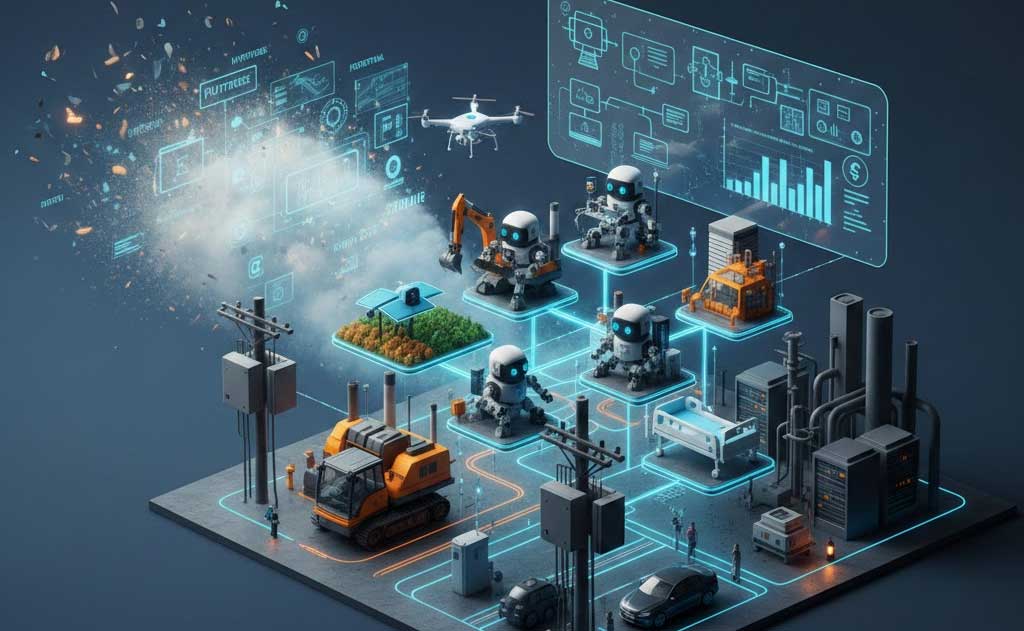
As we step into 2026, artificial intelligence is undergoing a profound maturation. After years of explosive growth, massive model scaling, and eye-catching demonstrations, the industry is shifting toward practical, efficient, and measurable applications. Experts widely describe this as the year AI moves “from hype to pragmatism,” focusing on systems that deliver tangible value rather than endless promises.
This transition reflects growing pressure on enterprises to justify enormous investments in AI infrastructure. With data center energy demands soaring and ROI scrutiny intensifying, 2026 prioritizes reliable agents, efficient architectures, and targeted deployments that augment human capabilities instead of attempting wholesale replacement.
Agentic AI and World Models: The New Center Stage
One of the most exciting developments is the rise of agentic AI — autonomous systems capable of planning, reasoning, and executing multi-step tasks. These agents are evolving from experimental demos to real-world tools that integrate into workflows for customer service, IT support, sales, and more.
Complementing this are world models, AI systems that understand 3D interactions, physics, and spatial dynamics. These models are crucial for robotics, autonomous vehicles, and immersive environments, enabling AI to “reason” about the physical world like humans do.
Experts predict 2026 as the breakthrough year for these technologies, with advancements in simulation “gyms” accelerating learning and the Model Context Protocol (MCP) reducing friction in connecting agents to external tools and data.
Smaller, Efficient Models and the Edge AI Revolution
Gone are the days when bigger always meant better. Small Language Models (SLMs) and fine-tuned, domain-specific models are stealing the spotlight. These compact powerhouses match or exceed the performance of giant frontier models in targeted applications — at a fraction of the cost, speed, and energy use.
Andy Markus, AT&T’s chief data officer, emphasizes that “fine-tuned SLMs will become a staple for mature AI enterprises in 2026,” driven by their superior cost-performance ratio.
This efficiency push is supercharging edge AI, where intelligence moves to devices like smartphones, IoT sensors, wearables, and local hardware. Edge computing enables real-time processing with enhanced privacy, lower latency, and reduced reliance on massive cloud infrastructure — turning concepts into everyday reality.
Pragmatic ROI: Enterprises Demand Results
Businesses are no longer dazzled by flashy features; they want measurable productivity gains. 2026 is dubbed the “show me the money” year, with leaders prioritizing ROI, governance, security, and sovereignty. Agentic systems will augment human work, creating hybrid teams where AI handles routine tasks and humans focus on creativity, strategy, and oversight.
As one expert notes, “2026 will be the year of the humans” — emphasizing collaboration over replacement.
AI Stocks and Chipmakers Rally Amid Infrastructure Demand
The market reflects this optimism. Chip giants like Nvidia, AMD, and Intel kicked off 2026 with strong gains, fueled by relentless data center expansion. Nvidia maintains dominance with its ecosystem, while AMD pushes open-standard solutions and Intel advances client computing.
Ongoing hyperscaler investments drive this rally, though concerns about sustainability persist.
Speculation around space-based data centers highlights the energy crunch. Proposals from startups like Starcloud aim to harness unlimited orbital solar power, potentially slashing costs and bypassing Earth’s land/power limits. While still emerging (with prototypes eyed for 2026), this sci-fi-inspired idea underscores the urgency of addressing AI’s environmental footprint.
CES 2026: AI-Integrated Everything on Display
The year’s biggest showcase arrives soon — CES 2026, running January 6-9 in Las Vegas. Expect AI everywhere, from autonomous vehicles and advanced mobility to humanoid robots tackling household chores, smart home systems that anticipate needs, and edge-powered devices.
Key highlights include:
- Robotics taking center stage, with tours and demos of AI-powered machines for manufacturing, logistics, and daily life.
- Autonomous driving advancements, including robotaxis and safety features.
- Integrated smart homes linking with vehicles and wearables for seamless experiences.
CES Foundry will debut for AI and quantum innovations, alongside workshops and talks emphasizing practical AI deployment.
The Future Looks Pragmatic — and Promising
2026 signals AI’s coming-of-age: less spectacle, more substance. With efficient models, capable agents, and ROI-focused strategies, the technology is embedding itself as essential infrastructure — quietly powering productivity, innovation, and real-world progress.
At VFutureMedia, we’re tracking these shifts closely, helping businesses navigate the pragmatic AI era. Stay tuned for more insights as CES unfolds and these trends accelerate.
This article is optimized for search terms including “AI trends 2026”, “agentic AI 2026”, “edge AI reality”, “AI pragmatism”, “CES 2026 AI highlights”, and “AI stocks rally 2026”.
I’m Ethan, and I write about the tech that’s actually going to change how we live — not the stuff that just sounds impressive in a press release. I cover AI, EVs, robotics, and future tech for VFuture Media. I was on the ground at CES 2026 in Las Vegas, walking the show floor so I could give you a real read on what matters and what’s just noise. Follow me on X for daily takes.
If you found this useful, the best thing you can do is share it with someone who’d actually appreciate it. And if you want more like it, we’re here every week.



Leave a Comment