
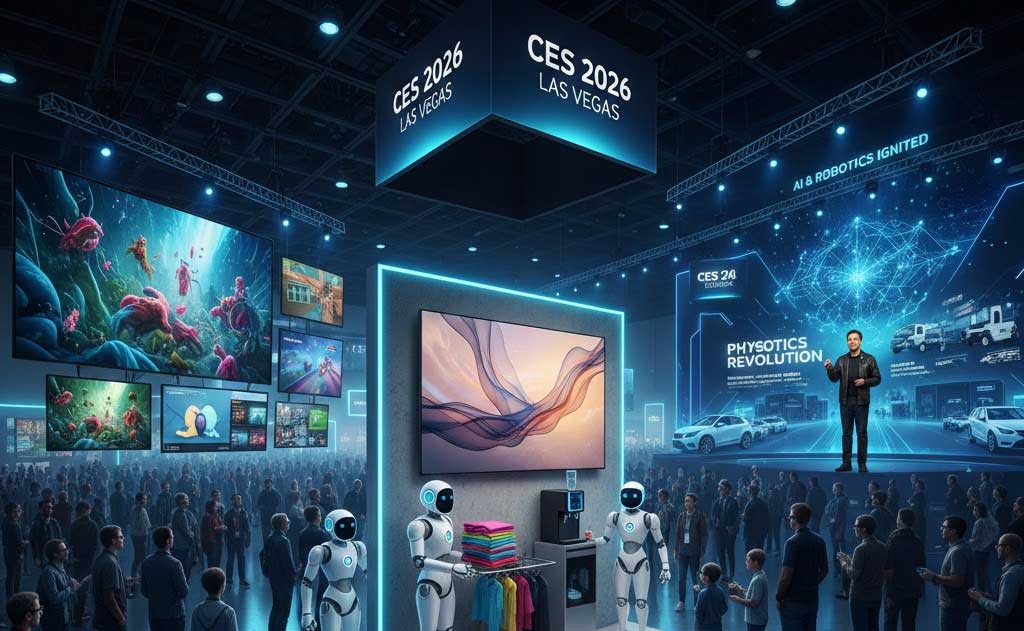
As CES 2026 officially kicks off in Las Vegas (January 6–9, 2026), the pre-show buzz—often called Day 0—has already delivered massive reveals that signal 2026 as the breakout year for AI-integrated displays, edge computing, and practical home robotics. With press conferences and announcements rolling out on January 4 and 5, giants like Samsung, LG, and Nvidia are setting the stage for a future where screens are smarter, homes are more automated, and AI steps into the physical world.
From Samsung’s expanded lineup of stunning Micro RGB and upgraded OLED TVs to LG’s truly wireless Wallpaper OLED and the debut of the CLOiD humanoid home helper, plus Nvidia CEO Jensen Huang’s highly anticipated keynote teasing the next wave of physical AI and robotics, the energy is electric. Searches for “CES 2026 AI robots,” “Samsung Micro RGB TV 2026,” and “Nvidia CES 2026 keynote” are skyrocketing as enthusiasts and industry pros gear up for the main show floor.
This in-depth preview explores the biggest Day 0 highlights, why they matter, and what they foreshadow for the year ahead. Let’s dive in.
Samsung’s 2026 TV Lineup: Micro RGB Takes Center Stage with Massive Sizes and Precision Color
Samsung wasted no time dominating the pre-CES narrative with its “First Look” presentation and announcements expanding its premium Micro RGB TV series. Building on the 115-inch model launched in 2025, Samsung is now rolling out an accessible range: 55-, 65-, 75-, 85-, 100-, and 115-inch sizes, with a show-stopping 130-inch variant stealing the spotlight at the event.
Micro RGB technology uses tiny red, green, and blue LEDs for direct, precise backlight control—delivering deep OLED-like blacks, exceptional contrast, and up to 100% BT.2020 color gamut coverage (certified in some modes). This positions Micro RGB as a new premium category: brighter highlights than traditional OLED, minimal blooming, and anti-glare performance perfect for bright rooms.
The flagship R95H Micro RGB model emphasizes “picture quality innovation” with frame-by-frame AI enhancements via the Micro RGB AI Engine Pro, making colors more realistic and content more immersive for movies, sports, and gaming.
Samsung isn’t sidelining OLED either. The 2026 OLED lineup includes upgrades across the board:
- Flagship S95H gets a significant brightness boost (up to 4500 nits peak in some demos), glare-free anti-reflection tech now trickling down from higher tiers, and gaming features like 4K at 165Hz, Nvidia G-Sync compatibility, and HDR10+ Advanced.
- Mid-range S90H inherits the premium glare-free coating.
- Entry-level S85H introduces a new 48-inch option for more accessible premium OLED.
All 2026 Samsung TVs integrate Eclipsa Audio for immersive 3D spatial sound, deeper SmartThings connectivity (now serving over 430 million users), and AI-driven personalization—turning your TV into a true smart companion that anticipates viewing habits.
Here are some stunning visuals from Samsung’s 2026 announcements to showcase the scale and vibrancy:
These massive, color-accurate screens are already generating huge excitement for transforming living rooms into cinematic experiences in 2026.
LG’s Wireless Display Revolution and the Game-Changing CLOiD Home Robot
LG matched Samsung’s momentum with pre-show teases emphasizing seamless, cable-free designs and the long-promised rise of household robotics under its “Zero Labor Home” vision.
The standout display is the evolved OLED evo W6 Wallpaper TV—now the world’s thinnest true wireless OLED. This ultra-slim panel mounts flush like artwork, connects wirelessly for power and signal, and incorporates Hyper Radiant Color Technology for richer, more vibrant hues. It supports 4K 165Hz gaming with NVIDIA G-Sync, making it ideal for immersive setups without visible cables.
But the real show-stealer is LG CLOiD, the AI-powered humanoid home robot making its public debut at CES 2026. Designed for practical chores, CLOiD features:
- Two articulated arms with seven degrees of freedom each and five-fingered hands for dexterous tasks like folding laundry, fetching items, prepping meals, or organizing.
- Advanced sensors, cameras, voice interaction, and a head-mounted chipset acting as its “brain.”
- Affectionate Intelligence—LG’s adaptive AI that learns from interactions, refines responses over time, and builds natural, personalized engagement.
CLOiD coordinates with LG’s connected appliances for seamless home automation, aiming to eliminate drudgery and free up “quality time.” Demos at the booth showcase real household scenarios, marking a major leap toward everyday humanoid helpers.
This robot aligns with LG’s broader push into “affectionate” AI that feels helpful and empathetic rather than purely mechanical.
Nvidia’s Jensen Huang Keynote: Charting the Future of Physical AI and Robotics
The most anticipated pre-show moment arrived on January 5 with Nvidia CEO Jensen Huang‘s 90-minute special presentation titled “what’s next in AI.” Streaming live from the Fontainebleau Las Vegas, Huang focused on the shift to physical AI—where intelligence extends beyond servers into real-world applications like robotics, autonomous systems, edge devices, and simulation.
Key teases included:
- Advances in robot training using digital twins (virtual replicas for safe real-world testing).
- Edge AI for faster, more efficient on-device processing in homes, cars, and factories.
- Over 20 demos across AI, robotics, simulation, gaming, and content creation at the Nvidia Showcase.
While no major new consumer GPUs (like RTX 50 SUPER) were expected, the keynote emphasized Nvidia’s role in powering the “Big Bang” of embodied AI—directly fueling the robotics surge seen elsewhere at CES.
The Exploding Robotics Scene: Humanoids, Companions, and Practical Helpers
CES 2026 is cementing robotics as the breakout category. Beyond LG’s CLOiD, early reveals include:
- Startups like Zeroth Robotics launching family-oriented humanoids (starting with the M1 at ~$2899 pre-order) for chores, learning, and emotional support.
- Expressive AI companions focused on bonding rather than just utility.
- Broader trends in world models (AI with physical space understanding) enabling competent navigation in homes.
Nvidia’s edge AI advancements promise to make these bots smarter, faster, and more affordable—accelerating adoption in 2026 and beyond.
Why CES 2026 Day 0 Feels Like the Dawn of a New Era
The pre-show momentum is undeniable: Samsung and LG are redefining home entertainment with brighter, more precise displays and wireless freedom; Nvidia is steering AI toward tangible, physical applications; and robotics—from chore-handling humanoids to affectionate companions—is transitioning from concept to demo-ready reality.
This convergence points to a 2026 where AI isn’t just in your phone or cloud—it’s in your living room, helping with tasks, enhancing entertainment, and even providing companionship. As the show floor opens, expect even more surprises.
We’ll be updating this post live from Las Vegas with hands-on impressions, deeper analysis, and breaking news. Follow along on vfuturemedia for the latest from CES 2026—the AI and robot revolution is officially here.
Ethan Brooks covers the tech that’s reshaping how we move, work, and think — for VFuture Media. He was at CES 2026 in Las Vegas when the world got its first real look at humanoid robots, AI-powered vehicles, and Samsung’s tri-fold phone. He writes about AI, EVs, gadgets, and green tech every week. No hype. No filler. X · Facebook
If you found this useful, the best thing you can do is share it with someone who’d actually appreciate it. And if you want more like it, we’re here every week.



Leave a Comment