
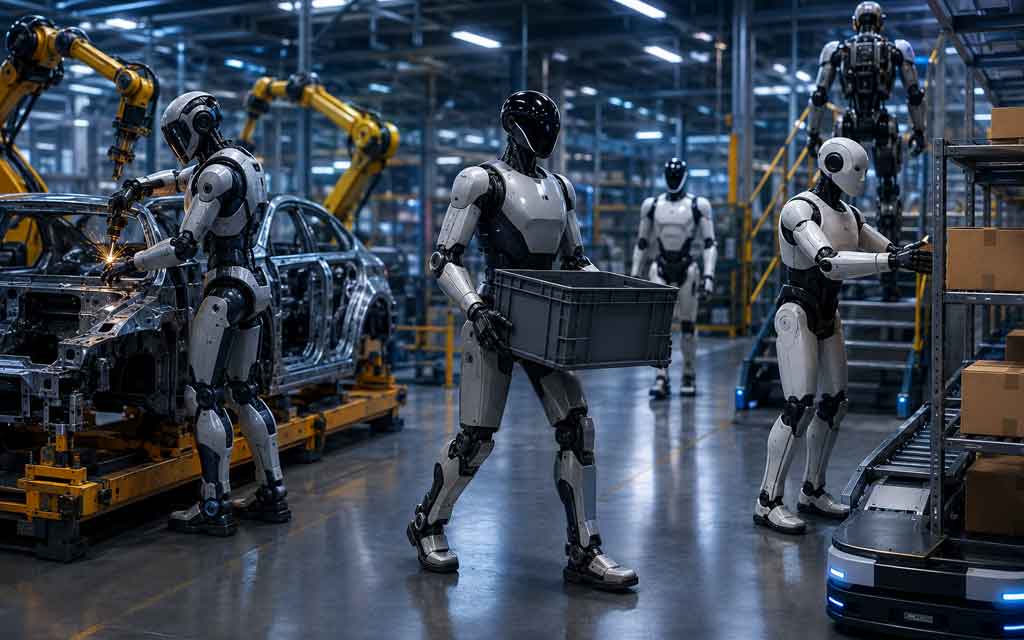
Boston Dynamics Atlas, Tesla Optimus, Figure AI, and others accelerate physical AI deployments in 2026. How humanoid robots and embodied AI are entering factories, warehouses, and daily life in the US.
Introduction: Physical AI Goes Mainstream
2026 is the year Physical AI transitions from viral demo videos to real-world productivity. Major players like Boston Dynamics, Tesla, Figure AI, and NVIDIA-powered systems are deploying humanoid robots and advanced robotic platforms into factories, logistics centers, and research facilities across the United States.
For American manufacturers facing labor shortages, investors in robotics, and workers adapting to the future of work, these breakthroughs signal both massive opportunity and necessary workforce transitions.
Key Developments in Physical AI (Mid-2026)
- Boston Dynamics Atlas: Production units are now training in Hyundai factories, performing complex tasks like part sequencing and machine tending. The 60 Minutes feature highlighted impressive whole-body control and rapid learning via AI.
- Tesla Optimus: Internal deployments are scaling, with Gen 2 models showing improved dexterity and autonomy. Tesla aims for broader factory use by late 2026.
- Figure AI: High-rate manufacturing of Figure 03 humanoid robots, with pilots at BMW and other partners for general-purpose tasks.
- NVIDIA & Partners: GR00T foundation model and Isaac Lab simulation tools are accelerating training across multiple robot platforms.
These systems leverage frontier AI models for better reasoning, adaptation, and safety in human environments.
Technical Breakthroughs Powering Progress
- Embodied Intelligence: Robots now use vision-language-action models to understand instructions and improvise solutions.
- Simulation-to-Real Transfer: NVIDIA’s platforms allow millions of training hours in simulation before real-world deployment.
- Hardware Advances: Better actuators, sensors, batteries, and lightweight designs enable longer operation and finer manipulation.
- Safety & Collaboration: Advanced force sensing and human-aware navigation allow safe side-by-side work with people.
US Economic and Workforce Impact
- Manufacturing Resurgence: Robots handle repetitive, dangerous, or precision tasks, helping reshore production.
- Job Creation: New roles in robot programming, maintenance, supervision, and AI training — often higher-paying than traditional factory work.
- Labor Shortages: Addresses gaps in automotive, logistics, and elder care sectors.
- Investment Boom: Billions flowing into US robotics startups and established players.
Comparison Table: Leading Humanoid Robots 2026
Atlas
- Developer: Boston Dynamics
- Key Strengths: Dynamic movement, factory dexterity
- 2026 Status: Production deployments
- Primary Applications: Automotive, manufacturing
Optimus
- Developer: Tesla
- Key Strengths: Cost efficiency, ecosystem integration
- 2026 Status: Scaling internal use
- Primary Applications: Tesla factories, future home
Figure 03
- Developer: Figure AI
- Key Strengths: General-purpose versatility
- 2026 Status: High-rate manufacturing pilots
- Primary Applications: Logistics, multiple industries
GR00T-powered
- Developer: NVIDIA + Partners
- Key Strengths: Simulation training, foundation models
- 2026 Status: Reference platforms
- Primary Applications: Research & custom builds
Challenges and Considerations
- Technical Hurdles: Full autonomy in unstructured environments still requires human oversight.
- Cost: High initial investment, though prices are expected to drop with scale.
- Regulation & Ethics: Safety standards, liability, and workforce impact discussions are intensifying in the US.
- Adoption Pace: Early deployments focus on controlled factory settings before broader rollout.
Future Outlook for 2026–2027
Analysts predict rapid scaling in late 2026, with thousands of humanoid units in US facilities by 2027. Synergies with large language models (like those from Anthropic and OpenAI) will make robots more capable and easier to instruct. This positions America as a leader in Physical AI, complementing its dominance in software AI and data centers.
For businesses: Pilot programs now can provide competitive advantages. For workers: Upskilling in robotics and AI is becoming essential.
FAQ
Q: Will humanoid robots replace human jobs in 2026? A: Primarily augment — taking over dangerous/repetitive tasks while creating new tech-focused roles.
Q: When will robots work in American homes? A: Limited home deployments possible in 2027+, starting with controlled tasks.
Q: Which companies are best positioned? A: Tesla, Boston Dynamics (Hyundai), Figure AI, and NVIDIA ecosystem partners lead the pack.
Conclusion: Physical AI breakthroughs in 2026 are turning science fiction into factory reality. With Boston Dynamics Atlas, Tesla Optimus, and others entering real production environments, the US is poised to lead the next wave of industrial and economic transformation. The future of work is here — and it’s collaborative between humans and intelligent machines. Stay tuned as deployments accelerate throughout the year.
Sources: Boston Dynamics, Tesla updates, NVIDIA, Figure AI announcements, industry reports, and 60 Minutes coverage (as of June 17, 2026). For informational purposes only.




Leave a Comment