
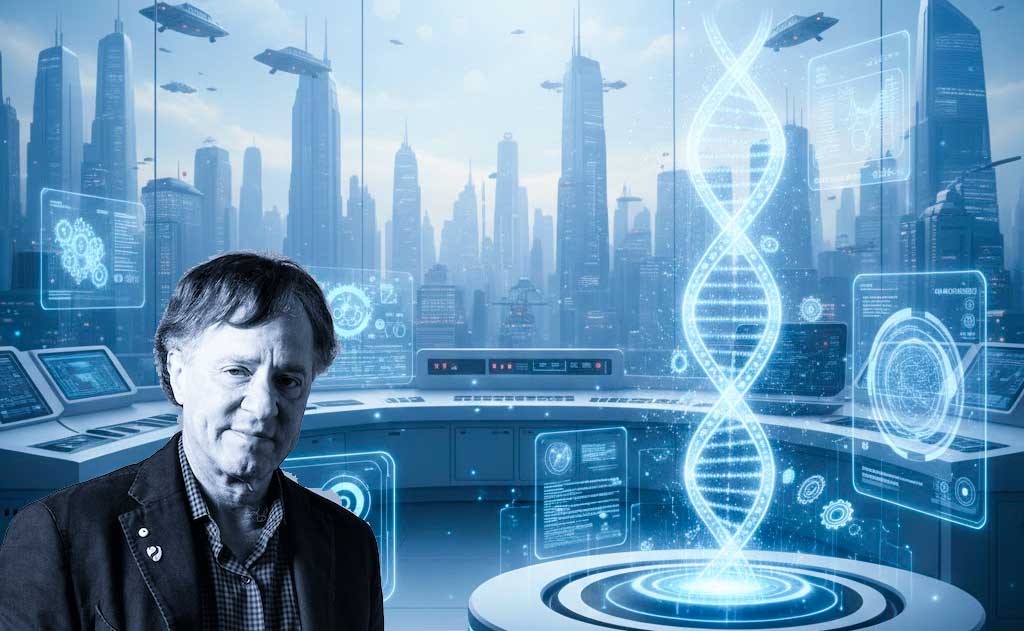
As we progress into 2026, the convergence of artificial general intelligence (AGI), molecular nanotechnology, and advanced biotechnology is accelerating toward a potential inflection point in human biology: the achievement of longevity escape velocity (LEV). Futurist and Google Director of Engineering Ray Kurzweil maintains his longstanding prediction that by 2029–2030, biomedical interventions will extend healthy human lifespan by more than one year for every calendar year elapsed—effectively rendering senescence negligible for those who attain this threshold.
Kurzweil’s thesis hinges on the deployment of intravascular medical nanorobots capable of real-time cellular repair, telomere extension, mitochondrial optimization, and senolytic clearance at the molecular scale. Coupled with the anticipated arrival of AGI in 2029, these systems could enable in silico simulation of human biochemistry at atomic resolution, dramatically accelerating therapeutic discovery and personalized interventions.
Kurzweil’s Core Timeline: AGI, Nanomedicine, and Longevity Escape Velocity
Kurzweil’s updated forecasts, detailed in The Singularity Is Nearer (2024), remain anchored in the Law of Accelerating Returns:
- 2029: Achievement of Artificial General Intelligence—systems exhibiting human-level cognitive performance across all domains, including scientific reasoning and invention.
- Early 2030s: Clinical deployment of programmable medical nanorobots using diamondoid mechanosynthesis for precise molecular repair.
- Longevity Escape Velocity (LEV): Starting circa 2029–2030, cumulative advances in epigenetic reprogramming, CRISPR-based multiplex editing, and AI-driven drug design yield incremental lifespan gains exceeding chronological progression.
This trajectory is supported by exponential declines in DNA sequencing costs (now sub-$100 per genome), compute performance (exceeding 10²⁶ FLOPS in frontier clusters), and advances in protein structure prediction via deep learning architectures like AlphaFold 3 and successors.
Underlying Mechanisms: Molecular Nanotechnology and AI-Accelerated Biotechnology
Contemporary research provides empirical foundations for Kurzweil’s projections:
- Nanotechnology in Precision Medicine: While fully autonomous Drexlerian nanorobots remain in development, current platforms include lipid nanoparticles for mRNA delivery, DNA origami scaffolds, and peptide-based targeted therapeutics. Recent 2025 trials demonstrated senescent cell clearance via nanoparticle-conjugated dasatinib/quercetin analogs, reversing age-related pathology in murine models.
- Epigenetic Reprogramming: Partial cellular reprogramming via transient Yamanaka factor expression (OSKM) has restored youthful epigenetic states in vivo, with Harvard and Altos Labs reporting vision restoration in aged primates through chemical induction of plasticity.
- AI-Driven Biomolecular Simulation: Frontier models now perform ab initio folding of multi-subunit complexes and predict off-target CRISPR effects at scale. Integration of quantum-corrected force fields enables simulation of mitochondrial dynamics and telomere maintenance pathways.
- Human-Machine Augmentation: Neural interfaces (e.g., Neuralink’s high-bandwidth BCIs) and optogenetic control systems foreshadow direct augmentation of neural plasticity and systemic homeostasis.
Institutions such as Harvard’s Wyss Institute, Calico Labs, and the SENS Research Foundation are advancing damage-repair paradigms targeting the seven canonical hallmarks of aging.
The Biotechnology Controversy: Existential Opportunity vs. Systemic Risk
Proponents frame radical life extension as the ultimate mitigation of age-related morbidity—eliminating neurodegenerative disorders, cardiovascular disease, and oncogenesis through preemptive molecular intervention.
Critics highlight profound challenges:
- Access Disparity: Initial therapies may be restricted to ultra-high-net-worth cohorts, exacerbating global bio-inequality and creating a de facto biological caste system.
- Demographic and Resource Constraints: Indefinite healthspan could precipitate exponential population growth absent corresponding advances in resource synthesis and off-world colonization.
- Ontological and Psychological Implications: Removal of finite lifespan endpoints may disrupt evolutionary incentives for risk-taking, innovation, and meaning derivation.
- Existential Safety: Misaligned AGI overseeing nanomedical systems introduces gray goo scenarios or unintended cascading failures in cellular regulatory networks.
Even proponents like Elon Musk prioritize multi-planetary expansion as a hedge against Earth-bound longevity bottlenecks.
Societal Readiness for Negligible Senescence
Should LEV materialize this decade, systemic adaptations would be required:
- Economic Models: Redesign of pension systems, intergenerational wealth transfer, and labor participation in a multi-century workforce.
- Governance Structures: Regulatory frameworks for morphological freedom, cognitive enhancement, and population dynamics.
- Psychosocial Frameworks: Reevaluation of identity, purpose, and existential philosophy in the absence of mandatory mortality.
Conclusion: Approaching the Biological Singularity
The confluence of artificial general intelligence, molecular nanotechnology, epigenetic reprogramming, and systems biology positions 2026–2030 as a plausible window for the transition from compulsory to elective biological mortality. Whether this manifests as indefinite healthspan or incremental health extension, the trajectory is clear: exponential technological amplification is compressing centuries of biomedical progress into years.
VFuturMedia will continue tracking frontier developments in longevity escape velocity, AGI timelines, mechanosynthetic nanomedicine, and the broader technological singularity.
If you found this useful, the best thing you can do is share it with someone who’d actually appreciate it. And if you want more like it, we’re here every week.




Leave a Comment