
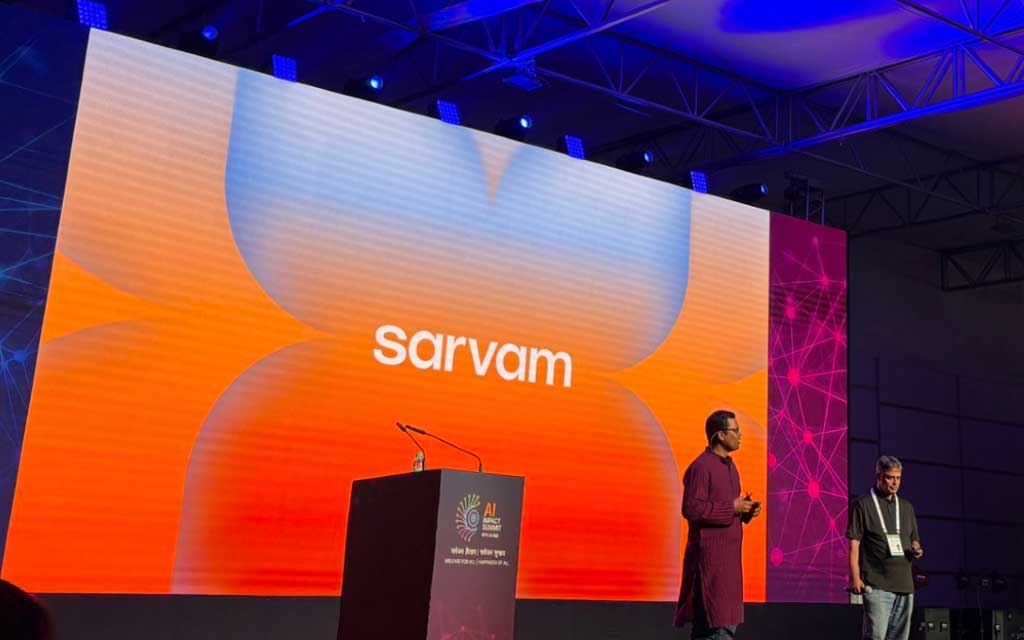
In a landmark moment for India’s AI ecosystem, Bengaluru-based startup Sarvam AI launched two new foundational large language models—Sarvam 30B and Sarvam 105B—at the India AI Impact Summit 2026 in New Delhi’s Bharat Mandapam on February 18, 2026. As a forward-thinking media and creator platform at VFutureMedia, we’re closely watching how these models could empower content creators, AR/VR developers, and enterprises with efficient, Indic-language-optimized AI tools—reducing reliance on foreign APIs and enabling more inclusive, real-time applications for India’s diverse billion-plus population.
The announcement, made on Day 3 of the summit (which runs from February 16–20, 2026, and features global leaders like Google CEO Sundar Pichai), underscores India’s push for sovereign AI infrastructure. Sarvam AI, founded by IIT alumni and backed by investors like Peak XV, is positioning these models to compete with global giants like OpenAI’s GPT series, while prioritizing cost-efficiency, multilingual support (including Hindi, Marathi, Punjabi, and 20+ other Indic languages), and real-world enterprise use.
Launch Details and Event Context
The models were revealed during live demonstrations at the summit, where co-founder Pratyush Kumar showcased their capabilities. Sarvam 30B powers Vikram, a multilingual chatbot designed to run even on basic feature phones—democratizing AI access in low-resource environments. The larger Sarvam 105B impressed with enterprise demos, such as real-time analysis of company balance sheets.
This comes amid broader summit highlights: PM Narendra Modi inaugurated the event wearing Sarvam’s Kaze AI wearable glasses, and the government has onboarded massive compute resources (38,000+ GPUs) while funding 12 indigenous foundation models. Partnerships with Qualcomm, Bosch, Nokia, and others signal strong ecosystem momentum.
Key Specifications and Features
Both models are trained from scratch on trillions of tokens (Sarvam 30B on ~16 trillion), emphasizing efficiency, reasoning, coding, and Indic multilingual performance.
- Sarvam 30B:
- 30 billion parameters
- Context window: 32,000 tokens
- Optimized for real-time, cost-effective tasks like conversational AI, translation, content generation, and multilingual interactions
- Powers lightweight apps (e.g., Vikram chatbot for feature phones)
- Competitive in benchmarks for math (Math500), coding (HumanEval, MBPP, Live Code Bench), and general reasoning (MMLU)—often matching or outperforming peers like Gemma 27B, Mistral variants, and others in efficiency-focused categories
- Sarvam 105B:
- 105 billion parameters
- Context window: 128,000 tokens (ideal for long-document processing and complex chains of thought)
- Built for advanced reasoning, enterprise analytics, large-scale tasks, and high-level language understanding
- Performs on par with frontier open- and closed-source models in its class, with strong multilingual and reasoning edges
Both support 22+ Indian languages natively, addressing gaps in global models that prioritize English. They’re designed for lower inference costs, fewer tokens per response, and sovereign deployment (built and run on Indian infrastructure).
Why This Matters for Creators and Tech Enthusiasts in the US
For American audiences following global AI trends, Sarvam’s launch highlights a rising challenger in the race for inclusive, sovereign AI. While US giants dominate with massive scale, India’s focus on multilingual efficiency and affordability could inspire hybrid approaches—especially for creators building AR/VR content, voice-driven apps, or global media tools.
At VFutureMedia, we see huge potential: Imagine seamless Indic-language dubbing, real-time translation for immersive videos, or AI agents handling complex scripts/editing workflows without high cloud costs. These models could integrate into creator ecosystems, enabling more diverse storytelling and faster prototyping for next-gen media.
Sarvam positions this as a step toward “AI for all from India”—with upcoming tools like voice AI, agents (Samvaad), and platforms (Sarvam for Work/Content). Open-source elements (as noted in reports) may accelerate adoption and innovation.
The India AI Impact Summit continues through February 20—expect more demos and partnerships. Stay tuned to VFutureMedia for breakdowns on how these could reshape global AI accessibility and creator tools.
What excites you most about sovereign AI models like these? Drop your thoughts below—we’ll track updates as they roll out!
We started VFuture Media because we wanted tech news written by people who actually follow this industry — not content farms chasing keywords. If that resonates, we’d love to have you as a regular reader. Pull up a chair.
I’m Ethan, and I write about the tech that’s actually going to change how we live — not the stuff that just sounds impressive in a press release. I cover AI, EVs, robotics, and future tech for VFuture Media. I was on the ground at CES 2026 in Las Vegas, walking the show floor so I could give you a real read on what matters and what’s just noise. Follow me on X for daily takes.


Leave a Comment