
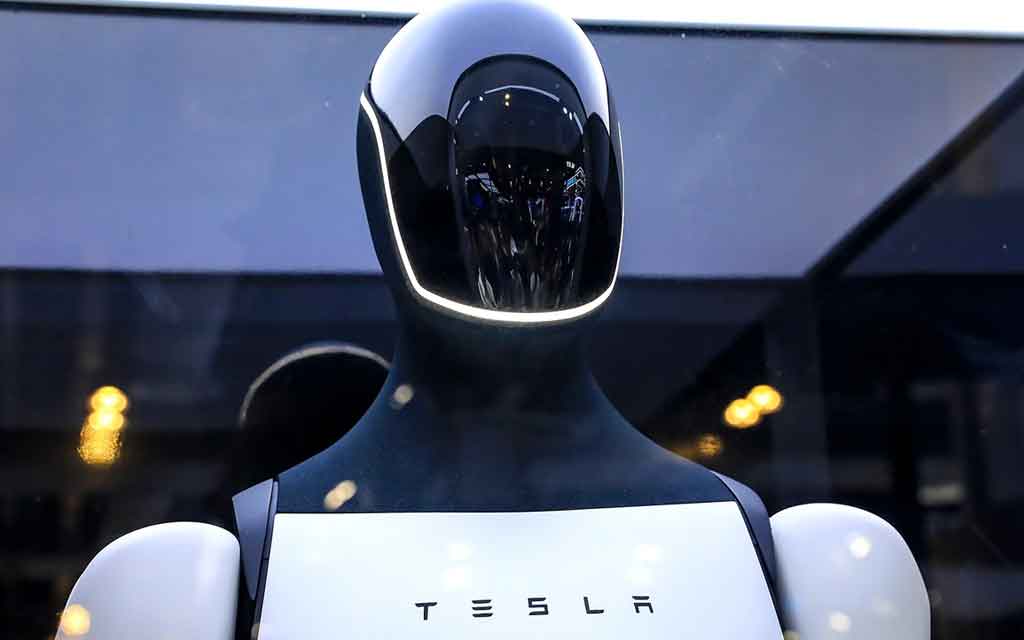
Search volume for Tesla’s humanoid robot continues rising as the company refines AI-powered automation. Elon Musk has positioned Optimus as a long-term workforce solution, potentially transforming industries from manufacturing to household chores. As of February 2026, Tesla is heavily investing in the project — even repurposing Fremont factory space from Model S/X production to scale Optimus manufacturing.
Current prototypes (primarily Optimus Gen 3) focus on repetitive factory tasks, logistics support, and demonstrating advanced dexterity. While demos show impressive progress, real-world deployment remains limited to internal testing, with broader availability still years away. At VFutureMedia, we break down the latest capabilities based on Tesla’s updates, videos, and expert analyses.
What Is Tesla Optimus? Overview and Goals
Tesla Optimus (also called Tesla Bot) is a general-purpose, bipedal humanoid robot designed to handle “unsafe, repetitive, or boring tasks.” Announced in 2021, it leverages Tesla’s Full Self-Driving (FSD) AI stack for vision, navigation, planning, and real-time decision-making.
Key specs (based on Gen 2/Gen 3 iterations):
- Height: ~5’8″ (168–173 cm)
- Weight: ~57–125 lbs (lighter in recent gens)
- Payload: Up to 20 kg (carry), ~68 kg deadlift
- Walking speed: ~8 km/h (5 mph)
- Degrees of Freedom: 28+ in body; hands upgraded to 22 DoF (Gen 3, with some reports of 50 actuators for precision)
The robot uses end-to-end neural networks trained on vast data, similar to Tesla’s Autopilot, enabling learning from demonstrations and self-play in simulations (“Optimus Academy”).
Tesla’s vision: Optimus as a scalable, autonomous helper for factories first, then homes — potentially cooking, cleaning, folding laundry, or more complex operations.
Current Capabilities: What Optimus Can Actually Do in 2026
As of early 2026, Optimus Gen 3 represents the latest iteration, with production ramp-up targeted internally. Demonstrated skills include:
- Mobility and Balance: Smooth walking on flat/uneven terrain, squatting, navigating obstacles, and basic locomotion at human-like speeds.
- Fine Motor Skills & Dexterity: Handling delicate objects — e.g., picking up eggs without cracking them, tearing paper towels, opening cabinets, folding laundry, catching tossed items.
- Manipulation Tasks: Sorting battery cells or parts in Tesla factories, lifting small boxes, basic object handling.
- Other Demos: Dancing, yoga poses, simple household simulations (e.g., potential for cooking/cleaning in controlled settings).
- Autonomy Level: Relies on vision-based AI for perception and planning; some tasks are end-to-end learned, but many demos are scripted or teleoperated in early stages, with increasing autonomy.
Tesla videos highlight progress in hand redesigns (more actuators for precision) and integration with Grok-like AI for better interaction. By mid-2026, internal factory deployment is expected for data collection and real-world refinement, moving toward more complex operations by year-end.
However, capabilities remain focused on repetitive, structured tasks — not yet fully general-purpose or human-level in unstructured environments.
Timeline and Production Status in 2026
- Gen 3 Unveil/Progress: On track for early 2026 reveal as “production-ready” version.
- Internal Use: Deployment in Tesla factories (Q2–Q3 2026) for tasks like parts handling.
- Limited External Sales: Possible by late 2026 (e.g., to other companies), with public/consumer availability targeted for 2027+ at ~$20,000–$30,000.
- Scale Ambitions: Fremont factory repurposed for up to 1 million units/year long-term.
Elon Musk claims Optimus could reach “human-level proficiency” in 2026 and eventually surpass humans in many tasks, but critics note delays (e.g., 2025 production targets shifted) and that demos often overstate autonomy.
FAQs
Is Optimus available for sale? No — not yet for consumers or broadly externally. As of February 2026, it’s in prototype/factory testing phase. Limited sales to companies may start late 2026, with wider availability (including home use) eyed for 2027 at around $30,000 or less.
Can it replace workers? Potentially in repetitive factory/logistics roles — Tesla plans internal use to handle unsafe/boring tasks. However, it’s not ready to fully replace human workers in complex, variable jobs. Long-term, Musk envisions it augmenting or replacing labor in many sectors, but we’re years from widespread adoption.
How advanced is the AI? Highly advanced for vision and planning — shares Tesla’s FSD neural nets, enabling end-to-end learning and real-time adaptation. It learns from simulations and real data, with features like catching objects or fine manipulation. Still, it’s specialized (not general AGI-level), and some tasks rely on pre-programming or human oversight.
The Bottom Line: Realistic Expectations for Optimus in 2026
Tesla’s Optimus is making rapid strides in dexterity, mobility, and AI integration — far beyond early prototypes. In 2026, expect it to excel at controlled, repetitive tasks in factories, with demos showcasing impressive fine motor skills and potential household applications.
But it’s not yet a household robot or full worker replacement — challenges like full autonomy in unstructured settings, battery life, cost, and reliability persist. Musk’s vision is bold (potentially trillions in value), but progress is iterative.
I’m Ethan, and I write about the tech that’s actually going to change how we live — not the stuff that just sounds impressive in a press release. I cover AI, EVs, robotics, and future tech for VFuture Media. I was on the ground at CES 2026 in Las Vegas, walking the show floor so I could give you a real read on what matters and what’s just noise. Follow me on X for daily takes.
At VFutureMedia, we track AI, robotics, and Tesla innovations. Optimus could redefine automation — watch for Q1/Q2 2026 updates on Gen 3 deployment.


Leave a Comment