
The Future of AI Infrastructure is Coming to Your Backyard – Here’s Everything You Need to Know
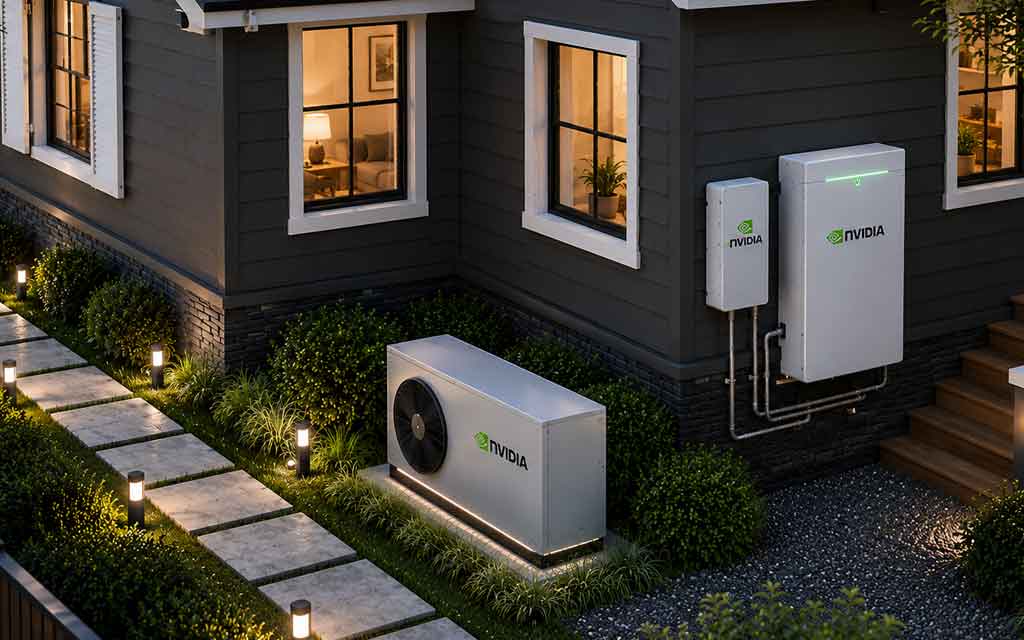
In a groundbreaking move that’s turning heads in tech and real estate circles, Nvidia is partnering with startup Span and major homebuilder PulteGroup to install mini AI data centers (called XFRA nodes) directly on new homes. These compact, high-performance units could transform ordinary residences into part of a distributed AI computing network.
Homeowners who host one may enjoy heavily subsidized or even free electricity and internet bills — sparking viral claims of earning close to $22,000 a year. Is this the ultimate side hustle for the AI era, or too good to be true? Let’s break it down.
What Are Nvidia’s Mini AI Data Centers for Homes?
Span’s XFRA nodes are self-contained, liquid-cooled mini data centers designed to sit outside your house, resembling a large HVAC unit. Each node packs serious computing power:
- 16 Nvidia RTX Pro 6000 Blackwell GPUs (or similar high-end Nvidia hardware)
- Multiple AMD EPYC CPUs
- Several terabytes of high-speed RAM
- Advanced cooling and integration with Span smart electrical panels
These units tap into “stranded” or unused residential electrical capacity — the average home uses only about 42% of its allocated power. Span redirects the excess to power AI workloads, primarily inference tasks, while networking multiple homes into a larger distributed system.
Key Benefits for Homeowners:
- Subsidized or free electricity and broadband
- Backup battery storage for outages
- Potential flat utility fee (examples around $150/month, which Span may cover or offset)
- No upfront cost for the hardware or installation (in pilot programs)
How Much Can You Actually Earn?
Viral social media posts claim Nvidia will “pay you $1,000/month” or nearly $22,000 annually, but the reality is more nuanced.
Current details from Span and partners focus on bill savings rather than direct cash payouts:
- Span covers or heavily discounts your electricity and internet bills.
- In high-value locations, this could mean zero utility bills plus backup power.
- Savings depend on local rates. In expensive areas like California, electricity + internet could easily exceed $300–500/month — translating to $3,600–$6,000+ in annual value.
- Some reports mention additional compensation based on energy/network usage.
While $22k might be an optimistic projection combining maximum savings, incentives, and future program expansions, even conservative estimates make this attractive for new home buyers in participating communities.
Who Can Participate? (Current Status)
This is still in early stages:
- Pilot program launching with ~100 homes in the Southwestern U.S. later in 2026.
- Initial focus on new construction homes by PulteGroup and other builders.
- Retrofits for existing homes are being explored but not yet widely available.
If you’re building a new home, contact your builder about Span/Nvidia integration options.
Pros and Cons of Hosting a Home AI Data Center
Advantages:
- Significant utility cost reduction or elimination
- Contribute to AI advancement without building massive centralized data centers
- Faster AI deployment — Span claims they can roll out capacity 6x faster and cheaper than traditional builds
- Backup power resilience
- Potential property value boost from smart tech integration
Potential Drawbacks:
- Visual/noise impact (though liquid-cooled units are designed to be quiet)
- Security and privacy concerns with external hardware
- Grid strain questions in neighborhoods with many units
- Limited availability — not open to everyone yet
- Maintenance and liability handled by Span, but long-term unknowns remain
Why This Matters: Solving the AI Power Crunch
AI demand is exploding, but building traditional hyperscale data centers faces huge hurdles: power shortages, regulatory delays, and local opposition. Distributed models like XFRA leverage existing residential infrastructure to accelerate growth while sharing benefits with homeowners.
Nvidia’s involvement signals strong confidence in this approach for scaling AI compute efficiently.
Is This the Future of Homeownership?
Hosting a mini AI data center could become a smart financial and technological decision for many families. While the “$22,000 a year” figure represents an upper-end scenario, the core value proposition — dramatically lower utilities plus contributing to the AI revolution — is compelling.
Stay Updated: Follow developments from Span, Nvidia, and PulteGroup. As pilots expand in 2026–2027, more opportunities should open up.
Have you considered hosting one? Would the utility savings be worth it for your household? Share your thoughts in the comments below!
Ready to future-proof your home with AI tech? Bookmark this page and subscribe to VFutureMedia for the latest on emerging tech, smart homes, and investment opportunities.
Tags: Nvidia Mini Data Center, Home AI Compute, Span XFRA, PulteGroup, AI Infrastructure, Smart Homes, Passive Income Ideas 2026
Disclaimer: Earnings and program details are based on public announcements and may change. Always verify directly with Span or your builder.



Leave a Comment