
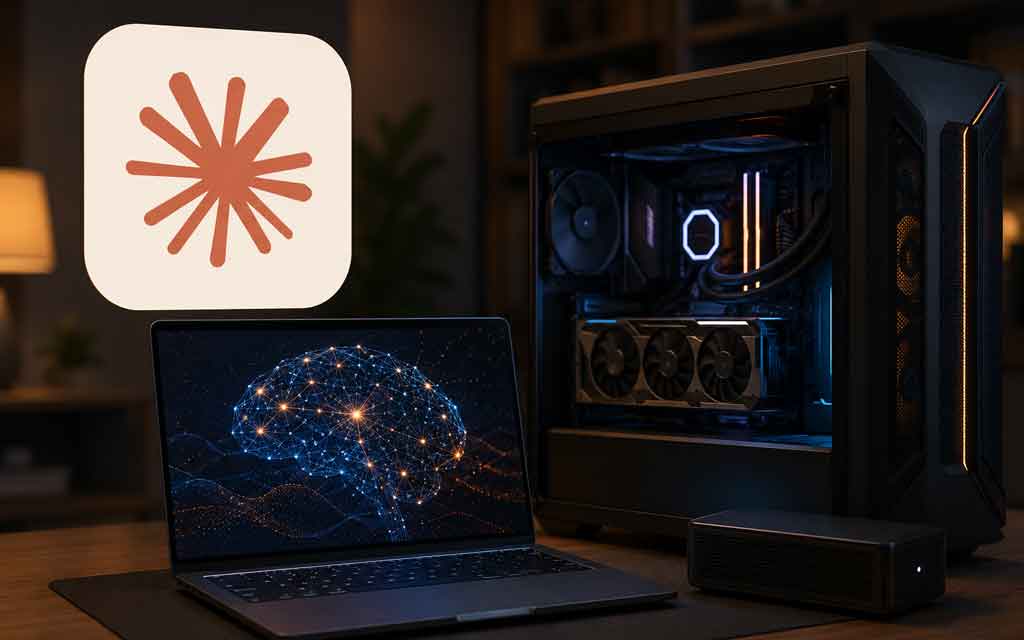
A growing number of analysts and AI researchers believe that Claude Fable — one of Anthropic’s most advanced models — could become runnable on high-end consumer hardware within roughly two years (by mid-to-late 2028).
This would mark a significant shift from the current cloud-only model most frontier AI systems use today.
What Is Claude Fable?
“Fable” appears to be the internal or codename for one of Anthropic’s next-generation AI systems (possibly tied to advanced reasoning, agentic capabilities, or multimodal features).
Recent changes to access — moving from subscriber plans to usage credits only — suggest Anthropic is treating Fable as a high-value, resource-intensive offering.
If projections hold, Fable (or a distilled version of it) could eventually move from Anthropic’s servers to users’ own machines.
The Two-Year Local Run Projection
According to recent industry analysis and hardware roadmaps:
- Timeline: Mid-to-late 2028 (approximately 24 months from now)
- Hardware Target: High-end consumer GPUs and AI accelerators (e.g., future NVIDIA RTX 50-series, AMD Radeon AI GPUs, or Apple’s next-generation silicon)
- Key Enablers:
- Aggressive model quantization and distillation
- Continued improvements in inference efficiency
- Next-generation consumer AI hardware with significantly higher TOPS (trillions of operations per second)
This timeline aligns with broader trends seen in open-source models, where smaller, optimized versions of frontier models are increasingly running locally.
Why Local Running Matters
Running advanced AI models locally offers several major advantages:
Benefits of Running AI Locally
- Privacy: Data never leaves your device, providing greater security and confidentiality.
- Cost: No recurring API or subscription fees after setup, reducing long-term expenses.
- Speed: Lower latency since processing happens locally without internet round-trips.
- Offline Use: AI continues to work even without an internet connection.
- Customization: Easier to fine-tune, modify, and control models for specific use cases.
For power users, developers, and privacy-conscious individuals, local deployment of frontier-level models would be transformative.
Technical Feasibility: Is Two Years Realistic?
Several trends support the projection:
- Rapid Efficiency Gains Techniques like quantization (4-bit, 2-bit, and even lower), knowledge distillation, and speculative decoding are dramatically reducing the hardware needed to run large models.
- Hardware Progress Consumer GPUs are gaining massive AI acceleration capabilities. NVIDIA’s upcoming architectures and AMD’s AI-focused GPUs are expected to deliver significant leaps in local inference performance by 2027–2028.
- Model Optimization Trends We’ve already seen frontier-level capabilities compressed into much smaller models (e.g., Llama 3.1 405B distilled versions, Phi-4, and various reasoning models). Anthropic could follow a similar path with Fable.
Challenges that remain:
- Power consumption and heat on consumer devices
- Memory bandwidth limitations
- Maintaining performance close to the full cloud version
Comparison: Local AI Landscape in 2026
Local AI Capability: Current vs. Expected by 2028
- Claude Fable: Currently cloud-only; expected to run on high-end PCs by 2028 if local deployment becomes available.
- Llama 3.1 / Llama 4: Already runs locally today, with significantly more powerful local versions expected. Remains the leading open-source AI family.
- Grok: Limited local options currently, with broader local support anticipated as xAI’s ecosystem evolves.
- GPT-4o / o3-Class Models: Primarily cloud-based today, though distilled local versions could emerge as OpenAI continues exploring on-device AI.
What This Could Mean
If Claude Fable (or a capable version of it) becomes runnable locally within two years, it would:
- Accelerate the shift toward on-device AI
- Increase competition between cloud AI providers and local/open-source ecosystems
- Give users more control and privacy
- Potentially pressure Anthropic’s current usage-credit business model
It would also put Anthropic in direct competition with companies already pushing hard on local inference (Meta with Llama, Apple with on-device models, and various open-source communities).
Bottom Line
While still a projection, the idea that a model as advanced as Claude Fable could run on high-end consumer hardware within about two years reflects how quickly AI efficiency and hardware are improving.
If the timeline holds, 2028 could mark a major milestone where some of the most powerful AI systems become accessible directly on personal devices rather than living exclusively in the cloud.



Leave a Comment