

Meta Scales Back AI Mouse-Tracking Tool After Employee Backlash
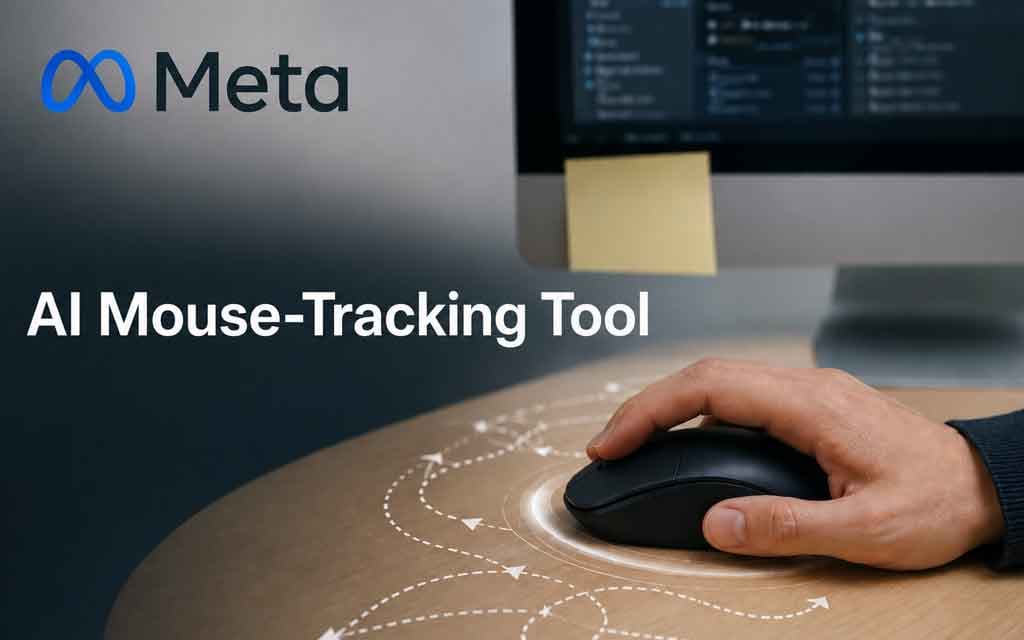
NEXT_PUBLIC_GOOGLE_ADSENSE_ID to enableMeta is dialing back key parts of its internal AI tool that tracked employees’ mouse movements, clicks, and keystrokes after facing intense pushback from its own workforce.
In a June 2 internal memo, the company introduced new controls allowing workers to pause data collection and request exemptions, following weeks of complaints that the program felt dystopian and invasive.
The move highlights growing tensions inside Big Tech as companies race to build more powerful AI agents while relying on real employee behavior to train them.
What Was Meta’s Mouse-Tracking Tool?
Meta launched the Model Capability Initiative (MCI) around April 2026 as part of a broader effort to improve its AI models’ ability to understand and replicate how humans actually use computers.
The software, installed on U.S.-based employees’ work laptops, captured:
- Mouse movements and clicks
- Keystrokes
- Occasional screenshots or snapshots of screen content
- Activity limited to work-related apps and websites
The goal was not traditional productivity monitoring. According to Meta, the data was meant to help train AI agents to perform complex digital tasks autonomously — such as navigating dropdown menus, using keyboard shortcuts, filling forms, and switching between applications the way humans do.
Meta framed it as essential for building the next generation of AI agents that could handle real workflows without constant human guidance.
Why Employees Pushed Back So Hard
The program quickly sparked widespread anger inside the company.
Employees described the tool as turning Meta into an “Employee Data Extraction Factory.” Many raised concerns that the data collected on their work devices could include personal or sensitive information, even if Meta claimed safeguards were in place.
Other major complaints included:
- Significant battery drain on laptops
- Spikes in home internet data usage
- Lack of meaningful control or opt-out options initially
- The uncomfortable reality that the AI being trained on their behavior could eventually automate parts of their own jobs
The backlash spread through Meta’s internal Workplace platform, with petitions reportedly gathering over 1,000 signatures. Some employees posted anonymous flyers in offices and used AI tools themselves (including Claude) to analyze the tracking software’s behavior.
The timing amplified the tension. The initiative launched amid Meta’s aggressive AI restructuring, which included pushes for employees to adopt AI agents in daily work and multiple rounds of layoffs.
Meta’s Response: Scaling Back the Program
On June 2, 2026, Stephane Kasriel, a vice president in Meta’s Superintelligence Labs unit, sent an internal memo acknowledging the concerns.
While defending the original privacy protections, Kasriel announced several concessions:
- Employees can now pause data collection for up to 30 minutes at a time.
- Workers can request exemptions from the initiative.
- Meta introduced technical optimizations to reduce impact on battery life and data usage.
- Access to the collected data has been further restricted.
Kasriel wrote: “While we remain confident in the privacy protections we put in place at launch, which went through several layers of risk review, we have heard your concerns about personal data on work devices, battery life, and wanting more control over when capturing happens.”
The core data collection continues, but with more employee-friendly guardrails than originally rolled out.
The Bigger Picture: AI Training vs. Workplace Trust
Meta’s approach reflects a growing industry challenge: high-quality training data for advanced AI agents is hard to come by. Synthetic data has limitations, so companies are increasingly turning to real human-computer interaction logs to teach models how people actually work.
However, using employees’ daily activity as training data raises difficult questions about consent, privacy, and power dynamics — especially when those same employees fear the AI could eventually reduce the need for their roles.
Critics argue this blurs the line between research and surveillance. Even when companies promise the data won’t be used for performance reviews, the psychological effect of constant tracking can damage trust and morale.
Meta is not alone in exploring these methods, but its scale and the public nature of the internal revolt have made it a focal point for debates about the future of work in the AI era.
Regulatory and Reputational Risks
The program could also create headaches beyond internal culture.
In Europe, strict data protection rules (GDPR and upcoming AI regulations) make collecting this level of behavioral data on employees particularly sensitive. Reuters has reported that the initiative risks colliding with EU privacy expectations.
For Meta, which already faces significant regulatory scrutiny globally, any perception of overreach on employee data could complicate ongoing negotiations and public trust.
What This Means for the Future of AI Development
The Meta episode reveals a key tension in today’s AI race:
Companies need vast amounts of high-quality, real-world interaction data to build truly useful autonomous agents. At the same time, the people generating that data — employees — are increasingly aware that their work patterns are being used to train systems that may transform or replace aspects of their jobs.
This creates a potential vicious cycle: aggressive data collection → employee resistance and lower morale → reduced quality of work and data → weaker AI models.
Companies that handle this transition transparently, with genuine employee input and strong protections, may ultimately build better and more trusted AI systems. Those that treat workers primarily as data sources risk internal revolt and external backlash.
Bottom Line
Meta’s decision to scale back elements of its mouse-tracking tool shows that even the most powerful tech companies cannot ignore employee concerns when deploying invasive AI monitoring systems.
While the company maintains that the initiative is about improving AI capabilities rather than surveillance, the strong internal reaction forced meaningful concessions.
As AI agents become more capable of performing white-collar work, the question of how much human behavioral data companies can ethically harvest from their own workforce will only grow more urgent.
For now, Meta has hit pause — literally and figuratively — on parts of its most controversial data collection effort. Whether this represents a temporary adjustment or a broader recalibration remains to be seen.
FAQs
What exactly was Meta tracking with the tool? The Model Capability Initiative captured mouse movements, clicks, keystrokes, and occasional screen snapshots on U.S. employees’ work laptops to help train AI models on real human-computer interactions.
Why did Meta create this tool? Meta wanted better training data so its AI agents could learn to navigate software interfaces, use shortcuts, and complete digital tasks the way humans actually do — a key step toward more autonomous and useful AI agents.
Has Meta completely canceled the program? No. The company scaled back certain elements (added pause controls and exemption requests, optimized for battery/data usage) but is continuing the core initiative with modifications.
Were employees able to opt out originally? Initially, there was no easy opt-out. Meta has now added the ability to request exemptions and pause collection temporarily.
Is this kind of tracking legal? On company-owned devices in the U.S., it generally falls into a legal gray area, though it raises significant privacy and ethical concerns. In the EU, it faces much stricter scrutiny under data protection laws.
What does this say about the future of AI training? It highlights a growing challenge: AI progress increasingly depends on real human behavioral data, but collecting that data from employees creates trust, privacy, and cultural problems that companies must navigate carefully.
Will other companies follow Meta’s approach? Many organizations are exploring similar methods to train AI agents. Meta’s very public backlash may serve as a cautionary tale and encourage more transparent or consent-based approaches across the industry.
NEXT_PUBLIC_GOOGLE_ADSENSE_ID to enable

