

Monako Glass Launches: AI Smart Glasses That Run Claude Code & Codex
NEXT_PUBLIC_GOOGLE_ADSENSE_ID to enableBy VFuture Media Tech Desk June 2026
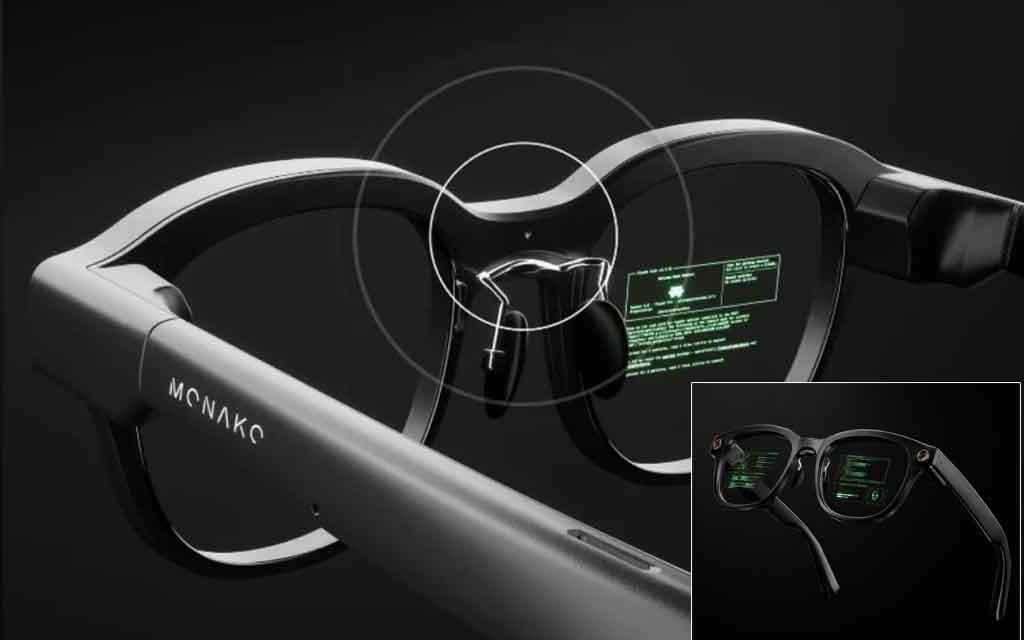
In a bold step toward wearable computing for creators and developers, Chinese startup Monako has launched Monako Glass — what it claims is the world’s first wearable Linux computer built directly into a pair of smart glasses. Weighing just 48 grams, the lightweight device integrates a heads-up display, camera, speakers, gesture controls, and native support for powerful AI coding agents such as Anthropic’s Claude Code and OpenAI’s Codex.
A Developer-First Wearable
Unlike consumer-focused smart glasses emphasizing media consumption or basic AR overlays, Monako Glass targets developers, researchers, AI power users, and students. Founder Candy Yue demonstrated how users can run full coding agent workflows directly from the glasses via a built-in terminal interface powered by MonoOS, a custom lightweight Linux-based operating system.
Key features include:
- Agent Terminal: Direct integration with Claude Code, Codex, and other coding agents for hands-free software development.
- Bone-Conduction Microphone: Reads voice vibrations through the nose bridge for reliable input even in noisy environments like cafes or events.
- Gesture Controls & Vision Engine: Navigate interfaces and interact with on-device AI capabilities.
- Hyper-Personalized Apps: Users can describe an idea in natural language (e.g., “Build an app to convert math notes to LaTeX”), and AI agents generate and run lightweight Lua-based applications on the fly.
- Lightweight Runtime: LuaJIT application layer with tiny memory footprint (200–500 KB per app) and embedded Rive animation runtime for smooth, cinematic interfaces.
- Interoperability: Seamless workflows spanning the glasses, cloud sandboxes, and local Mac/PC setups.
The glasses support prescription lenses and are designed for all-day wear, promising up to 8 hours of typical usage.
Hands-Free Software Creation
Monako positions the device as more than hardware — it’s a new productivity paradigm. Users can ask agents to research topics, generate presentation slides, build tools, edit code, or create small apps without touching a laptop. Demonstrations show real-time tasks like turning ideas into functional software or linking to creative tools such as Blender or Unreal Engine.
This reflects the rapid evolution of AI coding agents in 2026, which have moved far beyond simple autocompletion into autonomous, agentic systems capable of handling complex development workflows.
Pricing and Availability
Monako Glass is priced at $399, with early reservations available for a $19 deposit. The company emphasizes open-source elements, privacy (no heavy data collection), and developer-friendly customization.
Challenges Ahead
While innovative, questions remain around sustained battery life during intensive AI tasks, the practicality of coding on a small heads-up display versus traditional monitors, and long-term comfort. Privacy considerations with the built-in camera will also be key as the device ships.
The Bigger Picture
Monako’s launch signals a broader industry shift: AI agents are becoming the primary interface for work, and wearables could serve as always-available command layers. As AI-native computing moves beyond screens, devices like Monako Glass hint at a future where high-level productivity is as portable as a pair of eyeglasses.
For developers tired of being tethered to desks, Monako Glass offers a tantalizing glimpse of coding on the go — literally in front of your eyes.
Reserve yours at monako.ai.
VFuture Media will continue to track hands-on reviews and real-world developer feedback as units ship later in 2026.
NEXT_PUBLIC_GOOGLE_ADSENSE_ID to enable

