
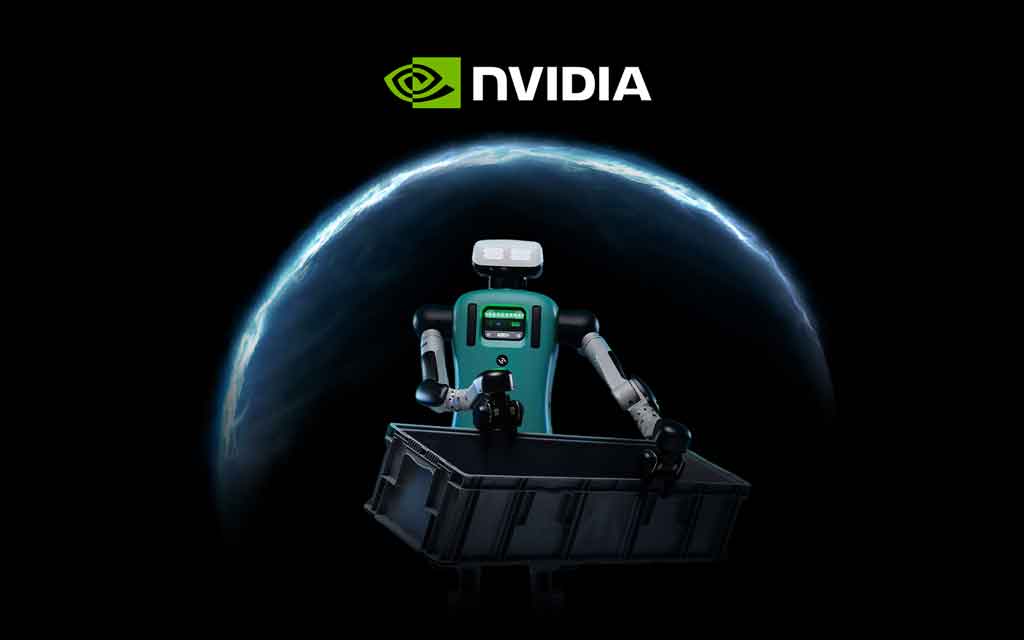
Nvidia has unveiled Halos for Robotics, a comprehensive new safety platform designed to allow humanoid and industrial robots to work safely alongside humans in factories, warehouses, and other shared spaces. The announcement marks one of the most significant steps yet toward making physical AI robots practical for real-world human collaboration.
The new system combines specialized hardware, real-time safety software, advanced sensors, and certification processes. It draws heavily from Nvidia’s years of experience in autonomous vehicle safety.
What Is Nvidia Halos for Robotics?
Halos is described as the industry’s first full-stack safety system for physical AI. It integrates:
- Hardware: Powered by the NVIDIA IGX Thor platform (based on Blackwell architecture), which delivers high-performance AI compute with built-in functional safety features.
- Software: The new Halos OS runs real-time safety decisions, enabling robots to detect and avoid hazards instantly.
- Sensors & “Outside-In Safety”: Combines on-robot sensors with external AI-powered cameras for comprehensive situational awareness.
- Certification & Standards: Includes processes to help robots meet industrial safety regulations.
The system is designed to move robots beyond traditional “caged” or isolated operation zones, allowing closer and more dynamic interaction with human workers.
Why This Matters
Humanoid robots are advancing rapidly, but safety remains one of the biggest barriers to widespread adoption in human environments. Most current industrial robots operate in fenced-off areas to prevent accidents. Nvidia’s Halos system aims to change that by embedding proactive safety intelligence directly into the robot’s operation.
By leveraging lessons from self-driving car development (Nvidia claims over 18,600 engineering years of autonomous vehicle expertise), the company is applying proven safety architectures to humanoid and collaborative robots.
Nvidia VP Deepu Talla noted that the system is intended to accelerate the development of safer robots as physical AI begins reshaping workplaces.
First Deployment: Agility Robotics’ Digit Humanoid
Agility Robotics is the first company integrating Halos into its Digit humanoid robot. Digit is already being deployed in real-world operations for major customers including:
- Amazon
- GXO Logistics
- Schaeffler
- Toyota
The integration allows Digit to operate more freely in shared human workspaces while maintaining high safety standards. This represents a practical step toward humanoid robots handling logistics, material handling, and other tasks in dynamic environments.
Technical Highlights
Halos builds on Nvidia’s broader robotics stack, including:
- Isaac platform for simulation, training, and deployment
- Jetson AGX Thor and IGX Thor modules for edge AI computing
- Real-time inference capabilities critical for safety-critical decisions
The “Outside-In Safety” approach is particularly notable. Instead of relying solely on sensors mounted on the robot, external cameras and AI systems provide an additional layer of monitoring. This creates a more robust safety net, similar to how autonomous vehicles use multiple sensor modalities.
Broader Context: The Rise of Physical AI
Nvidia’s move comes amid a surge of interest in physical AI — AI systems that interact with the physical world through robots. Major companies and startups are racing to develop humanoid robots for manufacturing, logistics, eldercare, and other applications.
Key challenges in this space include:
- Real-time decision making
- Safe human-robot interaction
- Energy efficiency
- Compliance with safety standards
By offering an integrated hardware-software safety solution, Nvidia is positioning itself as a key enabler for the next generation of collaborative robots.
Industry Implications
The launch of Halos could accelerate adoption of humanoid robots in environments where they previously would have been restricted. Potential benefits include:
- Higher productivity in manufacturing and logistics
- Reduced need for physical barriers and safety cages
- Faster deployment of robots in new settings
- Improved worker safety through proactive hazard detection
It also raises important questions about standards, liability, and regulation as robots become more capable of operating in close proximity to humans.
What’s Next
Nvidia is expected to continue expanding its robotics ecosystem, with further developments in simulation, foundation models for robotics, and edge computing platforms. The company has been actively partnering with robot manufacturers, automotive firms, and logistics companies to bring physical AI into real-world use.
As humanoid robots move from research labs and controlled environments into everyday workplaces, safety systems like Halos will likely become essential infrastructure for the industry.



Leave a Comment