

EV Tax Credit 2026: Complete US Eligibility Comparison (What Changed & What Buyers Get Now)
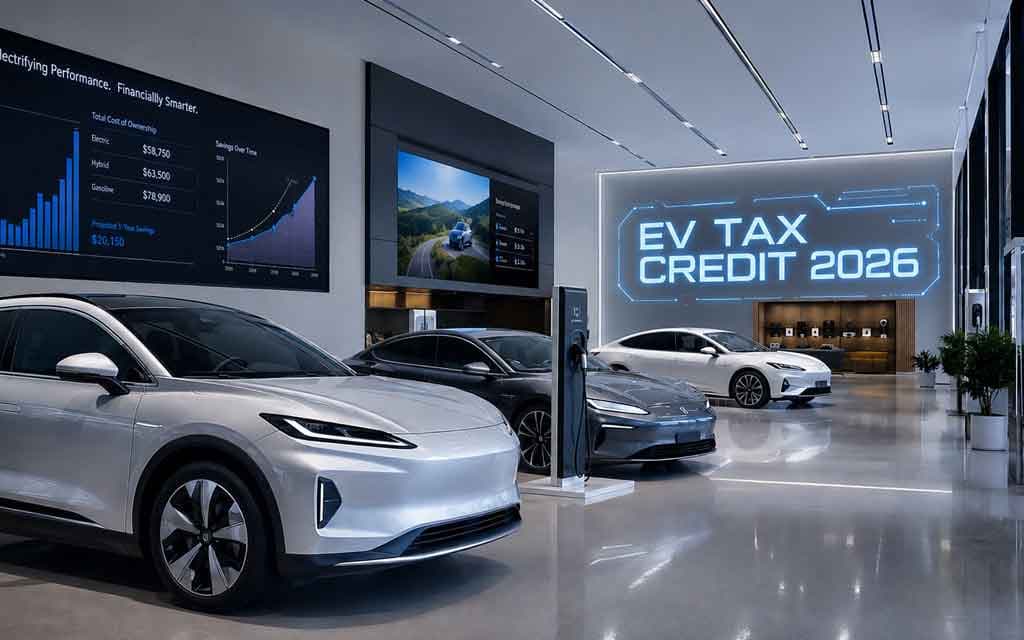
NEXT_PUBLIC_GOOGLE_ADSENSE_ID to enableThe big question for anyone considering an electric vehicle in 2026 is simple: Do I still get a federal tax credit?
The short answer is no for most buyers.
The $7,500 federal tax credit for new EVs and the $4,000 credit for used EVs were eliminated for vehicles purchased or leased after September 30, 2025. This change came through the “One Big Beautiful Bill Act” passed in 2025.
Here’s a complete, side-by-side comparison of how EV tax credit eligibility worked before and what buyers face in 2026.
2025 vs 2026 EV Tax Credit Rules: Full Comparison
| Feature | 2023 – Sept 30, 2025 (Old Rules) | 2026 and Beyond (Current Rules) | Impact on Buyers |
|---|---|---|---|
| New EV Federal Credit | Up to $7,500 | $0 | Major loss |
| Used EV Federal Credit | Up to $4,000 | $0 | Major loss |
| Final Assembly Requirement | Must be in North America | No longer applies | — |
| Battery Critical Minerals | 60%+ from US or allied countries (2025) | No requirement | — |
| Battery Components | 60%+ manufactured in North America | No requirement | — |
| MSRP Caps | $55,000 (sedans) / $80,000 (SUVs & trucks) | No caps (but no credit anyway) | — |
| Buyer Income Limits | $150,000 single / $300,000 joint | No limits | — |
| Point-of-Sale Discount | Available at participating dealers | Not available | Harder to get upfront savings |
| Commercial/Fleet Credit | Available (with limits) | Mostly eliminated | Big impact on fleets |
| Charging Equipment Credit (30C) | Up to 30% with caps | Limited / partially expiring | Reduced support |
Why Did the EV Tax Credit End?
The previous $7,500 credit (created under the Inflation Reduction Act) had very strict rules about where the vehicle and its battery were made. Only certain models from Tesla, GM, Ford, Hyundai, Kia, and a few others qualified.
In 2025, the new administration and Congress passed legislation that ended these consumer purchase credits after September 30, 2025. The goal was to reduce government spending on EV incentives.
As a result, almost no new or used EVs qualify for a federal tax credit in 2026.
Which EVs Lost the Credit?
Nearly all models that previously qualified lost the $7,500 credit after September 30, 2025. This includes:
- Most Tesla Model 3 and Model Y variants
- Chevrolet Blazer EV, Equinox EV
- Ford Mustang Mach-E and F-150 Lightning
- Hyundai Ioniq 5 & 6, Kia EV6 & EV9
- Many Rivian and Lucid models (though some already had limited eligibility)
The only remaining federal support is very limited and does not replace the old $7,500 credit for typical buyers.
What EV Buyers Still Get in 2026
Even without the federal tax credit, there are still ways to save money:
1. Manufacturer Discounts & Incentives
Automakers are now offering their own cash discounts, low-interest financing, and free charging packages to make up for the lost credit. Examples include special financing rates from Rivian (through June 2026) and various Tesla, GM, and Ford promotions.
2. State-Level Rebates
Many states still offer their own EV incentives:
- California, New York, Massachusetts, Colorado, Washington, and others have active rebate or tax credit programs.
- Amounts range from $1,000 to $7,500+ depending on the state and vehicle.
3. Leasing Deals
Leasing can sometimes be more attractive than buying outright in 2026 because some commercial incentives still exist in limited forms, and manufacturers often sweeten lease offers.
4. Lower Base Prices
Several brands have already reduced MSRPs or introduced more affordable trims (such as Tesla’s “Standard” models and the returning Chevy Bolt) to improve competitiveness without the tax credit.
How This Affects Major 2026 EV Releases
The end of the federal credit is shaping which vehicles are gaining traction this year:
- Rivian R2 — Positioned as a more affordable option; strong focus on value without relying on tax credits.
- Chevy Bolt return — One of the best plays for budget-conscious buyers in a post-credit world.
- Lucid Gravity — Competing on range and efficiency rather than incentives.
- Tesla Model Y updates — Tesla continues to push volume through competitive pricing and technology.
Buyers are now making decisions based on real price, range, features, and total cost of ownership rather than the tax credit.
What Should You Do If You’re Buying an EV in 2026?
- Check state incentives first — Use your state’s energy or environmental department website.
- Compare total cost — Factor in electricity vs gas savings, maintenance, and insurance.
- Negotiate hard — Dealers and manufacturers have more room to discount now.
- Consider leasing — It can lower monthly payments and sometimes include better incentives.
- Look at used EVs — Prices have come down, and there’s no federal credit anyway.
- Watch for summer/fall promotions — Many brands run big sales events in the second half of the year.
Final Verdict: Is 2026 Still a Good Time to Buy an EV?
Yes — but for different reasons than before.
The removal of the federal tax credit has made the market more competitive. Prices are falling, new affordable models (like the returning Chevy Bolt) are arriving, and manufacturers are fighting harder for customers.
If you were counting on the $7,500 credit, that money is no longer available from the federal government. However, smart buyers can still find strong deals through a combination of manufacturer discounts, state programs, and negotiation.
Bottom line: Focus on the vehicle’s actual price and long-term ownership costs rather than waiting for a tax credit that no longer exists.
Frequently Asked Questions
Is there any federal EV tax credit left in 2026? No. The main $7,500 new EV credit and $4,000 used EV credit ended for vehicles purchased after September 30, 2025.
Do any EVs still qualify for a federal credit? Very few, if any, for typical consumer purchases. Some limited commercial or charging-related credits may still apply in specific cases.
Should I lease or buy in 2026? Leasing is often more attractive right now because manufacturers are offering strong lease deals to move inventory.
Will the tax credit come back? There is no indication of a broad reinstatement in 2026. Policy can change, but current law has removed it.
The EV market in 2026 is more about real value than government incentives. Whether you’re looking at the Rivian R2, Lucid Gravity, Chevy Bolt, or a Tesla update, the key is comparing the actual out-the-door price and long-term costs.
Which EV are you considering in 2026? Let us know in the comments — we can help break down the real costs without the tax credit.
For more analysis on EVs, future tech, and the shifting American auto market, subscribe to vfuturemedia.com.
Information current as of June 2026. Tax rules can be updated by Congress. Always verify with the IRS, your tax advisor, and state incentive programs before purchasing.
NEXT_PUBLIC_GOOGLE_ADSENSE_ID to enableArticles you might like
 Electric Vehicles
Rivian R2 Pricing Strategy Analysis 2026: A Calculated Bet on Premium Positioning Before Going Mass-Market
 Electric Vehicles
Latest EV News June 2026: Global Sales Surge, US Faces Headwinds, Rivian R2 & Lucid Gravity Heat Up
 Electric Vehicles