
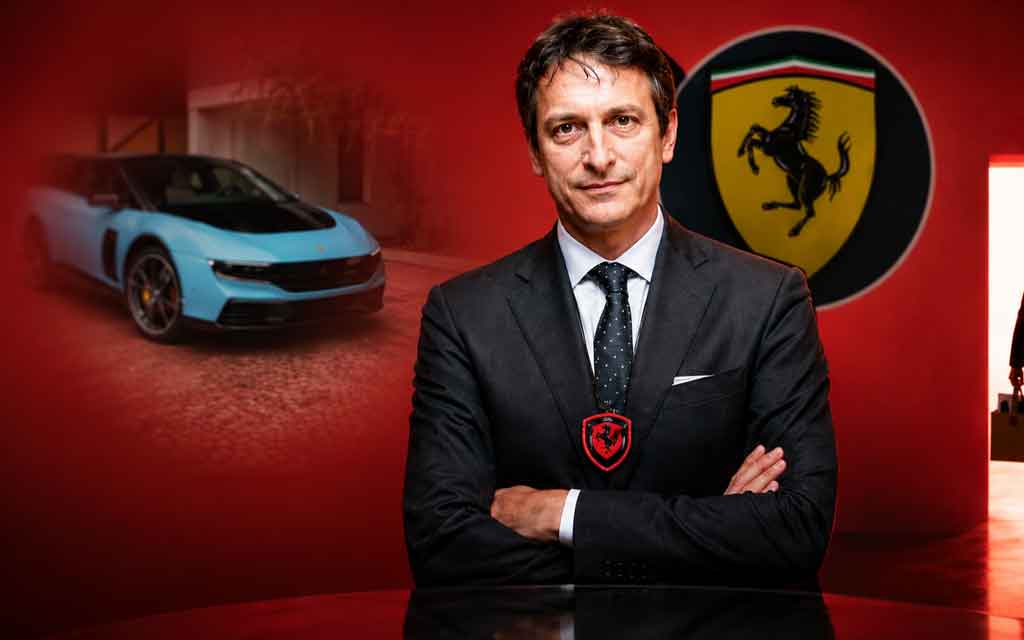
Ferrari has ousted longtime marketing chief Enrico Galliera following heavy criticism of its first electric vehicle, the Luce. Ex-BMW Italy boss Massimiliano Di Silvestre steps in amid stock volatility and brand identity debates
Ferrari has replaced its longtime Chief Marketing and Commercial Officer Enrico Galliera — who served for 16 years — just weeks after the controversial debut of the Luce, the Italian supercar maker’s first all-electric vehicle.
Effective July 1, 2026, Massimiliano Di Silvestre, former CEO of BMW Italy, will take over the role. The timing has fueled speculation that the leadership shake-up is directly tied to the rocky launch of the Luce, which triggered significant online backlash, memes, and an immediate ~8% drop in Ferrari’s stock price on the day of its unveiling.
The Luce EV: Bold Move Meets Fierce Criticism
Unveiled in late May 2026 with input from legendary designer Jony Ive, the Luce is a high-priced (~$630,000–$640,000) four-door electric liftback packing over 1,000 horsepower. It represents Ferrari’s first serious foray into electrification as it navigates regulatory pressures and the broader industry shift toward EVs.
While some praised the futuristic design and performance specs, traditional Ferrari enthusiasts and online commentators lambasted it as “un-Ferrari-like” — comparing it to an Apple product, a luxury minivan, or a PowerPoint on wheels. Critics argued it strayed too far from the brand’s roaring V12 heritage, aggressive styling, and emotional engine sound that defines the marque for many collectors.
The backlash was swift and viral, with memes flooding social media. Ferrari’s stock took a hit as investors worried about diluting the brand’s exclusivity and emotional appeal. CEO Benedetto Vigna later defended the model, citing strong interest and incoming orders from both new and existing customers.
Why the Marketing Chief Change?
Ferrari described Galliera’s departure as part of planned succession, but the proximity to the Luce launch suggests the executive bore responsibility for how the vehicle was positioned and marketed. Key issues likely included:
- Brand Positioning: Failure to effectively communicate the Luce as a evolution rather than a betrayal of Ferrari DNA.
- Target Audience: Alienating core enthusiasts while trying to attract tech-savvy younger buyers or EV-curious luxury customers.
- Launch Execution: The debut, despite high-profile attendees like the Italian President and Pope, did not quell pre-existing skepticism about Ferrari going electric.
Di Silvestre brings extensive luxury and performance automotive experience from BMW, where he navigated similar transitions in premium segments. His appointment signals Ferrari’s intent to refine its storytelling around electrification and future models.
Broader Implications for Ferrari and Luxury EVs
This episode highlights the challenges legacy supercar brands face in the EV era:
- Heritage vs. Innovation: Ferrari must balance its iconic gasoline-powered identity with inevitable electrification driven by emissions regulations and market demands.
- Investor Confidence: Stock volatility shows how sensitive the brand is to perception. Strong order books for the Luce may stabilize things, but sustained criticism could impact future limited editions and halo models.
- Competitive Landscape: Rivals like Lamborghini (which delayed or adjusted EV plans) and Porsche (with the Taycan) offer case studies in navigating the shift. Ferrari’s approach with the Luce will be closely watched as it expands its EV lineup.
- Design and Emotion: Jony Ive’s influence brings a minimalist, tech-forward aesthetic, but it clashed with expectations for Ferrari’s passionate, auditory drama.
Ferrari has committed to a hybrid future before going fully electric, with the Luce serving as a bridge. Success will depend on delivering the performance, exclusivity, and driving emotion that loyalists demand — even without the traditional engine soundtrack.
What’s Next for Ferrari?
The company insists the Luce is receiving positive feedback from key clients and that Galliera’s exit was not punitive. However, the marketing overhaul suggests internal recognition that the launch narrative needs sharpening.
As Ferrari pushes deeper into electrification, expect more focus on personalized experiences, advanced hybrid tech, and storytelling that honors the past while embracing the future. The Di Silvestre era will likely emphasize digital engagement, exclusivity events, and clearer differentiation in a crowded luxury EV space.
For enthusiasts and investors alike, the Luce saga is a reminder that even iconic brands must evolve — but execution and perception are everything.
What do you think? Was the backlash to the Ferrari Luce fair, or an overreaction to necessary change? How should Ferrari market its EVs without losing its soul?
Sources: Ferrari announcements, Electrek, industry reports, and market reactions (May–June 2026). This is an evolving story in the luxury auto sector.


Leave a Comment