
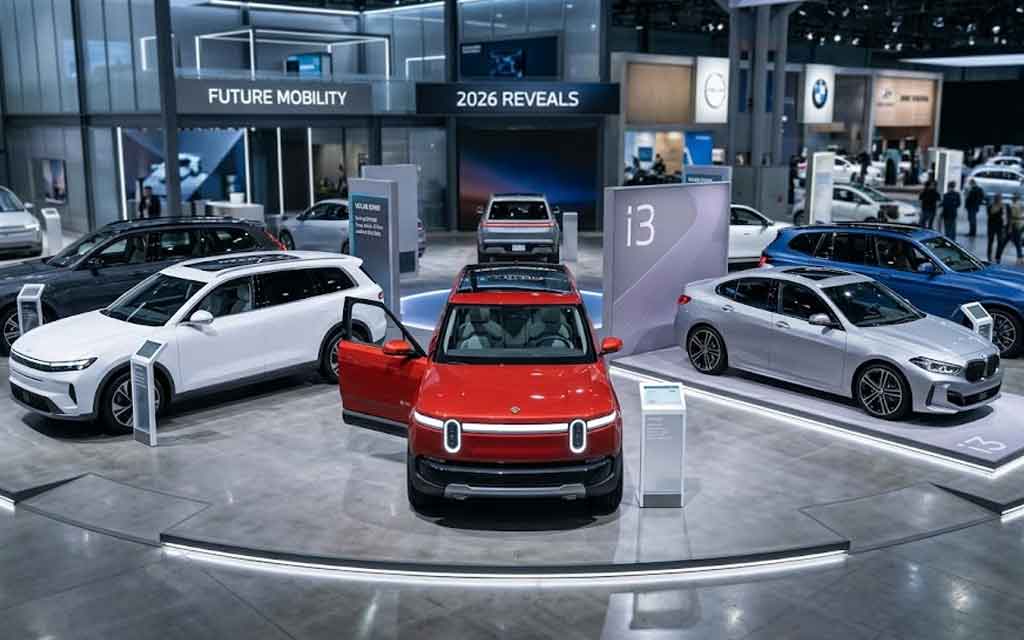
2026 stands out as a pivotal year for electric vehicles, with manufacturers introducing more affordable options, extended ranges, ultra-fast charging, and advanced software features amid moderating EV demand in some regions. The new EVs 2026 lineup spans mainstream accessible models to premium entries built on next-generation platforms.
This guide breaks down the most anticipated 2026 electric cars by key regions — USA, Canada, and Europe — focusing on highlights like the Rivian R2 launch, BMW’s Neue Klasse offerings (iX3 and i3), Hyundai expansions, Honda, Volvo, and others. We cover key specs, timelines, and what matters most for buyers in each market.
USA: Focus on Affordability, Range, and Mainstream Appeal
The U.S. market emphasizes competitive pricing, strong EPA-estimated ranges, and access to widespread charging networks (including NACS compatibility in many cases). Federal incentives and state rebates continue to influence affordability.
Rivian R2 (Spring 2026 onward): Rivian’s most important launch targets the mainstream segment as a more compact, rugged SUV rival to the Tesla Model Y.
- Pricing: Performance Launch Edition starts at ~$57,990; Premium trim ~$53,990 (late 2026); base Standard models ~$45,000–$48,490 (2027).
- Range & Performance: Up to 330+ miles EPA; options from single-motor RWD to tri-motor AWD with up to 656 hp and 0-60 mph in ~3.6 seconds.
- Key Features: Adventure-ready design, bidirectional charging, durable build for daily and off-road use, and built-in Autonomy+ hardware. Production ramps in Q2 2026, with initial high-volume deliveries focused on the U.S. Rivian aims for 20,000–25,000 R2 units in 2026.
BMW iX3 (Summer 2026): The first Neue Klasse vehicle brings advanced 800-volt architecture.
- Pricing: Starts around $60,000 (iX3 50 xDrive).
- Range & Performance: Up to ~400 miles; 463 hp dual-motor AWD, 0-62 mph in ~4.9 seconds, up to 400 kW charging.
- Highlights: Panoramic full-width HUD replacing traditional gauges, large central touchscreen, and software-defined features. Lower-spec variants expected in 2027.
BMW i3 (Late 2026 / early 2027): All-new electric sedan on the Neue Klasse platform, reimagining the 3 Series.
- Expected pricing around $50,000–$55,000 base.
- Up to ~440 miles range with 109-kWh battery and 800-volt system; 463 hp in initial xDrive trim.
- Radical interior with thin windshield-base display and trapezoidal touchscreen.
Other notable U.S. launches:
- Hyundai Ioniq 6 N (~$60,000+, 2026): High-performance sedan with up to 641 hp boost mode and sporty dynamics.
- Volvo EX60 (late spring/late 2026): Midsize SUV with ~400 miles range and premium safety focus, starting ~$60,000.
- Honda 0 Series (Saloon/SUV variants delayed toward late 2026/2027 in some reports): Bold design and advanced ASIMO OS.
- Additional entries include refreshed models and performance variants from Genesis, Jeep (Recon), and others.
U.S. buyers benefit from strong domestic production ramps (e.g., Rivian) and competitive incentives for qualifying models.
Canada: Similar Timeline with Local Pricing and Incentives
Canada largely mirrors the U.S. in launch sequencing, though with adjustments for currency, provincial rebates (e.g., in Quebec, British Columbia), and slightly different regulatory timelines. Cold-weather performance and winter range remain key considerations.
- Rivian R2: U.S. spring 2026 priority; Canadian availability pushed to 2027 in recent updates, with pricing details (previously ~C$66,500) under review. Focus remains on U.S. volume first.
- BMW iX3: Available from March 2026 in selected markets, with broader North American deliveries in summer 2026. Similar specs to U.S. (up to 400 miles, ~$60,000 USD equivalent).
- BMW i3: Late 2026 onward, aligning with U.S. Neue Klasse rollout.
- Hyundai, Volvo, and Honda models: Expected to follow similar North American timelines, with local adaptations for incentives and charging standards.
Canadian buyers should watch provincial EV rebates and infrastructure expansion, which favor longer-range and efficient models like the BMW Neue Klasse entries.
Europe: Earlier Access for Some Models, Emphasis on Efficiency and Smaller Segments
Europe often sees earlier rollouts for premium and compact models due to stricter emissions rules, strong incentives in countries like Germany, Norway, and the UK, and a preference for efficient, smaller vehicles. WLTP ranges are typically quoted (higher than EPA).
BMW iX3 and i3:
- iX3: Deliveries already underway or starting early 2026 in Europe (e.g., from Hungary plant), with strong order books. Pricing from ~£59,000 / € equivalent; WLTP range claims up to 500+ miles in optimistic tests. More affordable variants (including RWD) expected later in 2026.
- i3: Mid-to-late 2026, with production in Munich. Pricing from ~£45,000; strong efficiency focus on the Neue Klasse platform.
Hyundai Ioniq 3:
- Sales starting Q3 2026 in Europe, built in Turkey. Competitive pricing from ~£28,000 / €33,000; stylish compact EV with practical range (~380 miles WLTP targeted). Ideal for urban and family use.
Other Europe-focused highlights:
- Volvo EX60: Mid-2026, ~£60,000, strong safety and up to ~500 miles WLTP claims.
- Rivian R2: First passenger EV for Rivian in Europe, but timeline shifted later (potentially 2027–2028) as the company prioritizes U.S. production.
- Compact and affordable entries: Models like Renault Twingo E-Tech, Volkswagen ID.2/ID.Polo equivalents, and others target sub-€25,000–€30,000 segments with city-friendly sizes and ranges suited to European driving patterns.
- Performance options like Hyundai Ioniq 6 N also expected.
Europe benefits from dense charging networks and policy support, making efficiency and total cost of ownership (including incentives) critical factors. Smaller crossovers and hatchbacks often gain more traction here than large SUVs.
Common Trends Across Regions in 2026 EVs
- Range & Charging: Widespread 800-volt systems enable 10–80% charges in ~20–30 minutes; many models target 300–440+ miles (EPA) or higher WLTP figures.
- Pricing Accessibility: More entries under $50,000 / equivalent, addressing demand slowdowns.
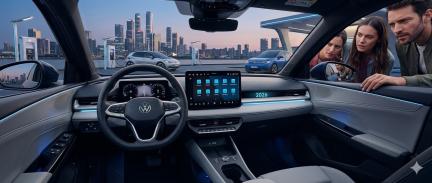
- Tech Focus: Software-defined vehicles, panoramic displays, AI assistants, and over-the-air updates.
- Platform Sharing: Neue Klasse (BMW), E-GMP expansions (Hyundai), and dedicated EV architectures drive efficiency gains.
Auto events and experiences in early 2026 (including March shows) highlighted EV dominance with production-ready reveals emphasizing sustainability and innovation.
What Buyers in India and Emerging Markets Can Learn
While many of these models (especially premium ones like BMW iX3/i3 or Rivian R2) may arrive later or in limited numbers in India due to pricing and localization, they signal global trends:
- Greater affordability push and longer ranges help address infrastructure gaps.
- Fast-charging and efficient batteries suit varied road conditions.
- Policy support (FAME/PM e-Drive schemes) could accelerate localized or adapted versions.
- Compact, practical EVs (in the spirit of Hyundai Ioniq 3) align well with dense urban markets like Hyderabad, while rugged options inspire future variants for highways.
Indian buyers should prioritize durability, ground clearance, thermal management for AC/heat, and strong service networks as global tech trickles down.
The Road Ahead for 2026 EVs
Whether in the USA (volume and value focus with Rivian R2 leading), Canada (aligned North American rollouts), or Europe (earlier premium and compact access), 2026 brings maturing EV technology with broader appeal. The Rivian R2 launch, BMW Neue Klasse duo, and supporting models from Hyundai, Volvo, Honda, and others promise improved real-world usability.
As new EVs 2026 arrive, expect continued progress in range, charging speed, and pricing that could reshape mobility across regions.
Which 2026 EV are you most excited about, and in which market? Share your thoughts in the comments.
Stay updated on EVs and future mobility. Subscribe to VFutureMedia.com for region-specific analysis. Follow us on social media for the latest 2026 electric car news.
Published: March 29, 2026 | By VFutureMedia Team



Leave a Comment