
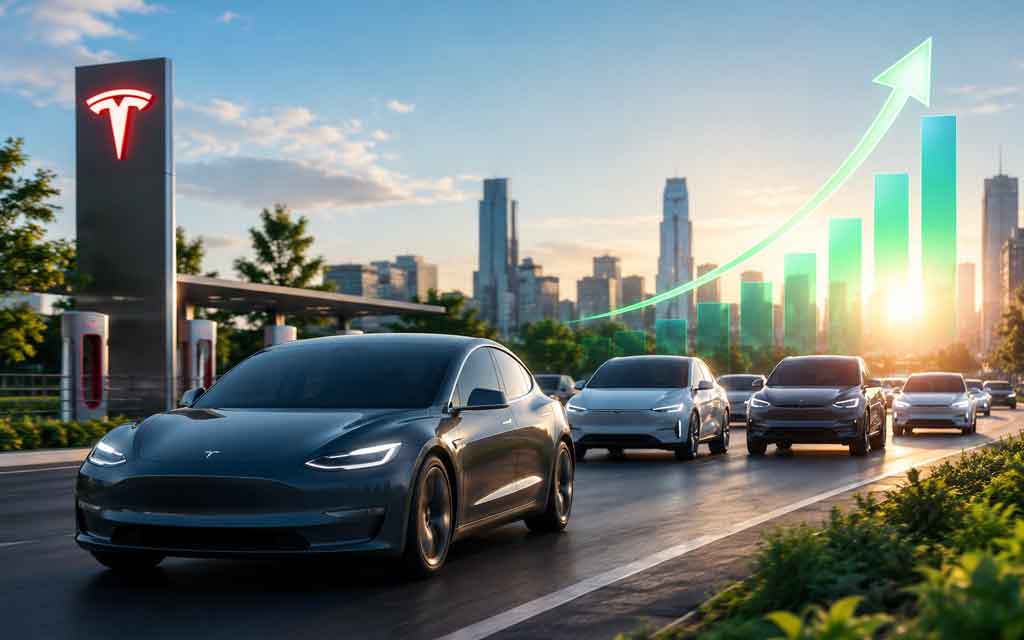
The U.S. electric vehicle market showed clear signs of stabilization in May 2026. After a sharp post-tax-credit hangover that hammered sales in late 2025 and early 2026, new EV registrations climbed 10.3% month-over-month to 84,746 units, according to Cox Automotive’s EV Market Monitor.
While still down 21.9% compared to May 2025, this marked the smallest year-over-year decline since federal incentives ended in September 2025 — and the strongest month for new EV sales since the tax credit vanished.
Tesla remained the undisputed leader, but a broader group of brands gained ground, prices continued falling, and the used EV market kept surging. Here’s the complete breakdown of what happened last month and what it signals for June and the rest of 2026.
Key May 2026 US EV Sales Numbers at a Glance
U.S. EV Market Snapshot – May 2026
- New EV Sales: 84,746 units (+10.3% vs April, -21.9% YoY)
- EV Market Share: 5.7% (+0.1 percentage points vs April)
- Tesla Sales: 40,578 vehicles (47.9% market share)
- Used EV Sales: 42,923 units (+5.5% vs April, +24.7% YoY)
- Average New EV Price: $54,532 (-0.5% vs April, -4.0% YoY)
- Average Incentive: ~$7,611 (14% of transaction price)
Source: Cox Automotive EV Market Monitor – May 2026 (via Kelley Blue Book data).
Tesla Still Dominates — But Competitors Are Fighting Back
Tesla delivered 40,578 vehicles in May, capturing 47.9% of the entire U.S. EV market. The Model Y and Model 3 continued to dominate the top spots, with the Model Y remaining America’s best-selling EV by a wide margin.
Tesla’s average transaction price fell again (down ~3.4% YoY), helping keep volume resilient even without the $7,500 federal credit. The company’s software advantage, Supercharger network, and frequent over-the-air updates continue to give it a structural edge that legacy automakers are still trying to match.
However, Tesla’s share slipped slightly from April as several competitors posted stronger sequential gains. This is a healthy sign of a maturing market rather than weakness — more brands are finally offering competitive products with real incentives.
Other Brands & Models Gaining Traction
Top performers outside Tesla included:
- Hyundai (strong gains with Ioniq 5)
- Cadillac (luxury EV momentum)
- Toyota (bZ4X and new electrified models)
- Chevrolet and Ford (Mustang Mach-E still moving despite broader Ford EV struggles)
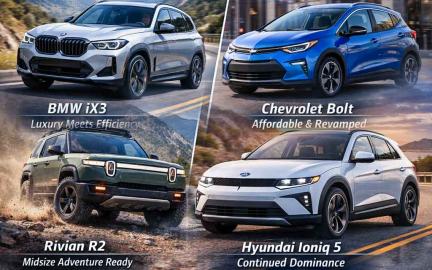
The next tier of volume leaders after the Tesla twins featured the Hyundai Ioniq 5, Ford Mustang Mach-E, and Toyota bZ4X. These models benefited from aggressive manufacturer incentives and improving inventory positions.
Used EV Market Continues Its Explosive Growth
One of the brightest spots in the entire auto industry right now is the used EV segment. Sales jumped to 42,923 units in May — up 24.7% year-over-year and 5.5% month-over-month.
Used EVs now represent 2.8% of all used vehicle sales, with days’ supply dropping to just 31 days (extremely tight compared to gas cars). This surge is fueled by:
- Off-lease returns hitting the market
- Trade-ins from early adopters
- Falling prices making previously expensive EVs accessible to mainstream buyers
Tesla again led used sales through non-Tesla dealerships (15,353 units), followed by Hyundai, Chevrolet, Ford, and BMW. For many American families, the used EV market is now the most practical entry point into electric driving.
Prices Keep Falling — Good News for Buyers
The average transaction price for a new EV dropped to $54,532 in May — down 4% year-over-year and continuing an 11-month streak of declines.
Manufacturers are offering an average of $7,611 in incentives per vehicle (14% of ATP), nearly double the industry average for gas cars. Tesla’s pricing discipline is exerting downward pressure across the segment, while brands like Cadillac and BMW are using targeted discounts to move higher-trim models.
This combination of lower MSRPs, bigger incentives, and a robust used market means now is one of the better times in the past two years for qualified buyers to get into a new or nearly-new EV — especially if you can take advantage of home charging and qualify for any remaining state or utility rebates.
Why Did Sales Rebound in May?
Several factors aligned:
- Normalization after the tax credit cliff — The sharp drop in Q4 2025 and Q1 2026 was partly pull-forward demand. The market is now finding a new equilibrium.
- Aggressive manufacturer incentives — Automakers are filling the gap left by the federal credit with their own cash and low-rate financing.
- Tightening inventory — New EV days’ supply fell to 71 days (well below year-ago levels), signaling that demand is absorbing supply more efficiently.
- Elevated gas prices — In many regions, fuel costs renewed interest in efficiency, even if buyers didn’t always choose full EVs over hybrids.
- New model momentum — Fresh product from Hyundai, Toyota, and others helped broaden appeal.
Remaining Challenges for US EV Adoption
Despite the May rebound, headwinds persist:
- Overall market share remains low (~5.7%) compared to China (>50% in many months) and parts of Europe.
- Some legacy automakers (notably Ford) have scaled back EV ambitions or canceled programs.
- Charging infrastructure, while improving, remains uneven outside major metro areas and highway corridors.
- A segment of American buyers still prefers hybrids or efficient gas vehicles for long trips and lower upfront cost.
BloombergNEF and IEA reports both note that the U.S. is now an outlier in the global EV boom, with sales projected to decline for the full year 2026 in some forecasts.
What’s Next for June 2026 and Beyond?
Early indications suggest the positive sequential momentum from May could carry into June, though full data won’t be available until mid-July. Key things to watch:
- Rivian R2 launch — Deliveries of the more affordable ~$45,000 R2 SUV are beginning, potentially expanding Rivian’s reach significantly.
- New model pipeline — Several affordable or refreshed EVs from established brands are arriving or launching soon.
- Tesla developments — Continued FSD (Full Self-Driving) expansion and any updates on unsupervised robotaxi plans could influence buyer psychology.
- Battery & cost improvements — Ongoing declines in battery pack prices are making lower-priced EVs more viable without subsidies.
- State-level policies — Some states are stepping up with their own incentives or charging investments.
Longer term, the market is shifting from subsidy-driven growth to product- and software-driven competition. Vehicles that offer the best combination of price, range, charging speed, software experience, and total cost of ownership will win — areas where Tesla currently holds strong advantages, but where legacy players and startups are improving fast.
Bottom Line for American EV Shoppers
May 2026’s data shows the U.S. EV market is not collapsing — it is adapting. The post-tax-credit correction was painful but necessary. What remains is a leaner, more competitive landscape with better deals for buyers.
If you’re considering an EV:
- New buyers — Look at current incentives on Model Y, Ioniq 5, Mustang Mach-E, or Cadillac models. Negotiate hard.
- Budget-conscious buyers — The used EV market is offering excellent value right now.
- Long-term view — Total cost of ownership (electricity vs gas + maintenance + potential resale) still favors EVs for most drivers with home charging access.
The transition to electric mobility in America is maturing rather than stalling. Innovation in batteries, software, autonomy, and charging continues at full speed — even if the sales curve is bumpier than some optimistic forecasts predicted two years ago.
Would you buy an EV right now with current pricing and incentives? Which model are you considering — Tesla Model Y, Hyundai Ioniq 5, or something else? Let us know in the comments.
Data primarily sourced from Cox Automotive EV Market Monitor (May 2026) and cross-referenced with Kelley Blue Book, Electrek, and industry analyses. Sales figures are estimates and may be revised slightly.


Leave a Comment