

BMW Humanoid Robots at Leipzig: Future of Car Manufacturing
NEXT_PUBLIC_GOOGLE_ADSENSE_ID to enableIntroduction: A New Era in Automotive Production
BMW Group has officially declared humanoid robots as “the future” of car manufacturing. The German automaker is rolling out its first European pilot project with humanoid robots at its state-of-the-art Plant Leipzig. This move signals a major shift in how vehicles will be built in the coming decades.
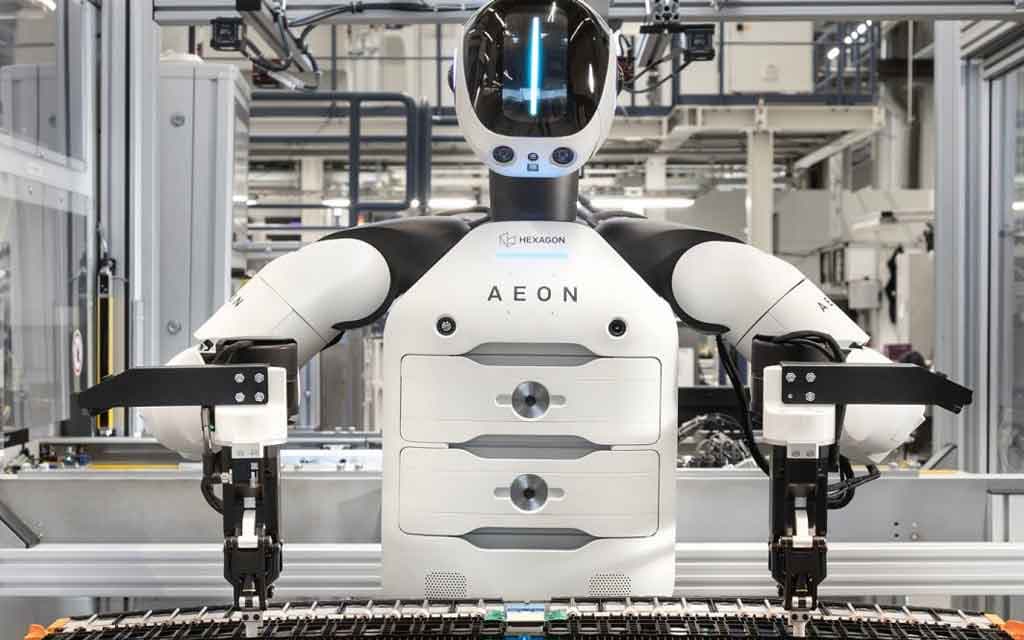
In February 2026, BMW announced the deployment of the AEON humanoid robot, developed in partnership with Hexagon Robotics. This initiative builds on successful trials at its Spartanburg plant in the US and positions Leipzig as a testbed for “Physical AI” — the integration of advanced artificial intelligence with versatile robotic hardware.
For www.vfuturemedia.com readers interested in robotics, AI, and the automotive industry, this development represents one of the most significant milestones in modern manufacturing. Humanoid robots are no longer science fiction; they are becoming collaborative team members on factory floors.
What Are Humanoid Robots and Why BMW Chose Leipzig
Humanoid robots are bipedal (or in AEON’s case, wheeled-base) machines designed with human-like form factors, including arms, hands, and sensory systems that allow them to operate in environments built for people. Unlike traditional industrial robots fixed in place for repetitive tasks, humanoids offer flexibility, adaptability, and the ability to learn new jobs through AI.
BMW selected its Leipzig plant for this pioneering European pilot because of its diversity. The facility handles everything from press shop and body shop operations to injection molding, component manufacturing, and high-voltage battery assembly for electric vehicles. This makes it an ideal “living laboratory” for testing versatile robots.
The AEON robot features advanced capabilities, including multiple sensors (reports mention around 21-22 onboard sensors), swappable batteries for continuous operation, and Physical AI that enables it to perceive, decide, and act in dynamic factory settings. Initial testing began in December 2025, with further evaluations in April 2026 leading to full pilot operations in summer 2026.
BMW’s Vision: Humanoid Robots as “The Future”
BMW executives have been vocal about the transformative potential of this technology. The company is establishing a new “Center of Competence for Physical AI” to accelerate the global integration of AI and robotics across its production network.
This isn’t just about replacing workers. BMW emphasizes that humanoid robots will handle monotonous, ergonomically demanding, or physically strenuous tasks, improving worker safety and job satisfaction. Humans will focus on higher-value activities like quality control, innovation, and complex problem-solving.
Michael Nikolaides, head of process planning at Plant Leipzig, has described the project as pointing toward the future of automotive production. By combining digital AI with physical robots, BMW aims to create more resilient, efficient, and adaptable manufacturing systems.
Details of the Leipzig Pilot Project
The primary focus areas for the AEON humanoid at Leipzig include:
- High-Voltage Battery Assembly: Critical for BMW’s expanding EV lineup, this task requires precision, care with sensitive components, and repetitive movements that can strain human workers.
- Component Manufacturing: Handling parts with varying sizes and weights, where dexterity and adaptability are essential.
The robot works safely alongside human colleagues, equipped with safety protocols and collaborative features. This “cobots” approach (collaborative robots) is a key differentiator from traditional automation.
BMW’s earlier success with Figure 02 robots at Spartanburg provides confidence. There, the humanoid performed real production tasks over months, contributing to the assembly of more than 30,000 X3 SUVs by handling sheet-metal components in ergonomically challenging positions.
Benefits for the Automotive Industry
The adoption of humanoid robots offers multiple advantages:
- Increased Productivity: Robots can work extended shifts without fatigue, maintaining consistent quality.
- Labor Shortage Solution: Many manufacturing regions face skilled labor shortages. Humanoids can fill gaps in physically demanding roles.
- Flexibility: Unlike fixed automation, humanoids can be reprogrammed or retrained for new vehicle models or processes quickly.
- Improved Safety and Ergonomics: Reducing repetitive strain injuries and exposure to hazardous environments.
- Cost Efficiency Long-Term: While initial investment is high, the versatility reduces the need for multiple specialized machines.
- Sustainability: More precise assembly can reduce material waste, and optimized operations lower energy consumption.
For the broader car manufacturing sector, BMW’s move could accelerate adoption by competitors like Mercedes, Volkswagen, Tesla, and Asian manufacturers already investing heavily in robotics.
Comparison with Global Competitors
BMW is not alone in this race:
- Tesla: Elon Musk has long championed Optimus humanoid robots for Tesla factories and beyond.
- Figure AI: BMW’s US partner has gained significant traction with its Figure 02 model.
- Chinese Manufacturers: Companies like Xiaomi and others are rapidly scaling humanoid deployments, supported by government initiatives.
- Other Automakers: Hyundai, Ford, and GM are exploring similar technologies.
What sets BMW apart is its methodical, pilot-based approach focused on real production integration rather than just demonstrations. The Leipzig project emphasizes seamless integration into existing series production.
Technological Underpinnings: Physical AI Explained
Physical AI refers to AI systems embodied in physical forms that can interact with the real world. It combines:
- Computer Vision and Sensing: For object recognition and environmental awareness.
- Machine Learning: Especially reinforcement learning for task mastery.
- Dexterous Manipulation: Advanced robotic hands capable of fine motor skills.
- Natural Language Processing: Potential for intuitive human-robot communication.
- Edge Computing: Onboard processing for real-time decisions.
Hexagon Robotics’ AEON is optimized for factory floors with its design tailored for industrial durability and human compatibility.
Impact on Jobs and the Workforce
A common concern is job displacement. BMW insists the technology augments rather than replaces the workforce. By taking over tedious tasks, robots can make jobs more appealing and allow reskilling into tech-maintenance, programming, and oversight roles.
Governments and unions will need to address training programs to prepare workers for this hybrid future. In Germany, with its strong manufacturing tradition and emphasis on “Industrie 4.0,” this transition is being watched closely.
Challenges and Considerations
Despite the excitement, challenges remain:
- High Initial Costs: Developing and deploying advanced humanoids is expensive.
- Technical Reliability: Ensuring consistent performance in varied conditions.
- Regulatory and Safety Standards: New frameworks needed for human-robot collaboration.
- Ethical Questions: Data privacy, decision-making accountability, and long-term societal impacts.
- Integration Complexity: Retrofitting existing plants versus designing new ones around robots.
BMW is addressing these through phased pilots and close collaboration with robotics partners.
Future Outlook for Humanoid Robots in Manufacturing
By 2030, analysts predict humanoid robots could become commonplace in automotive plants. Projections for the global humanoid robotics market are optimistic, with rapid growth driven by AI advancements and falling component costs.
BMW’s Leipzig initiative could serve as a blueprint for other industries, including electronics, logistics, healthcare, and construction. The versatility of humanoids makes them suitable for any environment designed for humans.
For EV production specifically, where battery handling and precision assembly are paramount, humanoids could accelerate the transition to sustainable mobility.
Why This Matters for the Future of Mobility
As the world shifts toward electric, autonomous, and software-defined vehicles, manufacturing must evolve. Humanoid robots represent the next leap in flexible production systems that can keep pace with rapid innovation cycles.
BMW’s bold step reinforces its commitment to innovation, quality, and leadership in premium automotive manufacturing. Plant Leipzig, already known for its modern approach, is now at the forefront of a global transformation.
Conclusion: Embracing the Robotic Future
BMW’s declaration that humanoid robots are the future of car manufacturing is more than hype — it’s backed by concrete action at the Leipzig plant. With the AEON pilot underway, the company is paving the way for smarter, safer, and more efficient production.
At VFutureMedia, we’ll continue tracking these developments as robotics, AI, and automotive technology converge to reshape industries. The age of collaborative human-robot manufacturing has begun, promising exciting advancements for consumers, workers, and businesses alike.
This pilot project not only highlights BMW’s forward-thinking strategy but also underscores the broader potential of Physical AI to solve real-world challenges in manufacturing. As more companies follow suit, the factories of tomorrow will look vastly different — more intelligent, adaptive, and human-centric in their design.
Stay tuned for updates on BMW’s progress, comparative analyses with other automakers, and deeper dives into the technologies powering this revolution.
NEXT_PUBLIC_GOOGLE_ADSENSE_ID to enable

