
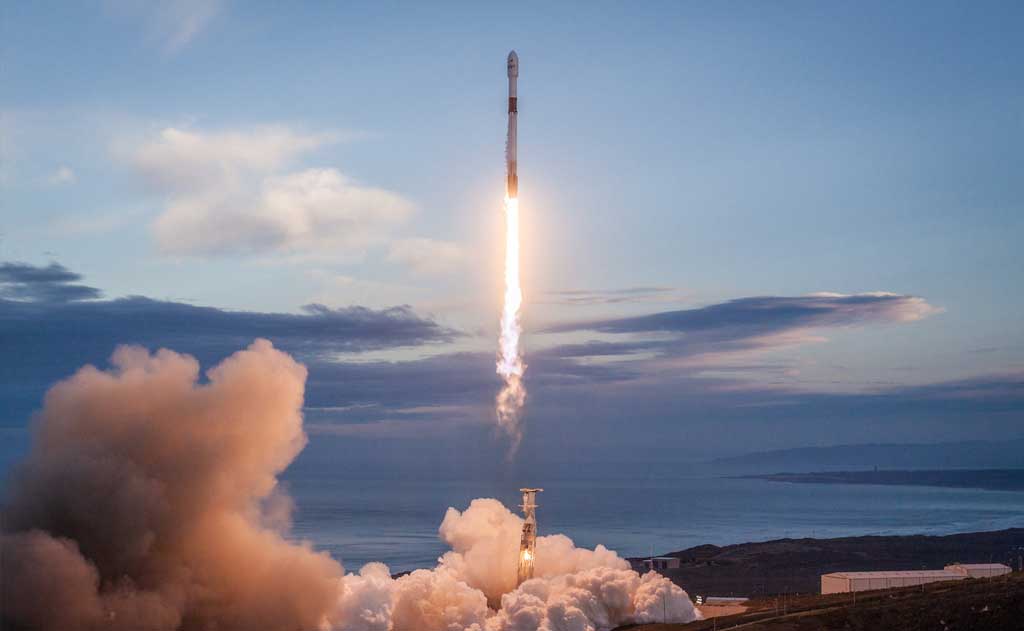
Imagine waking up to the sound of another rocket roaring into the sky—every few days. That’s no longer science fiction; it’s happening right now. In the first two weeks of January 2026, SpaceX has already completed multiple Falcon 9 launches, pushing the boundaries of what’s possible in spaceflight. As someone who has followed the evolution of reusable rocketry for years at VFutureMedia.com, I can tell you this pace isn’t just fast—it’s historic. This January marks a true world-record moment in launch frequency.
The Numbers That Define January 2026
SpaceX began 2026 with relentless momentum:
- Early January: Multiple Starlink deployment missions lifted off from both Florida and California, adding dozens of satellites to the constellation.
- Mid-January: Dedicated rideshare flights carried customer payloads, including scientific instruments, into precise orbits.
- Ongoing cadence: Launches occurring roughly every 2–3 days globally.
This rhythm translates to an average of one Falcon 9 mission every 2.4–2.8 days so far in 2026. No other organization—government or private—has ever sustained this level of orbital activity over such a short window. The company’s reusable boosters, many of which have flown 20+ times already, are the backbone of this achievement. Each successful landing and quick refurbishment allows the same hardware to fly again in weeks instead of years.
Why This Pace Matters: Key Benefits
The advantages of SpaceX’s accelerated launch cadence reach far beyond the launch pad.
- Dramatically lower costs — Frequent flights spread fixed expenses across more missions, driving down the price per kilogram to orbit. Small satellite operators and research institutions now enjoy access that was once reserved for major space agencies.
- Faster constellation growth — Starlink continues expanding at a remarkable rate, improving global broadband coverage and reducing latency in underserved regions.
- More frequent science and exploration opportunities — NASA and commercial partners can schedule payloads with far shorter lead times, accelerating research in Earth observation, materials science, and deep-space studies.
- Economic momentum — Launch sites in Florida and California see increased activity, supporting thousands of high-tech jobs and stimulating local innovation ecosystems.
This isn’t just about moving metal to space. It’s about making space infrastructure as routine and reliable as airline schedules—something that unlocks progress across countless industries.
Real Challenges Behind the Record Pace
Sustaining this tempo isn’t effortless. Several hurdles remain:
- Weather and range constraints — Coastal launch sites are still subject to wind, lightning, and range safety holds that can delay even the most prepared missions.
- Booster refurbishment demands — Turning around a flown first stage in record time requires flawless execution across engineering, logistics, and quality assurance teams.
- Orbital congestion concerns — More satellites mean more objects in low Earth orbit, raising long-term questions about collision risk and space sustainability.
- Regulatory coordination — Even with streamlined processes, coordinating airspace, maritime zones, and environmental reviews for frequent launches takes careful planning.
SpaceX has consistently demonstrated the ability to solve these problems at scale, but maintaining reliability while increasing frequency will remain a central engineering challenge throughout 2026.
Looking Ahead: What This Means for the Rest of 2026
If January is any indication, 2026 could easily become the highest-launch-rate year in history. Projections point toward 140–160 orbital missions, most of them Falcon 9 flights, with Starship beginning to contribute meaningful flight volume later in the year.
This cadence will:
- Further reduce the cost barrier for new entrants in the space economy
- Enable larger, more capable satellite constellations for AI-driven Earth monitoring, climate research, and global connectivity
- Support more ambitious human spaceflight campaigns, including continued crew rotations to the International Space Station and preparation for lunar and Mars missions
The ripple effects will touch green technology (orbital solar power studies), quantum computing (space-based testbeds), robotics (in-orbit servicing demos), and electric vehicle ecosystems (precise positioning and timing data from expanded satellite networks).
Frequently Asked Questions
How many launches has SpaceX completed in January 2026 so far? Multiple Falcon 9 missions have flown in the first half of January, maintaining an average of roughly one every 2–3 days.
Is this truly a world record? Yes. No entity has ever achieved and sustained this frequency of orbital launches over such a compressed timeframe.
What technology makes this possible? Reusable first stages, rapid refurbishment processes, vertical integration of manufacturing, and highly automated ground operations.
Will Starship change the cadence even more? Starship is expected to begin contributing regular flights later in 2026, potentially pushing total launch numbers significantly higher while handling much larger payloads.
How does this benefit everyday technology? Cheaper, faster access to orbit accelerates development of advanced communications networks, real-time Earth observation for climate and agriculture, and next-generation positioning systems that enhance autonomous vehicles and smart grids.
SpaceX’s January 2026 launch cadence isn’t just a statistic—it’s proof that the space industry is entering a new era of routine, high-frequency access to orbit. This shift will reshape how we build, explore, and innovate beyond Earth.
What are your thoughts on this pace? Drop a comment below and let me know how you see frequent launches changing the future of technology. For more deep dives into space, AI, electric vehicles, green innovation, robotics, quantum computing, and the startup world, keep coming back to VFutureMedia.com. Subscribe so you never miss the next breakthrough.
FAQ: Answering Your Questions on SpaceX’s 2026 Launch Cadence
How many launches has SpaceX done in January 2026?
As of January 13, five successful Falcon 9 missions, with more scheduled.
Is SpaceX’s launch cadence a world record?
Yes, averaging every 2.5 days surpasses previous global highs, building on 2025’s 109 from one coast.
What enables SpaceX’s rapid launches?
Reusable boosters, streamlined ops, and vertical integration cut turnaround to days.
Will Starship increase the cadence further?
Absolutely—Version 3 previews suggest monthly Mars-capable flights by late 2026.
How does this affect everyday tech?
Cheaper satellites mean better AI, EVs with space-linked navigation, and green monitoring tools.
What do you think about SpaceX’s pace? Share in the comments below, subscribe to VFutureMedia for weekly future tech updates, or explore our related posts on AI and startups. Let’s discuss how this shapes tomorrow—your insights could spark the next big idea!
Ethan Brooks covers the tech that’s reshaping how we move, work, and think — for VFuture Media. He was at CES 2026 in Las Vegas when the world got its first real look at humanoid robots, AI-powered vehicles, and Samsung’s tri-fold phone. He writes about AI, EVs, gadgets, and green tech every week. No hype. No filler. X · Facebook




Leave a Comment