
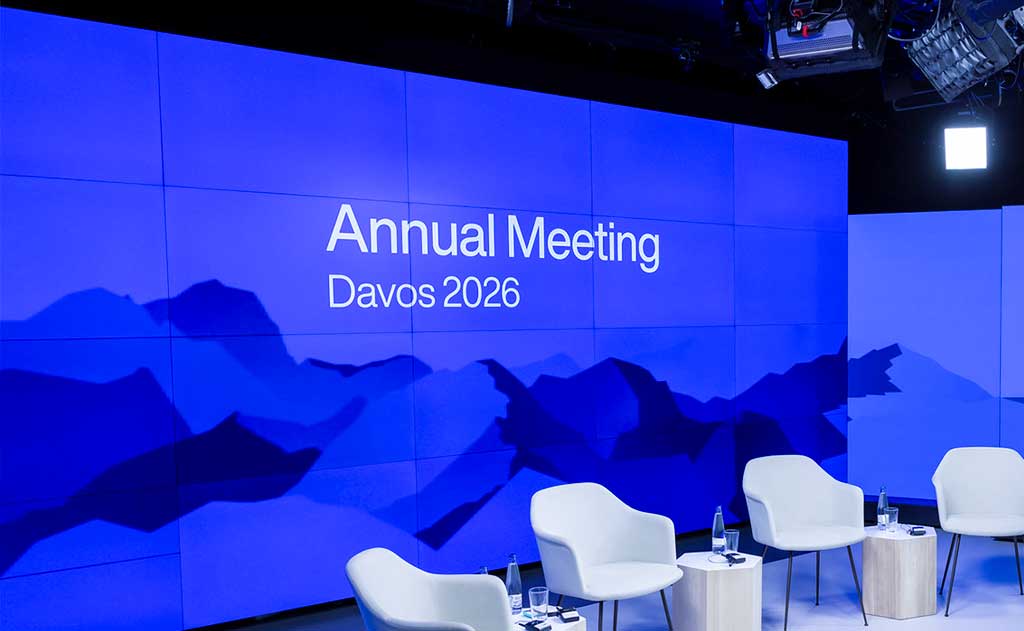
The 56th Annual Meeting of the World Economic Forum opened in Davos-Klosters with a resounding call for dialogue in a fragmented world. Under the theme “A Spirit of Dialogue”, Day 1 (January 19, 2026) blended cultural harmony with high-stakes sessions on artificial intelligence as the era’s defining force, contested geopolitics, economic resilience amid debt and tariffs, and emerging priorities like water security and energy transitions.
Leaders from over 60 heads of state, top CEOs, and innovators converged, with a notable U.S. presence including Commerce Secretary Howard Lutnick and allies navigating tariff threats and alliances. AI dominated early conversations, framed as both opportunity and risk, while panels addressed how to foster cooperation without referees in a multipolar era.
Opening Ceremony & Thematic Tone-Setter
Davos 2026 launched not with policy but with music: the Mala Chamber Orchestra’s performance symbolized unity across borders and genres. WEF President Børge Brende highlighted music’s borderless language, echoing the theme. Interim Co-Chairs Larry Fink (BlackRock) and André Hoffmann (Roche) stressed openness, collaboration, and responsibility—core to bridging divides in geopolitics, technology, and society.
Five priorities framed the week: cooperating in contested geopolitics, unlocking growth sources, deploying innovation responsibly (especially AI), building resilience, and advancing inclusive progress.
Standout Panel: The Future of AI – Innovation, Adoption & Existential Risks
A marquee session featured AI trailblazers Dario Amodei (CEO, Anthropic), Demis Hassabis (CEO, Google DeepMind), moderated by Zanny Minton Beddoes (Editor-in-Chief, The Economist). Discussions probed paths to AGI, responsible scaling, and bridging the “AI diffusion divide.”
Key insights:
- AI shifts from hype to real-world proof, with 2025 MINDS organizations demonstrating enterprise value.
- Governance gaps risk unchecked power; ethical frameworks and accountability are urgent.
- Job transformation looms—white-collar disruption parallels past manufacturing shifts, yet new skills and sectors emerge.
- Compute demands tie AI to energy security and national competitiveness.
Related talks included Andrew Ng on practical AI applications and Nick Tzitzon (Salesforce) on trusted platforms. Jensen Huang (NVIDIA) linked hardware to growth, while Larry Fink warned of unequal AI benefits echoing past globalization pitfalls.
Global Economy & Finance Panels: Navigating Debt, Tariffs & Uncertainty
High-profile economic discussions featured U.S. Secretary of Commerce Howard Lutnick, UK Chancellor Rachel Reeves, Canadian Finance Minister François-Philippe Champagne, Bank of America CEO Brian Moynihan, and EY CEO Janet Truncale. Moderated debates tackled $38+ trillion global debt, AI productivity boosts, U.S.-centric shifts, and market stability.
Highlights:
- Prosperity framed as “sovereign yet connected”—balancing national interests with global flows.
- Tariff threats (e.g., U.S. proposals on allies) sparked tensions, with NATO partners warning of ruptures over issues like Greenland.
- Christine Lagarde (ECB), Ken Griffin (Citadel), Larry Fink, and economist Adam Tooze analyzed shocks and cycle-breaking pathways.
- Digital finance and dollar dominance evolved amid contested norms.
Sir Martin Sorrell offered commentary on Modi, Trump, and alliance realignments, underscoring U.S. influence.
Geopolitics & Contested Cooperation
Sessions on Europe’s redefinition and supply chains (“Has the Dust Settled?”) highlighted strained alliances. NATO allies cautioned against unilateral moves, while panels explored renewed cooperation models amid sovereignty pushes and eroding trust.
Energy, Water & “Blue Davos” Initiatives
Day 1 advanced water resilience as 2026’s focus (“Year of Water”). The Water Resilience Challenge crowned winners supporting aquapreneurs in agriculture and infrastructure. Panels linked AI’s energy hunger to national security, debating future grids and blue foods for sustainability.
Additional Key Sessions & Addresses
- Open Forum: Which 2050 Do We Want? – Forward-looking visions on long-term futures.
- Previews of addresses from leaders like Javier Milei, Emmanuel Macron, and Mark Carney.
- Workforce evolution talks on AI-driven jobs and skills.
- TIME100 Davos Dinner stressing humanity in innovation.
Broader Day 1 Implications & Looking Ahead
Day 1 reinforced dialogue’s necessity amid Trump’s delegation (including Rubio, Bessent, Lutnick), tariff rhetoric, and pushes for growth without chaos. EU figures like Ursula von der Leyen emphasized strategic autonomy, while China’s He Lifeng participated early.
AI emerged as the “super system” reshaping finance, energy, and governance. Panels balanced optimism with warnings on bubbles, inequality, and ethical deployment.
As Davos 2026 progresses, expect deeper dives into agentic AI, materials geopolitics, and inclusive models. The “Spirit of Dialogue” tests whether contested world can yield collaborative solutions.
For ongoing coverage of Davos 2026 highlights, WEF panel discussions, AI trends 2026, global economics, and future media insights, bookmark vfuturemedia and follow #WEF26.
Author: Ethan Brooks.
I’m Ethan, and I write about the tech that’s actually going to change how we live — not the stuff that just sounds impressive in a press release. I cover AI, EVs, robotics, and future tech for VFuture Media. I was on the ground at CES 2026 in Las Vegas, walking the show floor so I could give you a real read on what matters and what’s just noise. Follow me on X for daily takes.
We started VFuture Media because we wanted tech news written by people who actually follow this industry — not content farms chasing keywords. If that resonates, we’d love to have you as a regular reader. Pull up a chair.



Leave a Comment