
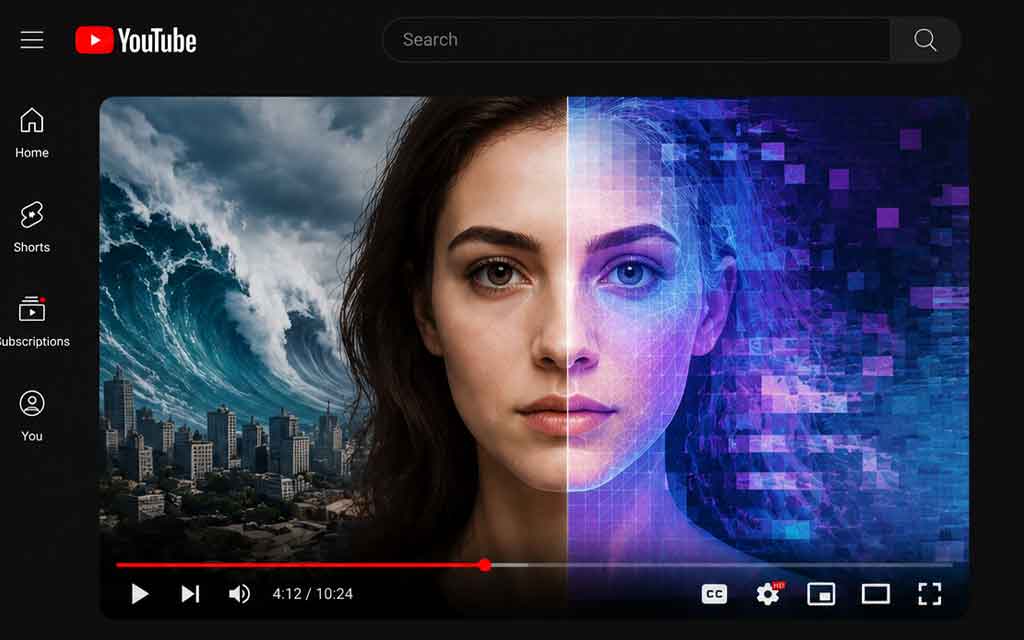
YouTube is stepping up its fight against low-quality, mass-produced AI content. Starting in May 2026, the platform is rolling out automatic labels for videos it detects were significantly made with generative AI, aiming to boost transparency and reduce viewer confusion from “AI slop.”
This move marks a shift from relying solely on creator disclosures to proactive detection using new internal signals.
What’s Changing with YouTube’s AI Labeling Policy
According to YouTube’s official announcement, the platform will now automatically apply labels to videos featuring significant photorealistic AI use if creators haven’t already disclosed it.
Key updates include:
- Automatic Detection: YouTube’s systems will flag content with realistic AI-generated or altered elements (e.g., deepfakes, synthetic scenes, or AI voices that could be mistaken for real).
- More Prominent Labels: Labels will appear directly below the video player for long-form content (above the channel icon) and as overlays in the bottom left for Shorts — making them harder to miss.
- Creator Override: Creators can edit or appeal the label in YouTube Studio if they believe it’s inaccurate.
- Mandatory for Google Tools: Videos using YouTube’s own AI tools (like Veo or Dream Screen) or containing C2PA metadata will require clear disclosure.
This builds on earlier 2024 rules that required manual disclosures for altered or synthetic content but often went unnoticed in descriptions.
Why YouTube Is Cracking Down on AI Slop Now
The surge in generative AI tools has flooded YouTube with low-effort, repetitive videos — often called AI slop — including fake movie trailers, misleading news clips, and mass-produced Shorts that rack up millions of views while misleading audiences.
YouTube CEO Neal Mohan and the team have acknowledged the problem, balancing support for creative AI use with protecting platform quality and viewer trust. The goal: empower genuine creators while curbing spam that harms engagement and ad performance.
What doesn’t require labeling:
- Clearly unrealistic or animated content
- Minor AI tools (e.g., color correction, basic filters, script brainstorming, auto-captions)
- Special effects that are obviously artificial
Implications for Creators, Viewers, and the AI Content Ecosystem
For Creators:
- Transparency Wins: Honest AI-assisted creators using the tool for enhancement can still thrive, with labels signaling innovation rather than deception.
- Risks: Failure to disclose (or overriding automatic labels improperly) could lead to reduced reach, demonetization, or removal — especially for mass-produced repetitive content.
- Opportunities: High-quality, value-adding AI content remains eligible for monetization if properly labeled and original.
For Viewers:
- Better ability to distinguish real from synthetic, reducing misinformation risks (especially in news, tutorials, or celebrity content).
- More informed viewing experience across billions of daily videos.
For the Broader AI Industry: This sets a precedent for platforms navigating the explosion of generative tools. It encourages responsible innovation while pressuring low-effort “slop factories” that dilute content quality.
What This Means for the Future of YouTube Content
YouTube isn’t banning AI — it’s pushing for responsible AI use. Expect:
- Stronger enforcement against inauthentic, mass-produced videos.
- Continued investment in AI tools that help creators (autodubbing, idea generation, editing assistance).
- Potential ripple effects on faceless channels, AI voiceovers, and fully synthetic long-form content.
Creators should review their workflows now: always check the “Altered or Synthetic Content” option in YouTube Studio for qualifying videos and monitor for automatic labels.
Conclusion YouTube’s automatic AI labeling rollout is a timely and necessary step in the platform’s evolution. By cracking down on deceptive AI slop while supporting creative applications, the platform aims to maintain trust in an era where distinguishing real from generated is increasingly difficult.
At VFuture Media, we’re closely following how AI is reshaping content creation, distribution, and consumption. This policy could redefine success for creators in 2026 and beyond.
Stay informed on the latest in AI, digital media, and platform policies. Subscribe for more in-depth analysis.
Sources: Official YouTube Blog (May 27, 2026)


Leave a Comment