
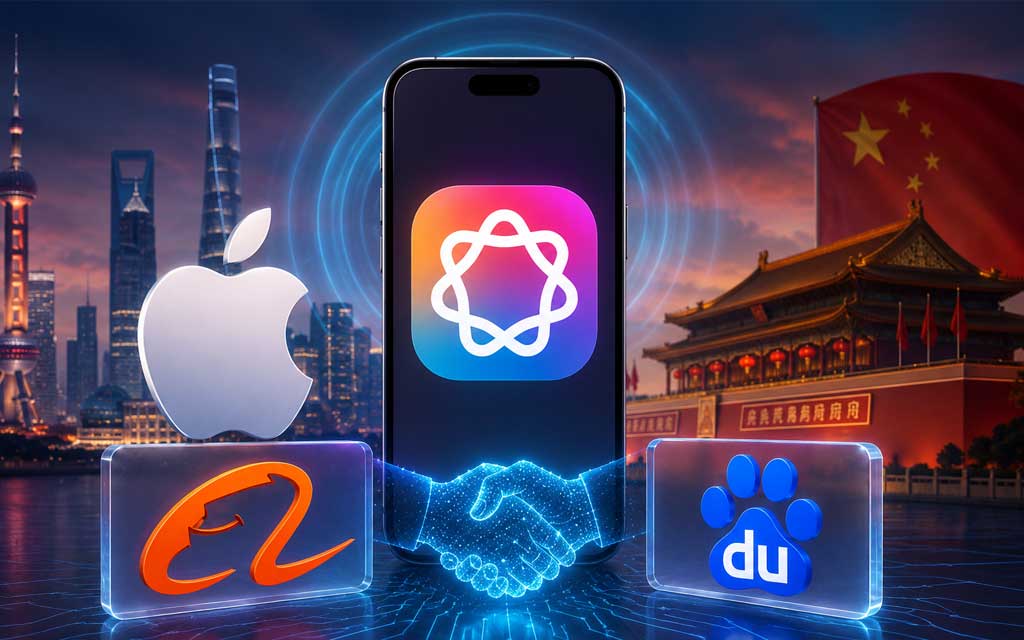
In a landmark development that highlights the complex realities of doing business in the world’s largest smartphone market, Apple has received Chinese government approval to launch Apple Intelligence on iPhones and other devices in China. The Cyberspace Administration of China (CAC) greenlit the service on July 15, 2026, with the rollout relying on AI models from domestic giants Alibaba (Qwen) and Baidu.
As an American tech reporter covering the intersection of AI, EVs, autonomy, and global competition at www.vfuturemedia.com, this story is more than a product launch — it’s a case study in strategic pragmatism, data sovereignty, and the intensifying U.S.-China tech rivalry. While Apple maintains its innovation edge, this partnership underscores the challenges American companies face in balancing global expansion with national security concerns and domestic AI leadership.
The Details: How Apple Intelligence Will Work in China
Apple Intelligence — the suite of on-device and cloud AI features for writing, image generation, Siri enhancements, and more — has been available in many markets since 2024 but faced delays in China due to strict regulatory requirements for generative AI.
Key elements of the China-specific version:
- Alibaba’s Qwen model will power core generative capabilities across iOS, iPadOS, macOS, and visionOS for Chinese users.
- Baidu is contributing additional features and integration support.
- The service emphasizes on-device processing where possible, aligning with Apple’s privacy focus, but complies with China’s data localization and content moderation rules.
- No immediate launch date was specified beyond the approval, but rollout is expected soon following the regulatory nod.
This marks a significant shift: In the U.S. and many Western markets, Apple Intelligence integrates with partners like OpenAI. In China, it adapts to local champions to meet government mandates.
Why This Matters: A Win for Apple, a Challenge for U.S. AI Independence
For Apple: China remains a critical market for iPhone sales. Enabling Apple Intelligence could help stem market share losses to Huawei, Xiaomi, and other local rivals who have aggressively deployed their own AI features. The approval is expected to boost user engagement and device upgrades among China’s massive base of iPhone users.
Stock Reaction: Shares of Alibaba and Baidu jumped on the news, reflecting the value of these partnerships. Alibaba’s ADRs rose significantly, highlighting the mutual benefits.
From an American Perspective: This partnership is a pragmatic necessity but raises important questions about technological sovereignty. U.S. companies must navigate export controls, national security reviews, and concerns over data access when operating in China. While Apple has long customized products for the Chinese market (e.g., iCloud partnerships), relying on Alibaba and Baidu models for core AI intelligence represents deeper integration with China’s AI ecosystem.
This comes amid broader tensions: The U.S. continues to lead in frontier AI through companies like OpenAI, Anthropic (which just expanded in India), and Google, while investing in domestic manufacturing via the CHIPS Act and IRA battery incentives. Yet, China’s state-backed push in AI, combined with its dominance in EV and battery exports (as we covered in our recent pieces on the 1M+ vehicle milestone), creates a bifurcated global tech landscape.
Geopolitical and Competitive Context
China’s approval process for generative AI requires models to align with “core socialist values” and undergo security assessments. By partnering locally, Apple avoids the fate of services blocked or restricted in the past.
Implications for U.S. Tech Strategy:
- Talent and Data: China’s vast user base and developer ecosystem provide valuable real-world AI training data, though access is controlled.
- Supply Chain Overlap: Apple’s heavy reliance on Chinese manufacturing for iPhones ties into the same ecosystem driving EV and battery dominance. This AI move could strengthen Apple’s position in intelligent mobility features for future vehicles.
- Innovation Pressure: American firms must accelerate domestic AI capabilities to reduce dependency. The IRA’s focus on building U.S. battery and tech infrastructure pairs well with AI investments for software-defined EVs and autonomous systems.
This development also contrasts with moves like Anthropic’s rupee pricing in India — another high-growth market where U.S. companies are localizing without ceding core model control to the same degree.
Opportunities and Risks for American Consumers and Industry
Positive Angles:
- Global Competition Drives Progress: Pressure from Chinese AI advancements pushes U.S. firms to innovate faster in areas like on-device efficiency, privacy, and multimodal AI.
- Consumer Benefits: Chinese users gain access to Apple’s polished AI experience, potentially influencing global feature development.
- Economic Ties: Stronger Apple presence in China supports jobs in U.S. design and software engineering.
Risks and Concerns:
- Technology Transfer: Partnerships may accelerate China’s AI capabilities over time.
- Data Security: Even with on-device emphasis, compliance with Chinese regulations raises questions for U.S. policymakers and users.
- Market Fragmentation: A “splinternet” where AI features differ by region could complicate development and user experience.
For American automakers and EV players, this highlights the need for robust domestic AI integration. Features like predictive battery management, ADAS, and voice interfaces in vehicles could benefit from similar localization strategies in global markets while protecting core IP.
What’s Next for Apple Intelligence and U.S.-China Tech Relations
Expect a phased rollout in China, with ongoing monitoring by regulators. Apple will likely continue balancing global privacy standards with local requirements. Meanwhile, U.S. responses could include further incentives for domestic AI hardware (tying into IRA-style policies) and alliances with partners in India, Europe, and beyond.



Leave a Comment