
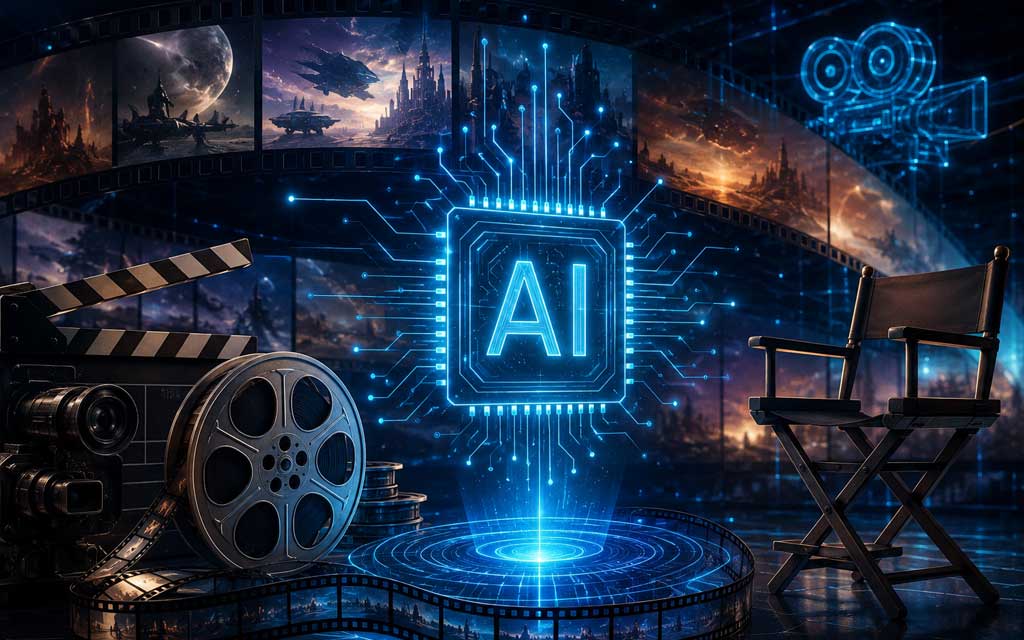
In a powerful endorsement that could reshape Hollywood’s future, George Lucas — the legendary creator of Star Wars, founder of Industrial Light & Magic (ILM), and pioneer of modern visual effects — has declared that artificial intelligence is “the future” of filmmaking. The 82-year-old visionary urged the industry to stop resisting and fully embrace AI, comparing holdouts to those who clung to horse-drawn buggies in the automobile era.
As America’s premier tech reporter at www.vfuturemedia.com covering AI, EVs, autonomy, and global competition, this statement from one of cinema’s most transformative figures is a rallying cry. It aligns perfectly with U.S. leadership in frontier AI — from Anthropic’s rupee pricing expansion in India to Apple’s strategic AI partnerships in China — and underscores how American ingenuity can harness disruptive technologies to maintain cultural and economic dominance, much like IRA-driven battery incentives counter China’s record vehicle exports.
Lucas’s Bold Message: AI as Inevitable Progress
In a candid interview with A Rabbit’s Foot promoting the upcoming opening of the Lucas Museum of Narrative Art in Los Angeles, Lucas pulled no punches:
“Artificial intelligence means it’s much easier for us to make movies… There’s nothing you can do about it. That’s progress, it’s the future.”
He likened anti-AI sentiment to outdated resistance against cars, acknowledging potential downsides but insisting solutions exist and advancement cannot be stopped. Lucas also critiqued Hollywood’s over-reliance on test screenings and focus groups, arguing they dilute bold creative visions — a stance that resonates with his history of pushing technological boundaries in the Star Wars prequels and beyond.
This isn’t surprising from the man who revolutionized filmmaking. Lucas founded ILM in 1975 to create tools that didn’t yet exist, bet on digital filmmaking when analog was king, and waited years for technology to catch up to his imagination. His pro-AI position continues that legacy.
How AI is Already Transforming Filmmaking – And What’s Next
Lucas’s comments highlight AI’s practical benefits in an industry facing soaring costs and tight timelines:
- Pre-Production: Generative AI for rapid script analysis, concept art, storyboarding, and world-building.
- Visual Effects & Virtual Production: Building on tools like StageCraft (The Mandalorian), AI can generate realistic environments, characters, and effects faster and cheaper.
- Post-Production: Automated editing, color grading, de-aging, background removal, and even synthetic performances.
- Accessibility & Personalization: AI-powered dubbing, subtitling, and audience-tailored versions for global markets, including high-growth regions like India and China.
- Democratization: Lower barriers for independent creators, enabling smaller teams to produce high-production-value content.
Directors like Peter Jackson have echoed similar positive views, signaling a broader industry shift.
SEO Keywords: George Lucas AI filmmaking 2026, Star Wars AI future, Hollywood embrace AI, AI in movies George Lucas interview.
American Tech Leadership: From Silicon Valley to Hollywood Soundstages
From an American perspective, Lucas’s endorsement is a timely affirmation of U.S. strengths in AI innovation. Companies like OpenAI, Anthropic, Google, and xAI are powering tools that Hollywood can leverage while maintaining ethical guardrails — such as constitutional AI principles — that differentiate Western approaches from competitors.
This ties directly into broader tech convergence:
- EV & Auto Parallels: Just as AI optimizes battery management systems, autonomous driving algorithms, and software-defined vehicles (areas bolstered by the Inflation Reduction Act and CHIPS Act), it will supercharge film production pipelines. Imagine AI-driven simulations for vehicle design visualization or immersive EV marketing experiences.
- Global Competition: While China dominates EV and battery exports (over 1 million vehicles in June 2026) and integrates local models like Alibaba’s Qwen into Apple Intelligence, America leads in creative AI applications. Lucas’s call reinforces the need to pair U.S. storytelling prowess with domestic AI to out-innovate global rivals.
- Economic Impact: AI adoption could reduce production costs, create high-skill jobs in tech-creative hybrids, and expand U.S. cultural exports — a key soft power asset.
Addressing Concerns: Jobs, Creativity, and Ethics
Lucas acknowledged risks but emphasized progress. Valid Hollywood concerns include:
- Potential displacement of VFX artists, writers, and crew.
- Intellectual property challenges around training data.
- Maintaining human authenticity in storytelling.
The solution, as Lucas implies and U.S. AI leaders advocate, is thoughtful integration: AI as a powerful collaborator that amplifies human vision rather than replacing it. Unions, studios, and policymakers are actively developing frameworks to protect creators while fostering innovation.
Strategic Recommendations for Hollywood and Beyond
- Invest in AI Upskilling: Train the next generation of filmmakers on tools like generative video, intelligent editing assistants, and multimodal AI.
- Ethical Guidelines: Adopt responsible AI practices that prioritize originality and credit.
- Cross-Industry Collaboration: Partner with Silicon Valley for custom tools tailored to narrative needs.
- Policy Support: Advocate for incentives similar to the IRA for creative tech R&D, ensuring America leads in both hardware (batteries, chips) and software-driven entertainment.
The Lucas Museum of Narrative Art, opening soon, could become a hub for exploring these intersections of technology and storytelling.
Broader Implications in the AI-Auto-EV Era
In the converging worlds of mobility and media, AI is the common thread. George Lucas’s vision of easier, more accessible filmmaking mirrors the promise of affordable, intelligent EVs and autonomous systems. For American audiences and creators, this is an empowering message: Technology evolves, and those who embrace it shape the future.
As we track AI’s role in everything from Claude’s growth in India to Apple’s China adaptations and U.S. battery manufacturing resilience, Lucas reminds us that bold American innovators have always driven progress.
Conclusion: Lucas Lights the Way Forward
George Lucas, the force behind one of the most impactful franchises in history, is urging Hollywood — and America — to embrace AI as the next great leap. There’s nothing you can do about progress… except lead it.
At VFutureMedia, we believe this mindset will define success across tech sectors. Whether crafting epic blockbusters or engineering the vehicles and batteries of tomorrow, American creativity paired with AI will continue to inspire the world.
The future of filmmaking is here. Let’s make it extraordinary.
By Ethan Brooks



Leave a Comment