
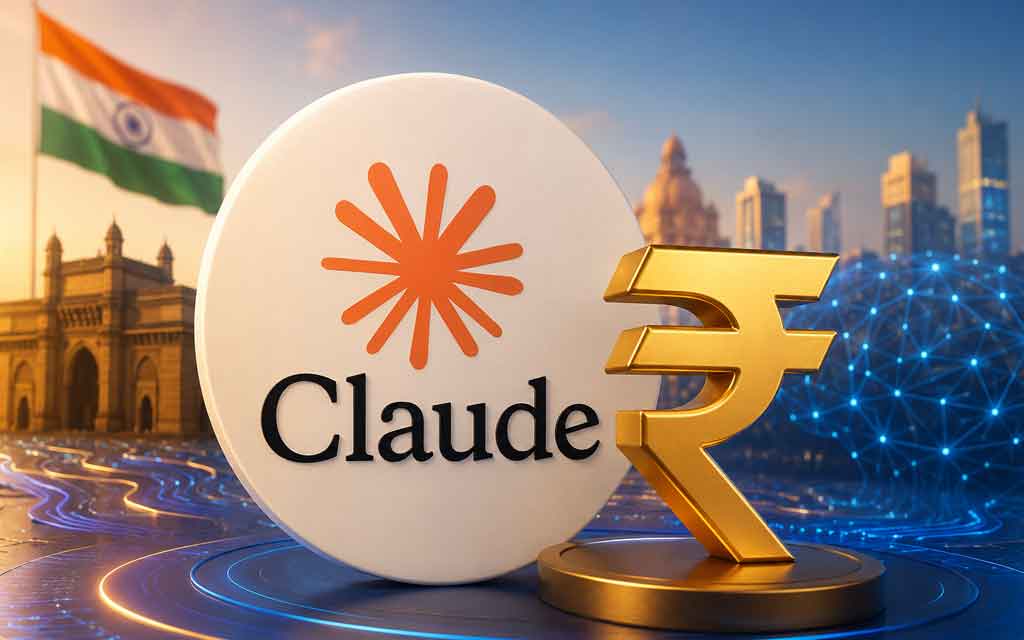
In a strategic move that underscores India’s rising prominence in the global AI landscape, Anthropic has officially launched India-specific rupee pricing for its flagship Claude AI models. This development, announced and rolled out around July 13, 2026, makes Claude more accessible to millions of Indian users by eliminating USD payment friction and currency conversion hassles. As America’s leading tech and AI reporter, this is a pivotal moment in the AI race — highlighting how U.S.-based frontier AI companies are adapting to emerging markets while competing fiercely with global players.
For www.vfuturemedia.com readers tracking AI, EVs, autonomy, and tech geopolitics, this isn’t just about pricing. It’s about talent, data, adoption curves, and how India’s massive developer and enterprise base could reshape the next phase of AI innovation — potentially influencing everything from software-defined vehicles to intelligent mobility systems.
The Announcement: Details of Claude’s India Pricing
Anthropic has introduced localized pricing in Indian Rupees (INR) for its paid tiers on both the website and mobile apps, with prices inclusive of GST. This addresses long-standing user feedback about international card requirements and forex fees.
Key Pricing Breakdown (as of July 2026):
- Claude Pro: ₹2,000 per month on annual billing (₹24,000/year) or ₹2,399 monthly. This is roughly equivalent to $21–$25 USD, compared to $17–$20 in the U.S.
- Claude Max:
- 5x tier: ₹11,999 per month (~$125 USD vs. $100 U.S.).
- 20x tier: ₹23,999 per month.
- Claude Team:
- Standard seat: ₹2,399 per user/month (annual) or ₹2,999 monthly (~$25 USD vs. $20 U.S.).
- Premium seat: ₹11,999+ per month.
The free tier remains unchanged. Notably, UPI integration is not yet enabled, but card payments in INR are now supported. This localization mirrors moves by competitors like OpenAI and Google, who have tailored offerings for price-sensitive, high-volume markets.
From an American perspective, the slight premium over U.S. dollar equivalents (driven by taxes) still represents a net savings for Indian users by avoiding conversion losses, making Claude far more competitive against local and global alternatives.
Why India? Second-Largest Market After the US
According to Anthropic’s own data, India accounts for approximately 5.8% of global Claude.ai usage, making it the second-largest market after the United States. Some reports cite figures as high as 7.2% in certain periods. This is remarkable given India’s per-capita adoption lags due to income and infrastructure factors, but the sheer population scale and vibrant tech ecosystem drive absolute numbers.
Indian developers, startups, enterprises, and students are heavily using Claude for coding, research, content creation, and automation. Sectors like IT services, fintech, e-commerce, and emerging EV/autonomous tech are prime adopters. India’s young, English-speaking talent pool — with millions of engineers — positions it as a critical growth engine for AI companies.
This mirrors broader trends: India is the world’s fastest-growing major economy, with digital infrastructure (UPI, Aadhaar, high smartphone penetration) accelerating AI experimentation. For U.S. firms like Anthropic, capturing this market strengthens moats in data diversity, model fine-tuning, and global talent acquisition.
Strategic Implications for Anthropic and Global AI Competition
1. Market Expansion and Monetization: Local pricing reduces barriers, potentially boosting conversion rates from free to paid users. In high-growth markets, volume often trumps high ARPU initially. Anthropic, backed by Amazon and others, is playing the long game against OpenAI, Google DeepMind, and Chinese contenders like Baidu or DeepSeek.
2. Talent and Developer Ecosystem: India’s second-place ranking signals deep integration into developer workflows. Many Indian engineers contribute to open-source, fine-tune models, or build on Claude via API. This could accelerate Anthropic’s roadmap in areas like agentic AI, multimodal capabilities, and enterprise tools — relevant for auto/EV applications such as predictive maintenance, autonomous driving software, and supply chain optimization.
3. Competitive Pressure: With China dominating hardware and exports (as we covered in previous pieces on vehicle milestones), Western AI leaders must win software and services in places like India. Rupee pricing is a defensive and offensive move — retaining users who might otherwise pivot to cheaper local models or Meta’s Llama ecosystem.
4. Geopolitical and Economic Context: This aligns with U.S.-India tech ties under frameworks like the Initiative on Critical and Emerging Technology (iCET). As America invests in domestic AI via CHIPS Act and IRA-inspired policies, partnerships with India’s booming sector provide resilience against supply chain risks.
Comparison to Other AI Pricing Strategies in India
- OpenAI/ChatGPT: Has offered localized pricing and India-specific initiatives.
- Google Gemini: Deep integration with Android and local languages.
- Microsoft Copilot: Enterprise focus via Azure India regions.
Anthropic’s move emphasizes safety, constitutional AI, and developer-friendly features (e.g., Claude Code, projects, artifacts), differentiating it in a market valuing reliability for complex tasks like software engineering — critical for India’s $250B+ IT industry.
SEO Keywords for Readers: “Claude AI India pricing”, “Anthropic rupee subscription”, “Claude Pro cost in INR”, “best AI tools for Indian developers 2026”.
Broader Impact on AI Adoption in Emerging Markets
India’s rise as Claude’s #2 market highlights a shift: AI is no longer U.S.- and China-centric. Emerging economies with large populations and digital leapfrogging (mobile-first, UPI-enabled) will drive the next billion users.
Opportunities:
- Enterprise Growth: Indian conglomerates and startups adopting Claude for internal tools, customer service, and R&D.
- EV/Auto Synergies: AI models like Claude power simulation, code for ADAS, battery management systems, and voice interfaces in next-gen vehicles. India’s EV push (aligned with global trends we’ve tracked) benefits from accessible AI.
- Skills Development: Lower barriers encourage education and upskilling, creating a virtuous cycle for global AI talent.
Challenges:
- Per-capita usage remains lower due to affordability and awareness gaps.
- Competition from open-source and hyper-local models.
- Data privacy, regulatory scrutiny (India’s DPDP Act), and infrastructure demands.
For American observers, this reinforces the need for U.S. policy that supports innovation while fostering alliances. Just as IRA builds battery resilience against Chinese dominance, smart AI diplomacy secures software leadership.
What’s Next for Anthropic in India and Beyond?
Expect further localization: UPI support, vernacular language enhancements, India data centers for lower latency, and tailored enterprise plans. Anthropic may expand “Claude for India” initiatives, similar to its global safety and economic impact research.
This pricing rollout could serve as a template for other high-potential markets in Southeast Asia, Latin America, and Africa — accelerating Anthropic’s path to broader accessibility without compromising its premium, safety-first positioning.
In the AI-auto-EV convergence, tools like Claude are already helping engineers prototype vehicle software, optimize energy systems, and accelerate R&D. India’s growing role amplifies this potential.
Conclusion: A Win for Global AI Democratization and U.S. Tech Strategy
Anthropic’s rupee pricing for Claude in India is more than a billing update — it’s recognition of India’s strategic importance as the second-largest market after the U.S. This move lowers barriers, fuels adoption, and strengthens Anthropic’s global footprint at a time when AI competition intensifies.
From Detroit to Silicon Valley to Bengaluru, the message is clear: winning the AI future requires understanding diverse markets, talent pools, and use cases. As we continue covering breakthroughs in autonomy, electrification, and intelligence at VFutureMedia, India’s Claude surge is a bullish signal for collaborative innovation.
American leadership in frontier AI, paired with India’s scale and ambition, could define the decade. Stay tuned for deeper dives into how these tools impact EV software, manufacturing AI, and beyond.




Leave a Comment