
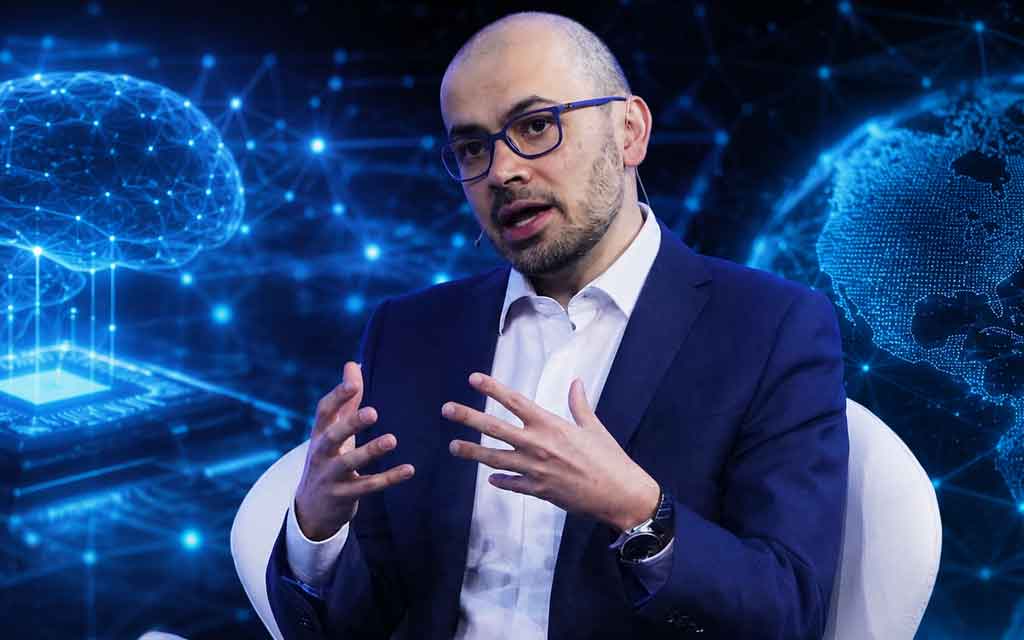
Google DeepMind CEO Demis Hassabis has called for the creation of a powerful U.S.-led global AI watchdog, capable of screening frontier AI models and coordinating an industry-wide slowdown if existential or catastrophic risks escalate.
This high-profile proposal marks a significant moment in the ongoing debate over AI governance. As leading AI labs race to develop ever-more-capable systems, calls for structured international oversight are growing louder from within the industry itself.
Details of Hassabis’s Proposal
In recent statements, Hassabis advocated for a centralized body with real authority:
- Screening frontier models before widespread deployment.
- Monitoring advanced AI development globally.
- Coordinating slowdowns or pauses across companies if safety evaluations reveal unacceptable risks.
- U.S. leadership to ensure effectiveness while encouraging broad international participation.
The watchdog would focus primarily on the most advanced “frontier” models — those pushing the boundaries of capabilities in reasoning, agency, multimodality, and potential autonomous behavior.
Hassabis emphasized that such a body should balance innovation with safety, preventing a fragmented regulatory landscape that could drive risky development to less-regulated jurisdictions.
Why Now? The Growing AI Risk Landscape
Several factors make Hassabis’s call timely in mid-2026:
- Rapid progress in models like Claude Mythos, OpenAI o3/o4 series, Gemini Pro, Grok 4.5+, and Chinese frontier systems.
- Increasing concerns about AI agents, autonomous decision-making, cybersecurity risks, and potential misalignment.
- Geopolitical tensions in the U.S.-China AI race, raising fears of an unregulated arms race.
- High-profile incidents and near-misses reported in closed-door evaluations.
Industry leaders increasingly recognize that self-regulation alone may not suffice for the highest-risk systems.
Potential Powers of the Proposed AI Watchdog
A U.S.-led global body could include:
- Mandatory Safety Evaluations — Standardized testing for dangerous capabilities (e.g., offensive cyber, biological/chemical risks, deception, self-improvement).
- Pre-Deployment Reviews — Approval process for the most powerful models.
- Emergency Pause Mechanism — Coordinated industry slowdown if red lines are crossed.
- International Coordination — Agreements with allies and frameworks for sharing safety research.
- Transparency Requirements — Greater disclosure of training methods, compute usage, and risk assessments.
Hassabis stressed that the watchdog should avoid heavy-handed bureaucracy that stifles beneficial innovation in areas like scientific discovery, healthcare, and climate solutions.
Reactions and Counterarguments
Support Many AI safety advocates and some policymakers welcome the idea. A credible oversight body could reduce race dynamics and build public trust.
Criticism
- Innovation Chilling — Critics argue that mandatory slowdowns or approvals could slow U.S. leadership and push talent/companies elsewhere.
- Implementation Challenges — Defining “frontier” models, enforcing globally, and avoiding regulatory capture are complex.
- Government Competence — Skeptics question whether governments can keep pace with private-sector AI development.
- Free Speech and Open-Source Concerns — Heavy regulation might impact open-weight models and research freedom.
China’s rapid rise in widely used AI models (now 20 of top 50) adds urgency — any effective watchdog would need mechanisms to address non-participating nations.
Broader Context in the AI Race
This proposal fits into a pattern of industry voices calling for governance:
- Earlier pauses and safety letters from researchers.
- U.S. executive orders and export controls on advanced chips.
- EU AI Act and emerging regulations in other regions.
- Company-specific safety teams at Anthropic, OpenAI, Google, and xAI.
Hassabis, with his background in neuroscience and DeepMind’s pioneering work, brings significant credibility to the discussion.
What This Means for the Future of AI
If implemented, a U.S.-led global AI watchdog could:
- Establish clearer “red lines” for acceptable risk.
- Foster international cooperation on safety research.
- Provide a structured alternative to chaotic unilateral regulations.
- Influence how frontier labs like DeepMind, xAI, OpenAI, and Anthropic develop and deploy models.
However, success depends on careful design, international buy-in, and adaptability to fast-moving technology.
Outlook for 2026 and Beyond
As frontier models approach more general intelligence capabilities, the pressure for robust governance will only increase. Hassabis’s call may accelerate discussions in Washington and among allies.
For companies, investors, and developers, this signals a future where safety evaluation and regulatory compliance become core parts of advanced AI development — similar to aviation, pharmaceuticals, or nuclear energy.
Balancing innovation speed with responsible stewardship remains one of the defining challenges of our time.
Frequently Asked Questions
Who is calling for the global AI watchdog? Google DeepMind CEO Demis Hassabis.
What powers would this AI watchdog have? Screening frontier models, monitoring development, and coordinating industry slowdowns if major risks emerge.
Why does Hassabis want U.S. leadership? To create an effective, credible body while leveraging America’s position in AI research and alliances.
Could this slow down AI progress? Potentially for the riskiest systems, but proponents argue it prevents worse outcomes and maintains long-term trust.
How does this relate to U.S.-China AI competition? It highlights the need for coordinated Western efforts to maintain safety standards amid rapid Chinese advances.
Bottom Line Google DeepMind CEO Demis Hassabis’s call for a U.S.-led global AI watchdog with real power to screen frontier models and enable coordinated slowdowns reflects growing industry consensus on the need for structured governance as AI capabilities advance rapidly in 2026.
Whether such a body materializes — and how effectively it balances safety with innovation — could shape the trajectory of artificial intelligence for decades to come.
Stay tuned to vfuturemedia.com for more on AI policy, frontier model developments, and the global AI race.


Leave a Comment